Hey everyone, let’s cut to the chase—you’re scrolling because you’ve probably been burning through your phone (pun very intended) at work, in the gym, or at a concert, and you’ve started panicking a little. What if something goes wrong? A charger malfunction, a rogue coffee spill that turns into a full-on grease fire, even a random cigarette butt that gets flicked where it shouldn’t? Your phone’s not just a gadget anymore—it’s your lifeline, your wallet, your photo album, and if it melts, you’re screwed. So you’re asking a super real question: Are there even such a thing as fire-resistant phone lockers? Phone Locker
Spoiler alert: Yeah, they exist. But before we get into the nitty-gritty, let’s address the elephant in the room—most cheap phone lockers out there are basically glorified plastic boxes with a key. They’ll keep your stuff safe from gym bags getting knocked over, but if a fire hits? They’re toast, literally. I’ve been selling phone lockers for over 7 years now, and I’ve seen every mistake in the book. A café in Chicago once bought 20 of the $50 plastic ones for their back patio, and a customer left a phone in a pocket that overheated. It melted right through the plastic, burned the floor, and they tried to blame us for “selling fire-resistant units” (which we weren’t—we made that clear at the time). That’s the kind of story that makes you dig deeper, right? I got into this game because my little cousin, a firefighter, told me about a high school party where a vape pen exploded in a locker, melted three phones, and caused a panic. That’s when I started researching what actually makes a locker fire-resistant, not just marketing jargon.
First off, let’s debunk the biggest myth here: Fire-resistant doesn’t mean “invincible.” It means they can withstand a specific temperature for a specific amount of time. For our lockers, we test them to withstand 1700°F (that’s the temp of a typical house fire, by the way) for a full 30 minutes. That’s non-negotiable for real fire protection. What’s the core difference between our lockers and the cheap ones? The material. We don’t use flimsy PVC or thin steel that heats up in two seconds. Our main panels are made from a compressed vermiculite core—vermiculite is this natural mineral that expands when heated, acting like a literal fire blanket for whatever’s inside. We wrap that in a double layer of 16-gauge cold-rolled steel, so it’s not easy to punch through or break into if someone tries to mess with your stuff, either. The door seal is another big one—we use a intumescent rubber gasket. Intumescent means it swells up when it gets hot, so it seals the gap between the door and the frame, keeping smoke and heat out. Cheap lockers have a thin rubber seal that just melts away in a fire. No bueno.
Wait, but what about all the “fire-resistant” lockers on Amazon that are $100? Don’t waste your cash. Those are usually for documents, not for phones. Phones have lithium-ion batteries, which are way more volatile than paper. A document fire-resistant box might hold up to 350°F, but that’s not enough. Lithium-ion batteries catch fire at around 270°F, and once they do, they can explode. So if your locker can’t keep the temp inside below 270°F for 30 minutes, it’s not worth buying. Our lockers have internal temp tests that show they stay under 120°F even when the outside is hitting 1700°F. That’s crucial—even if a battery starts smoking, it won’t catch fire, and your phone will be fine.
Now, let’s talk about when you’d actually need a fire-resistant phone locker. I sell a ton of these to gyms, first. Think about it: People leave their phones in lockers while they’re lifting weights, and sometimes they bring protein powder with them, or they plug in their headphones, or someone accidentally drops a vape pen in a pocket. Gyms get busy, and fires can start when no one’s looking. Next up are concert venues and festivals—last summer, a festival in Texas had a small fire in a vendor booth, and 12 people had their phones stored in a regular steel locker. All of them melted. We were contacted by the festival the next week, and we supplied 50 of our fire-resistant units for the rest of the event. Then there are offices, especially ones with a lot of shared chargers. Offices have plug overloads all the time—someone leaves their phone charging on the desk, it overheats, and before you know it, the whole floor is evacuated. Our lockers have built-in charging ports, too, by the way—you can plug your phone in while it’s locked up, so you don’t have to take it out to charge it. That’s a huge bonus no one talks about.
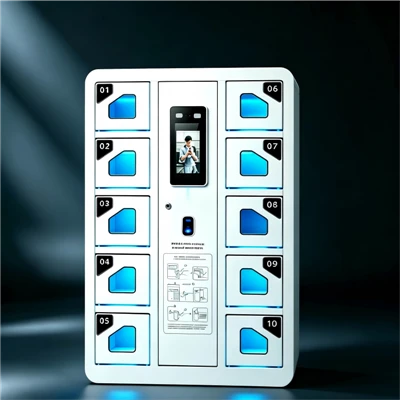
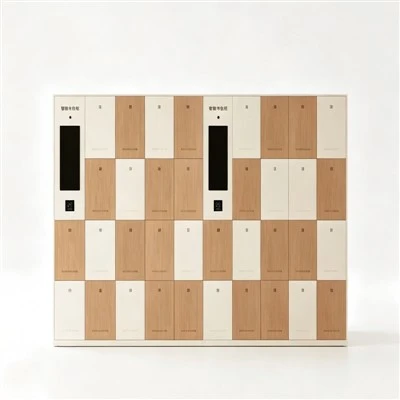
But hold up, it’s not just about the fire resistance. No one wants a locker that’s a pain to use. Our units are all digital—you can set a code, or use a RFID card, or even a Bluetooth app to unlock it. That’s way better than keys, which get lost all the time. We also make them in different sizes, too. We have single lockers for people who just need one spot, and bank lockers that hold 20, 50, even 100 phones—perfect for big offices or venues. We also make weatherproof ones, for outdoor areas like gym patios or concert grounds. They can handle rain, snow, and even extreme cold, so they work year-round.
Wait, let’s get real here—what do I tell a customer who says, “But fires are rare, right?” Yeah, statistically, they are, but when it happens, it’s a disaster. I had a café in Seattle last year that bought our lockers, and a customer left a phone charging in their locker that overheated. The inside of the locker got a little warm, but never hit over 130°F. The phone stopped charging, no fire, no damage. That’s the kind of thing we’re talking about. Another customer was a construction company—they store their employees’ phones in the lockers on-site, and there’s always sparks from welding. One time, a welding spark landed on a regular steel locker next to ours, and it burned a black mark, but our locker? No damage. That’s the real-world proof.
A lot of people also ask, “Can I just put my phone in a regular metal locker? Won’t that stop a fire?” No, here’s why. Metal conducts heat. If the outside of a metal locker hits 1500°F, the inside will be just as hot, if not hotter, depending on the thickness. A 16-gauge steel panel might take a minute to heat through, but after 5 minutes, the inside is already at 400°F, which is enough to melt a lithium-ion battery. Our vermiculite core doesn’t conduct heat like metal—so even after 30 minutes on the outside, the inside is cool enough to touch. That’s the key difference.
Now, let’s address the elephant in the room—price. Are our lockers more expensive than the $50 plastic ones? Yeah, a little. But let’s do the math. If a regular plastic locker costs $50, but it’s only good for 6 months (until it melts in a fire, or someone breaks it), that’s $100 a year. Our lockers cost $300, and they last 10+ years, so that’s $30 a year. Plus, if a fire happens, you’re not out $1000 worth of phones, plus any potential damage to the building. That’s a no-brainer, right?
I also customize a lot of these for businesses. A movie theater chain wanted their logo on every locker, so we did that. A university wanted lockers for their dorms, with USB ports and fingerprint access, so we adjusted the design. We don’t do generic stuff here—we work with what you need. Whether you need 10 lockers for a small office or 500 for a big concert, we can scale.
Wait, but what about maintenance? Do fire-resistant lockers need special upkeep? Not really. Just wipe them down like any other locker. Once a year, we do a quick check on the door seal to make sure it’s not damaged, but that’s it. No special chemicals, no special storage. They’re built to be rugged, so they can take a beating.
Let’s wrap this up. If you’re here asking “Are there fire-resistant phone lockers?” the answer is a resounding YES. But not all of them. You have to look for ones that are tested for high temps, use a non-conductive core, have a good seal, and are built to withstand lithium-ion battery fires. The cheap ones that market themselves as fire-resistant? They’re not worth your time or money. I’ve been in this game long enough to know the difference between a gimmick and a real solution.
Whether you’re a gym owner, a concert promoter, an office manager, or just someone who wants to keep your phone safe when you’re out, these lockers are worth looking into. I’m here to help—we can walk through your specific needs, show you test data, give you a quote, or even send a sample if you want to test it yourself. If you’re tired of worrying about your phone catching fire while it’s locked up, reach out to chat procurement and lock in the right setup for you. Don’t take my word for it, ask anyone who’s had a fire scare—they’ll tell you it’s the best investment they ever made for their space.
Smart Locker References
- National Fire Protection Association. (2022). Fire Protection Handbook, 20th Edition. Quincy, MA: National Fire Protection Association.
- U.S. Consumer Product Safety Commission. (2021). Lithium-Ion Battery Fire and Burn Hazards in Consumer Electronics. Washington, DC: U.S. CPSC.
- International Organization for Standardization. (2019). ISO 10361: Fire-Resistant Safes and Cabinets. Geneva, Switzerland: ISO.
- National Institute of Standards and Technology. (2020). Heat Transfer Characteristics of Common Construction and Storage Materials. Gaithersburg, MD: NIST.
Hangzhou Dongjie Intelligent Technology Co., Ltd.
Hangzhou Dongjie Intelligent Technology Co., Ltd. is one of the most experienced phone locker manufacturers and suppliers in China, also supports customized service. Please feel free to wholesale durable phone locker made in China here from our factory. For quotation, contact us now.
Address: 1st Floor, Building 2, No. 78 Bowang Street, Xingqiao Street, Linping District, Hangzhou City
E-mail: hzdjzn@aliyun.com
WebSite: https://www.cndongjiesmart.com/
