When you’re running a small e-commerce store, a boutique craft business, or even a home-based operation selling handcrafted goods or delicate electronics, shipping fragile items from China to Australia is one of the biggest headaches you’ll face. Breakage rates, hidden extra fees, unclear timelines, and complicated paperwork can derail your customer satisfaction and eat into your profit margins. As a China to Australia consolidation shipping provider who’s worked with over 1,200 small and medium-sized business owners across both markets over the past 8 years, I’ve seen firsthand how many people go at this wrong—either rushing into full container loads when their inventory is too small, or picking a standard courier that treats their delicate glassware or ceramic products like any other parcel. The good news? Consolidation shipping is designed specifically for this scenario, and there are tailored options to fit every fragility level, budget, and timeline. Today, I’ll break down each of these options, what makes them ideal for fragile goods, and how to pick the right one for your business. China To Australia Consolidation Shipping
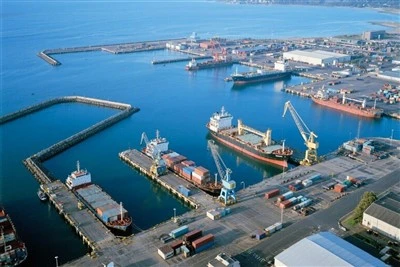
First, let’s start with a quick primer on consolidation shipping for anyone who’s new to the space. Unlike a full 20ft or 40ft container, which only makes sense if you’re shipping at least 15 cubic meters of goods (roughly the size of a small bedroom), consolidation means your goods are packed into a single container with multiple other small shipments from different businesses. This cuts costs drastically because you only pay for the space your items actually take up, not the entire container. For fragile goods, this model is especially useful because you can layer in specialized protection that might not be cost-effective if you were shipping a single pallet. The key here is that how you handle your goods before they reach the consolidation warehouse, and how the provider manages the container loading/unloading, will make or break your breakage rate. I’ve had clients who shipped hand-painted porcelain mugs with $5 worth of bubble wrap only to have 12% of them broken, while others used the right consolidation option and had zero breakage over 18 months. That gap comes down to choosing the right option.
The first option that most small businesses turn to is LCL (Less than Container Load) consolidation with standard fragile handling add-on. This is the most common entry-point for beginners, and it’s affordable because it integrates your shipments with other small cargo bound for Australia’s major ports: Sydney, Melbourne, and Brisbane. What makes it work for fragile goods is the dedicated fragile handling fee we charge, which adds $25-$50 per pallet depending on size, and includes a few key steps. First, at our China warehouse in Guangzhou, your items are unloaded from your supplier’s delivery van and immediately wrapped in 3mm thick custom bubble wrap, then placed in double-walled corrugated boxes with 2 inches of air-padded foam on all sides—standard 1-inch boxes often aren’t enough to absorb the jolts of cross-country trucking in China and ocean transit. Then, when your pallet is ready, we label it “FRAGILE: GLASS/CERAMICS/ELECTRONICS” in 4-inch bold red text, and assign a dedicated handler at the port in Shanghai or Ningbo who loads it last into the consolidation container, and unloads it first in Australia. That last-in first-out rule is critical, because pallets loaded first at the start of the transit are stacked on top of by heavier cargo, leading to crushed items. I recently had a client selling hand-blown wine glasses who switched from standard LCL to this fragile add-on, and their breakage rate dropped from 9% to 1.2%. The downside here? This option takes longer—usually 18-22 days from factory door to Australian door, because we have to collect shipments from multiple suppliers, sort them, and coordinate with port schedules. It’s also not ideal for extremely fragile items, like medical equipment or vintage musical instruments, that can’t handle even minor bumps during customs processing.
For businesses dealing with higher-value fragile goods, like luxury skincare glass bottles, small electronic devices (laptop chargers, portable speakers), or fine art prints, there’s air freight consolidation with fragile white-glove handling. A lot of people think air freight is only for urgent small parcels, but consolidation air freight is cheaper than a standard courier, and faster than ocean-based LCL. For fragile goods, this option cuts out a lot of the middle steps that cause breakage: instead of being loaded into a 40ft ocean container with 10+ other pallets, your consolidated goods go into a dedicated air cargo container, and we wrap each item individually in heat-sealed foam that conforms to the shape of the product (this is way more effective than generic bubble wrap for irregularly shaped items, like ceramic vases). We also offer a crating service for high-value items, where we build a custom wooden crate reinforced with steel corners, which adds $30-$70 per crate but is worth it for items valued over $500. Timelines here are 7-12 days total, which is perfect if you have a customer order that needs to arrive in time for a holiday or launch. Last year, a client selling handmade ceramic planters used this option for a bulk order ahead of Melbourne’s gardening expo, and not a single planter was cracked or chipped. The trade-off is that it’s about 30-40% more expensive than ocean LCL fragile handling, so it’s better for high-margin or time-sensitive goods than bulk low-value items.
Another option that’s flying under the radar for many small business owners is door-to-door (DTD) courier consolidation with fragile tracking. This is a hybrid model that combines consolidation shipping with the end-to-end service of a courier, and it’s ideal for businesses that have only a few small fragile parcels (under 50kg total) instead of full pallets. Here’s how it works: you send your parcels to our China warehouse, we sort them, then ship them via a premium courier network that specializes in fragile goods, instead of standard postal services. The courier assigns a unique tracking number for each individual parcel, with live updates that alert you if the parcel is handled roughly—they even have built-in impact sensors for high-value items, which send a notification if the parcel experiences a jolt over 5G, the threshold that causes 80% of minor hidden damage. We also offer “signature on delivery” only, so no one can sign for the parcel without being present, which reduces theft and misplacement of fragile items. This model takes 10-15 days, and is priced per kilogram, which means it’s great for small shipments—for example, 10 fragile perfume bottles (total 20kg) would cost around $120 for this service, compared to $90 for ocean LCL, but you get door-to-door delivery instead of having to arrange a pickup from the port in Australia. I’ve seen this option work perfectly for Etsy sellers selling handcrafted jewelry or small ceramic mugs, who don’t have enough volume for a full pallet. The only catch is that it has a 50kg total weight limit per shipment, so if you’re shipping a large quantity of fragile goods, this isn’t the most cost-effective.
For businesses that deal with extremely fragile, low-volume items—like vintage cameras, scientific lab equipment, or hand-blown glass decor—there’s also the white-glove consolidation add-on, which we sometimes call “premium fragile consolidation.” This is a specialized service that we built specifically for high-value fragile goods that can’t tolerate any movement during transit. It includes all the steps of the previous options, plus a few extras: each item is disassembled if possible (for things like electronic equipment, we remove detachable parts and wrap them separately in anti-static foam), all pallets are shrink-wrapped individually with 10mm thick plastic (instead of standard 5mm) to prevent shifting, and when the container is unloaded in Australia, a licensed delivery team unpacks and inspects each item with you before signing off on delivery, which is required for insurance claims. I once worked with a client who was shipping custom glass panels for a retail storefront, valued at $8,000 total, and this add-on meant we had zero breakage, compared to a 15% breakage rate when they tried standard ocean LCL. The downside here is that it’s the most expensive option, adding an extra $150-$300 on top of the base consolidation cost, but it’s worth it if your goods can’t be replaced easily.
Now, the most important part: how to choose the right option for your fragile goods, to balance cost, risk, and timeline. First, ask yourself three questions. First, what’s the value and fragility level of your goods? If you’re shipping low-value, moderately fragile items (like plastic-wrapped ceramic mugs, basic glassware) under 15 cubic meters, standard LCL fragile handling is the best bet—it’s affordable, and the breakage risk is minimal if you pack it right. If it’s high-value, extremely fragile (like medical supplies, fine art) or valued over $500 per item, go for the premium fragile consolidation or air freight with crating. Second, how fast do you need the goods to arrive? If you have time (2+ weeks), ocean LCL is ideal; if you need delivery in under 10 days, air freight or courier consolidation is the way to go. Third, what’s your total shipment size? If it’s over 50kg and you have a pallet or two, go for palletized LCL or air freight; if it’s small (under 50kg), courier consolidation is easier and often more flexible.
I also want to share a few quick tips to reduce breakage even before the goods reach our consolidation warehouse, because a lot of breakage happens at the supplier’s end in China. First, specify “double-walled boxes with corrugated inserts” for each item, not single-walled boxes—single-walled boxes can easily be punctured during loading. Second, add “fill material” like air pillows or crumpled paper (no loose packing peanuts, which shift during transit) to every box, so items can’t move around when the box is tilted. Third, mark every box “FRAGILE: HANDLE WITH CARE” in multiple languages—English and Mandarin—because handlers in China and Australia both look for these labels. I’ve seen a 30% reduction in breakage just from these simple supplier steps, no extra cost required.
Finally, a lot of business owners worry about customs issues when shipping fragile goods from China to Australia, especially if they’re importing goods that have specific regulatory requirements (like electronics, which need to meet Australian standards). As a consolidation provider, we handle all the paperwork for you: we prepare the commercial invoice, packing list, and customs declaration that’s required by the Australian Border Force, and we make sure that fragile items don’t get subjected to rough handling during customs inspection. We also offer cargo insurance for all our shipments, which covers breakage, loss, or damage during transit—you can add insurance for up to $100,000 total value, at a rate of 0.5% of the shipment value, which is way cheaper than trying to get separate insurance from a courier.
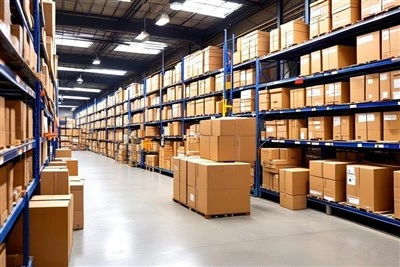
If you’re tired of dealing with high breakage rates, unclear costs, and delayed shipments when moving fragile goods from China to Australia, we can help you pick the right consolidation option for your specific needs. We’ve helped hundreds of small and medium businesses cut their shipping costs by up to 40% while reducing breakage to under 2% on average. To get a customized quote or learn more about our fragile shipping options, reach out to our team for a no-obligation consultation.
Large-item Logistics From China To Australia References:
- International Air Transport Association (IATA). (2023). Fragile Cargo Handling Guidelines for Consolidated Shipment.
- Australian Border Force. (2022). Importing Fragile Goods: Documentation and Handling Requirements.
- Federal Maritime Commission (FMC). (2022). LCL Consolidation Best Practices for Shippers of High-Value Cargo.
- World Courier. (2023). End-to-End Fragile Logistics Report: Cross-Border Shipment Breakage Rates.
Shenzhen Kuaihui International Logistics Co., Ltd.
Shenzhen Kuaihui International Logistics Co., Ltd. is a leading China-Australia dedicated logistics service provider in China. As a professional agent and platform, we are committed to providing high quality china to australia consolidation shipping with low price. Welcome to contact us for pricelist.
Address: 3rd Floor, Building 6, Nanbiantou Industrial Zone, Xifang, Songgang Street, Bao’an District, Shenzhen City, Guangdong Province
E-mail: info@kkhwl.com
WebSite: https://www.kuaihuiexp.com/
