When you’re building a metal control box, every component plays a role in keeping electrical systems safe, reliable, and compliant with industry standards. For us— a metal control box supplier with over 15 years of experience, speaking directly to engineers, project managers, and electrical contractors— one of the most frequent questions we get is: “How do I pick the right busbar for my box?” It’s not a trivial choice. A busbar’s job is to carry high currents from the main incoming supply to multiple distribution points inside the control box; pick the wrong one, and you’re looking at overheating, voltage drops, or even catastrophic failures that can shut down entire operations. I’ve seen this mistake cost clients thousands in downtime, so I’m breaking down the process we’ve refined over hundreds of control box builds, step by step, to help you make the right call. Metal Control Box
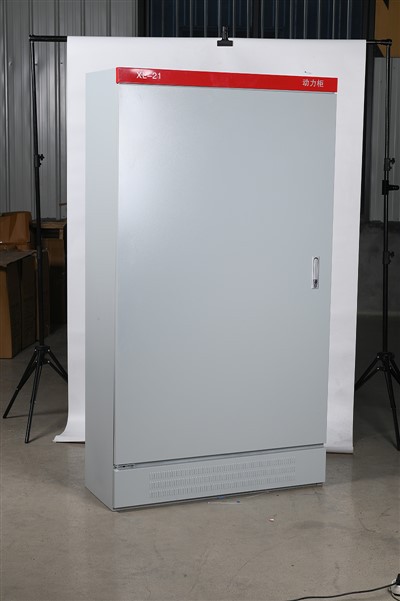
The first rule, and one we never skip, is matching the busbar’s current rating to your control box’s maximum load. This sounds obvious, but it’s where most people go wrong. They’ll look at the incoming current from the utility, divide it by the number of circuits they need, and pick a busbar rated right for that total sum. That’s a big error because every circuit isn’t running at full load at the same time. For example, if your control box serves a warehouse with a 200A main supply, and you have 5 30A circuits for lighting and 1 50A circuit for a heavy forklift charger, the peak load isn’t 200A— it’s when the forklift charger and all lights are running, which could hit 180A. That means you need a busbar rated for at least 180A, not 200A? Wait, no— actually, derating is key here. We always derate 15-20% to account for ambient temperature and future load growth. If your peak load is 180A, that means you need a busbar with a minimum rating of 216A, because unplanned additions to the control box are almost inevitable. That’s why we specify that our standard busbars for 200A control boxes are 250A-rated, not 200A, to give that buffer.
Next, material selection. Busbars are almost always copper or aluminum, and the choice comes down to cost, conductivity, and space. Copper is the go-to for most industrial control boxes because it has 40% higher electrical conductivity than aluminum, meaning it carries more current with less heat. For a control box where space is at a premium, like a compact panel for a small machine, copper is worth the extra cost— you can use a thinner, narrower copper busbar that fits without overheating, whereas an aluminum one would need to be bulkier, forcing you to size up your entire control box. Aluminum, though, is a game-changer for large, low-voltage control boxes where weight and cost matter. It’s 50% lighter than copper, and for loads above 400A, aluminum often works out cheaper per amp of current, even if the busbar has to be a bit larger. But there’s a critical caveat here: never mix copper and aluminum busbars in the same control box. The two metals react chemically when they’re in contact in the presence of moisture, creating corrosion that increases resistance and can lead to connections failing. We always insist our clients choose one or the other, or add a transition plate if they really need to switch, to prevent that issue.
Then there’s busbar shape and configuration, which depends entirely on how your control box is laid out. Most metal control boxes use three common shapes: flat bars, rigid bars, and modular bars. Flat bars are the most versatile— easy to cut to custom lengths, drill holes for connections, and fit into standard control box enclosures. They’re perfect for small to medium control boxes where you’re distributing power to a handful of circuits. Rigid bars, on the other hand, are thicker and sturdier, designed for high-current applications (600A and up) where vibration is a concern, like control boxes for industrial pumps or conveyor systems. They can handle the mechanical stress better than flat bars, so you don’t have to worry about connections loosening over time. Modular busbars, the new kid on the block, are prefabricated with slots for circuit breakers, so you just snap them into place. They save installation time a lot— we use them for many of our standard line of control boxes, because cutting and drilling custom holes on site is error-prone. But modular busbars only work for pre-defined circuit layouts, so if you have a custom control box with odd circuit counts, flat or rigid bars are still the way to go.
Don’t forget about environmental factors inside and outside your metal control box. Busbars don’t exist in a vacuum— their performance is affected by the space around them. If your control box is going in a hot industrial plant where ambient temperatures can hit 104°F (40°C) or higher, you need to adjust your busbar rating. Standard busbar ratings are based on 86°F (30°C) ambient, so at higher temps, the current carrying capacity drops. For example, a 250A copper busbar at 86°F is only good for around 220A at 104°F. If you don’t account for that, you’ll have the busbar running at too high a current, leading to overheating and insulation failure. Also, if your control box is in a harsh environment— like a food processing plant with moisture and corrosive dust, or an outdoor telecom shelter— you need a busbar with a protective coating. We offer tin-plated copper busbars for these applications; the tin coating prevents corrosion and makes connections easier to solder or crimp, without sacrificing conductivity.
Connection points are another make-or-break part. A busbar is only as good as its connections to circuit breakers, terminals, and other components. Bad connections cause 90% of busbar-related failures, in our experience. When you’re selecting a busbar, look for one with pre-tinned connection holes or flanges, because that ensures a solid, corrosion-resistant bond when you attach components. Also, make sure the hole size matches the terminal lugs you’re using— a hole that’s too big will lead to loose connections, while a hole that’s too small will damage the lugs. We always include a connector sizing guide with every custom control box we build, so clients can match the busbar to their lugs without guesswork.
Wait, let’s circle back to something I mentioned earlier: future-proofing. One of the most common complaints we hear from clients is that their control box was “too small” a year after installation, because they added new equipment. When you’re picking a busbar, it’s worth spending a little extra for a slightly higher rating than you think you need. For example, if you think your current load will max out at 150A, go with a 200A-rated busbar instead. That 50A buffer costs a few dollars extra upfront, but it saves you from having to replace the entire busbar and rework the control box a year later, which can cost 10x that amount. We see this all the time: a small investment in a higher-rated busbar prevents a huge headache down the line.
Let me give you a real example to make this concrete. Last year, we worked with a manufacturing client who was building a new assembly line. They initially came to us with a request for a control box with a 150A aluminum busbar, thinking that would be enough for their current 120A load. But when we calculated their planned expansion— they were adding a second assembly line 18 months later— their peak load would jump to 220A. We recommended they go with a 250A copper busbar instead of aluminum. The client was hesitant because copper was more expensive, but six months later, when they added the second line, they didn’t have to rework the busbar. If they’d gone with the aluminum 150A busbar, they would have had to replace it with a 250A aluminum busbar, plus modify the control box enclosure, which would have cost them around $1,200. The extra cost of the copper busbar was only $300, so they saved $900 and weeks of downtime. That’s the kind of call we aim to help every client make.
Now, let’s talk about avoiding common pitfalls. First, never use a busbar that’s too thin, even if the amp rating seems right. A thinner busbar will have higher resistance, leading to more heat generation. For example, a 1/8 inch thick copper busbar can carry 150A, but a 1/16 inch thick one can only carry 100A, even if it has the same surface area. Second, don’t ignore voltage drop, especially for control boxes that are far from the main power source. Voltage drop is the amount of power lost as electricity travels through the busbar. For low-voltage applications (12V, 24V), voltage drop is a big concern— even a small loss can damage sensitive electronics. To minimize voltage drop, pick a thicker busbar or a material with higher conductivity (copper) for long runs inside the control box. Third, always check compliance with local electrical codes. In the US, that’s NEC (National Electrical Code); in the EU, it’s IEC standards. These codes specify minimum current ratings, spacing between busbars and other components, and requirements for coatings, so make sure your busbar meets those specs. We test all our busbars to meet NEC and IEC standards, so our clients don’t have to worry about compliance issues that can delay projects or lead to fines.
Wait, let’s address a question we get a lot: what about busbars for small control boxes, like the ones used in residential electrical panels? The same rules apply, but on a smaller scale. For a residential control box with a 100A main supply, a 100A copper busbar works, but we still recommend a 125A to allow for future appliances, like a new electric vehicle charger. For very small control boxes (under 50A), modular busbars are perfect, because they’re easy to install and come in standard sizes that fit most enclosures.
I should also mention that when you’re working with a metal control box supplier (that’s us, by the way), the busbar is often custom-made for your box, not off-the-shelf. That’s another advantage of working with a supplier like us— we can tailor the busbar’s shape, rating, and material to fit your exact control box, instead of forcing you to adjust your design to fit a pre-made busbar. We do all the calculations for current, derating, and future load, so you don’t have to do the math yourself. That takes a lot of guesswork out of the process.
At the end of the day, selecting the right busbar comes down to three things: matching it to your current load with a safety buffer, picking the right material for your application, and accounting for your control box’s environment and future needs. It’s not a component you want to cut corners on— as someone who’s built hundreds of control boxes, I’ve seen how a wrong busbar can turn a simple installation into a major failure.
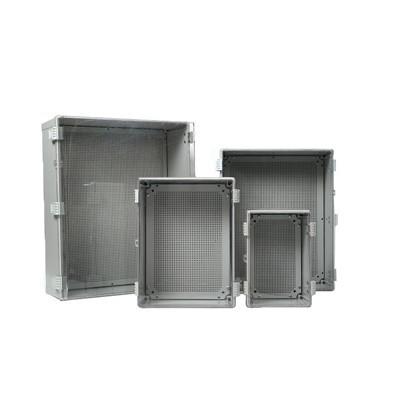
If you’re designing a metal control box and you’re still not sure which busbar is right for your project, don’t hesitate to reach out. Our team has 15 years of experience working with engineers and contractors across industries, and we can help you calculate the right rating, material, and configuration for your specific needs. We don’t just sell control boxes— we partner with you to make sure every component works as it should, so your systems run safely and reliably for years to come.
Metal Circuit Breaker Box For further reading on electrical busbar standards and selection, here are key references:
- National Electrical Code (NEC) 2023, Article 376: Busbars, Busways, and Associated Fittings
- IEC 61439-1: Low-voltage switchgear and controlgear assemblies
- Copper Development Association: “Busbar Selection Guide for Electrical Distribution Systems”
- Aluminum Association: “Aluminum Busbar Design and Installation Guidelines”
Shandong Qinghua Yike Electric Co., Ltd.
As one of the most experienced metal control box manufacturers in China, we also support customized service. We warmly welcome you to buy durable metal control box for sale here from our factory. If you have any enquiry about cooperation, please feel free to email us.
Address: No. 378 Taozhuang Village, Zaoyuan Town, Lanshan District, Linyi City, Shandong Province
E-mail: admin@sd-qhyk.com
WebSite: https://www.qhecobox.com/
