Hey everyone, welcome back to the blog! If you’re in the market for a new building project, or maybe you’re just curious about how those sleek glass facades on skyscrapers actually stack up cost-wise, you’ve probably asked yourself: “How much does a building curtain wall cost?” As a curtain wall supplier who’s been in the game for over a decade, I can tell you this isn’t a one-size-fits-all answer. I’ve worked on everything from small commercial storefronts to 50-story office towers, and every project’s number changes depending on a dozen factors. Let’s break this down straight, no corporate jargon, just the real stuff. Building Curtain Wall

First off, let’s get the basics right: a curtain wall’s not just glass hung on the outside of a building. It’s the whole system—aluminum or steel frames, insulation, sealants, fasteners, and yes, the glass itself. That’s why pricing bounces so hard. I’ve seen quotes as low as $80 per square foot for simple, low-rise storefronts, and as high as $500+ per square foot for high-performance, skyscraper-grade stuff. Wait, that’s a huge gap, right? Let me walk you through what drives that.
First big factor: building height and location. If you’re on a 2-story strip mall in the suburbs, your curtain wall’s way different than a 40-story tower in downtown Chicago. For high-rises, you have to deal with wind loads, seismic activity, and even snow loads if you’re in a cold climate. Those extra engineering checks don’t come cheap. Last year, we did a curtain wall for a 35-story apartment building in Miami—wind speeds there are crazy, so we had to use thicker aluminum frames and impact-resistant glass. That project ended up at around $280 per square foot, compared to a 3-story medical office building we did in Atlanta the same year, which was $125 per square foot. Makes sense, right? Also, location affects material costs too. If your job’s in Alaska, shipping specialty glass or steel is way pricier than if you’re building somewhere near a major port.
Next up, the type of curtain wall system. There’s a bunch of different ones, and each has its own price tag. Let’s keep it simple, no weird acronyms unless you’ve heard ’em before. First, stick systems—this is the most common one, where you build the wall piece by piece on site. It’s cheaper upfront, takes a bit longer to install, good for most mid-rise and small projects. We usually price stick systems at $80-$180 per square foot. Then there’s unitized systems—these are pre-fabricated in our shop, then lifted onto the building in big sections. Super fast to install, less waste, perfect for high-rises where time is money, but they cost more—like $180-$350 per square foot. I recently had a client argue unitized was too pricey for their 10-story office, but they ended up saving $100k total because installation took 3 weeks less than stick. That’s the hidden cost people miss: labor and timeline.
Then there’s specialty systems, like structural glass facades where the glass holds itself up, no visible frames, or ventilated curtain walls that let air flow between the wall and the building. Those are the fancy ones. A structural glass facade we did for a luxury hotel in New York was over $450 per square foot. Yeah, it’s steep, but it gives that “wow” factor clients want.
Glass is another huge chunk of the cost. Not all glass is equal. Basic clear glass is cheap, but if you want low-E coating to save energy, or tinted, or sound-dampening for a busy street, that adds up. Impact-resistant glass for hurricane zones? Double the price of regular clear. Even things like patterned glass, or glass with integrated solar panels, can send the cost sky high. Last quarter, a client asked for solar-integrated glass for their warehouse—we had to special order it, and that part alone was $120 per square foot, on top of the frame and labor. Don’t forget insulation either; if you’re in a hot or cold climate, you need thermally broken frames to cut energy costs long-term. That’s a must-have these days for green building codes, so if you skip it now, you’ll pay more in utilities later, but it does add to the upfront cost.
Labor is another big one that people underestimate. A lot of new clients think materials are the main expense, but no—curtain wall installation requires skilled workers, right? You can’t just hire a general contractor to hang this stuff; it needs specialists who know how to seal every joint so water doesn’t get in, which leads to mold and leaks. In cities with a tight labor market, like San Francisco or Seattle, labor can be 30-40% of the total project cost. We had a job in Phoenix a couple years back where labor was $60 per square foot, vs. a similar job in Dallas where it was $45. That’s a difference of almost $150k for a 10,000 square foot wall.
Wait, also add-ons and codes. Most cities now have energy codes, like IECC in the US, that require certain performance levels for curtain walls. If your initial design doesn’t meet those, you might have to upgrade materials mid-project, which adds cost. Also, if you want extra features, like access hatches for window washing, or integrated lighting for the facade at night, that’s extra. Last year, a retail client wanted LED strips along their storefront—we had to run wiring through the curtain wall frames, which added $12 per square foot to the total.
Now, let’s talk about real-world numbers to make this concrete. Let’s say you have a 5,000 square foot curtain wall for a 4-story office building in a mild climate, using a basic stick system, thermally broken aluminum frames, low-E glass, standard insulation. That would land around $110-$130 per square foot, so total cost would be $550k-$650k. If that same building was a 20-story tower in a hurricane zone, using unitized system, impact-resistant glass, extra wind loading, that’s $220-$250 per square foot, so $1.1M-$1.25M total. That’s a big jump, but when you factor in faster installation and lower long-term energy costs, it’s often worth it.
I should also mention that these numbers are pre-tax and for standard projects. Some jobs have extra costs, like if the building has an irregular shape—curves or angles mean custom cuts for frames and glass, which adds 15-25% to the cost. Or if you have to work around existing structures, like overhangs or parking garages that make it hard to access the facade for installation. We had a job downtown where the building was between two taller structures, so we had to use a crane with a specialized boom to lift the unitized panels—cost us an extra $20k right there.
A common mistake I see clients make is going for the cheapest quote without checking the details. One client a few years back got a quote from a company that was $40 per square foot lower than ours—turns out they were using non-thermally broken aluminum and basic glass that didn’t meet local codes. A year later, the client had air leaks in the winter, high energy bills, and had to replace the wall, costing them way more than the initial savings. That’s why it’s not just about the upfront price; it’s about quality and compliance.
So, when you’re planning a curtain wall project, what should you do first? Figure out your non-negotiables: height of the building, location, energy efficiency goals, and your budget. Then talk to a reputable supplier (that’s us, by the way) who can give you a detailed breakdown, not just a flat number. We’ll tell you exactly what’s included in the quote: materials, labor, engineering, permits, warranty. A lot of cut-rate suppliers leave out things like engineering or warranty, which come back to bite you later.
Wait, also warranties—don’t forget those. A good curtain wall should have a 10-20 year warranty for materials and workmanship. Some cheaper options might only have a 5-year warranty, so over time, you’re paying more for repairs. When we do a job, we stand behind our work, and we work with trusted installers who know how to get it right the first time.
Let me wrap this up. The short answer to “how much does a building curtain wall cost?” is: it depends, but between $80-$500+ per square foot for most commercial projects, with average mid-range jobs clocking in around $120-$250 per square foot. The key variables are system type, building height/location, glass specs, labor, and code requirements.
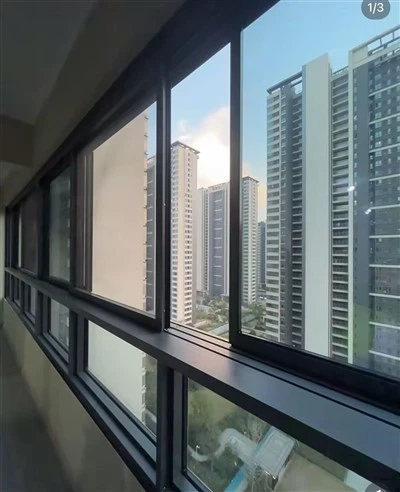
If you’re gearing up for a project, don’t leave the curtain wall cost to guesswork. We can walk you through every detail, help you balance your budget with your needs, and make sure you don’t end up with hidden costs. Hit us up to connect and chat through your specific project details—we’re here to make this as smooth as possible.
Aluminum System Windows References
- International Energy Conservation Code (IECC) for Commercial Buildings, 2021 Edition
- Curtain Wall Design and Installation Guidelines, American Institute of Architects (AIA), 2022
- Commercial Curtain Wall Cost Analysis, RSMeans Building Construction Cost Data, 2024
Huangshan City Anxin Decoration Company
We are one of the most reliable building curtain wall manufacturers and suppliers in China. With a professional production team, we are able to meet the needs of the majority of our customers. Please feel free to wholesale customized building curtain wall made in China here from our factory. Contact us for more details.
Address: Donglinxi Town, Xiuning County, Huangshan City, Anhui Province
E-mail: 1002501553@qq.com
WebSite: https://www.anxinfacade.com/
