Hey there, if you’re here because you’re in the market for a bagging and heat shrink machine, you’ve probably already realized it’s not just about the price tag or how fast it wraps a pallet. I’ve been selling these machines for over a decade, and the #1 mistake I see buyers make is skipping over the safety certifications. Yeah, I get it—you just need something that works, but trust me, a machine that’s missing the right certs isn’t just a risk for your team, it can tank your whole operation if OSHA (or whatever safety body applies to your area) comes knocking. Let me break down exactly what certifications you should be checking for, no fancy jargon, just real talk from someone who’s dealt with this stuff hundreds of times. Bagging and Heat Shrink Machine
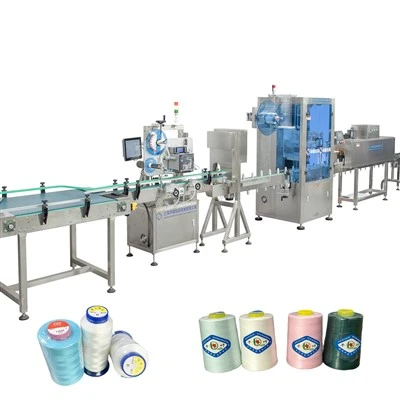
First off, let’s start with the big one that applies no matter where you’re based—unless you’re operating in a total vacuum, this is non-negotiable: ISO 13849. Wait, I know, another ISO number, but stick with me. ISO 13849 is all about functional safety for machinery, which basically means it’s tested to make sure if something goes wrong (like a hand slipping into a moving part), the machine doesn’t just keep running and injure someone. Here’s the thing about this cert—any supplier can say their machine is “safe,” but ISO 13849 requires third-party testing of the safety controls. For our machines, we don’t just slap a stop button on and call it good. We test every safety interlock—you know, the little switch that cuts power if the machine’s guard is open—for performance level d (PL d), which is the level OSHA recommends for packaging equipment like this. Last year, a customer of ours told me they almost bought a machine from a no-name brand that had a cheap interlock that failed the PL d test. That would’ve been a lawsuit waiting to happen. ISO 13849 isn’t just a piece of paper; it’s proof the machine’s safety systems actually work when you need them to.
Next up, if you’re in the US or Canada, OSHA compliance and CSA Group certification. Wait, CSA is specific to Canada, but a lot of US buyers don’t realize OSHA often references CSA standards for packaging machinery. Let me explain: OSHA doesn’t have a “bagging machine certification” per se, but they require all machinery to meet ANSI/ASME B155.1, which is the safety standard for packaging and packing machinery. CSA Group is the independent body that tests machines against ANSI standards for North America. If a machine has a CSA mark, that means it’s been tested to meet electrical and mechanical safety requirements that OSHA accepts. I’ve had customers tell me they saved a few bucks on a machine without CSA, only to have their plant shut down for a week because an OSHA inspector checked their shrink wrap line and saw no certification. OSHA’s fines aren’t chump change either—they can go up to $15,000 per serious violation. That “discount” machine? It cost them way more in lost production and fines. For our US and Canada customers, we make sure every single machine comes with a CSA cert pack, and we even help fill out OSHA paperwork if they need it—no hoops to jump through on their end.
Now, if you’re operating internationally—say, in the EU—CE marking is a must. CE isn’t just a sticker; it’s the manufacturer’s declaration that the machine meets all EU safety, health, and environmental protection requirements. When it comes to bagging and heat shrink machines, the key directives here are the Machinery Directive (2006/42/EC) and the Low Voltage Directive (2014/35/EU). Wait, but not all CE marks are created equal. A lot of off-brand machines just print a CE sticker and call it a day, but real CE marking requires third-party testing by a notified body (like TÜV SÜD or Intertek). For our EU clients, we work directly with notified bodies to test every machine before it leaves our shop. Last quarter, we had a potential buyer from Germany who had a bad experience with a machine that had a fake CE mark—its heat shield was way too thin, and it failed the Machinery Directive’s fire safety test. That’s the kind of headache you can’t afford. CE mark means you won’t have issues at border control or with local safety inspectors in any EU country, which is huge if you’re shipping goods across the bloc.
One certification I see a lot of buyers sleep on is electrical safety certification. I’m talking about UL 508A in the US, IEC 60204-1 internationally. Wait, what’s the difference? UL 508A is specifically for industrial control panels, which are the brains of your bagging and heat shrink machine. Those panels have all the wiring, relays, and circuits that run the machine. If they’re not tested to UL 508A, you’re at risk for electrical fires or shock hazards. I’ve actually had a customer who had a machine with a control panel that was wired by an unlicensed technician (the supplier cut corners to save money) and it caused a small electrical fire that shut down their warehouse overnight. UL 508A means every component in that control panel is rated for the voltage it’s handling, the wiring is installed correctly, and there’s proper overcurrent protection. IEC 60204-1 is the international equivalent, and it applies everywhere else—so if you’re in Australia, Southeast Asia, or anywhere else that uses international electrical standards, that’s the cert to look for. No matter where you are, bad electrical work on a machine is a fire hazard, and these certs prove it’s been checked.
Wait, let’s not forget heat-specific safety, because let’s be real—heat shrink machines get hot. A lot of people think “oh, it’s just a heater, what’s the big deal?” but the heat element and the conveyor around it need their own safety testing. That’s where NRTL (Nationally Recognized Testing Laboratory) certification comes into play for the US, or equivalent local body for other regions. NRTL testing checks things like maximum surface temperatures on the heat tunnel, thermal insulation to prevent accidental burns, and overheat protection that shuts the machine down if the heater gets too hot. Last year, we had a client in Florida whose old shrink machine didn’t have proper overheat protection—when the conveyor jammed, the heat tunnel kept running, melted the plastic, and started a small fire. The NRTL cert on our machines means that overheat protection is built in and tested to work. Also, for food-related products? If you’re wrapping food, you might need FDA compliance too. Yeah, that’s another one. FDA 21 CFR Part 177.1520 covers materials that come into contact with food, including the plastic film in bagging machines and the heat-resistant parts of the machine itself. If you’re wrapping snacks, produce, or any consumable, this is non-negotiable. I’ve had two food clients tell me they bought machines that weren’t FDA-compliant, and they got flagged by the FDA during a routine inspection. That meant they had to stop production for 3 days, which cost them tens of thousands in lost sales. It’s way easier to just get the cert upfront than deal with that.
Now, let’s talk about how to actually verify these certifications, because here’s the thing: anyone can send you a pdf that says “ISO 13849” or “CE,” but is it real? A lot of no-name suppliers will photocopy old certs or fake them. The easiest way to check is to ask for the certificate number and then look it up on the issuing body’s website. For ISO certs, you can check the ISO’s online registry, for CE it’s through the European Commission’s database, and UL has a free certification lookup tool. We always provide our clients with the actual cert numbers, and we even send copies of the full test reports if they ask—no hiding anything. I’ve had a few potential buyers get sketchy when I ask for proof of a cert, and that’s a red flag right there. If a supplier won’t show you a third-party test, they’re cutting corners, period.
Also, let’s be clear: you don’t need all of these if you’re in a small, specific market. If you’re just a small business in the US wrapping pallets for your own warehouse, CSA and OSHA compliance are enough, plus UL 508A for electrical. If you’re a manufacturer shipping to the EU, CE, ISO 13849, and IEC 60204-1 are musts. If you’re wrapping food, add FDA. The key is to match the certifications to your location and use case—don’t overcomplicate it, but don’t skip the ones that apply.
Here’s the other thing I’ve learned over the years: certified machines aren’t more expensive long-term. Yeah, the upfront cost might be a few hundred dollars more than a non-certified machine, but you avoid fines, lost production, lawsuits, and injuries. I’ve had a client switch to our machines because their old non-certified machine caused a back injury when an interlock failed. They had to pay the worker’s comp, hire a temp for 3 months, and pay OSHA fines—all of which was way more than the difference between our machine and the cheap one. Safety certifications aren’t just a box to check; they’re a investment in your people and your business.
At the end of the day, when you’re shopping for a bagging and heat shrink machine, don’t just look at speed, size, or price. Pull up the spec sheet, ask for the certifications, verify them, and don’t take the supplier’s word for it. If you’re not sure which ones apply to your operation, just reach out. I’ve helped hundreds of buyers walk through exactly what they need, no sales pitch, no hard sell—just real advice from someone who’s been in this game too long to cut corners.

If you’re ready to chat about what certifications your specific setup needs, or you have questions about our machines, feel free to connect with our team to talk through your requirements. We can send over full test reports, cert copies, and even walk through exactly how these safety features work on our equipment. Don’t risk your team or your operation on a machine that skips safety—reach out today to get all the details you need.
Bagging Machine References
- ISO 13849-1:2015, Safety of machinery — Safety-related parts of control systems — Part 1: General principles for design
- ANSI/ASME B155.1-2018, Safety Standard for Packaging and Packing Machinery
- IEC 60204-1:2018, Safety of machinery — Electrical equipment of machines — Part 1: General requirements
- U.S. Occupational Safety and Health Administration (OSHA), Packing and Wrapping Machinery Safety Guidelines
- U.S. Food and Drug Administration (FDA), 21 CFR Part 177.1520, Food Contact Materials: Polymers
Shanghai Peifu Packaging Machinery Co., Ltd.
We are one of the leading manufacturers and suppliers of bagging and heat shrink machine in China. With a professional production team, we are able to meet the needs of the majority of our customers. Please rest assured to buy customized bagging and heat shrink machine from our factory.
Address: No.1111, Xinlin Road, Fengxian District, Shanghai, China
E-mail: cathychensupplier@gmail.com
WebSite: https://www.peifupackaging.com/
