If you’ve ever watched a truck pull into a freight yard for a weight check, or a pallet stacker verify the load of parts before shipping, you might have glanced at the weighing hardware it uses. More often than not, that hardware falls into two categories that get mixed up constantly: mobile load cells and weighing pads. As a supplier who’s spent 12 years designing, testing, and delivering both types to industries from logistics and agriculture to manufacturing, I’ve lost count of how many times I’ve fielded calls from fleet managers, warehouse supervisors, and even engineers who can’t tell the difference beyond “one looks bigger, the other thinner.” That confusion isn’t surprising—both are portable, used for weighing, and built to handle heavy loads. But scratch the surface, and their design, use cases, accuracy, and value are worlds apart. Let’s break that down, because choosing the wrong one can cost you thousands in downtime, inaccurate loads, or even regulatory fines. Mobile Load Cells
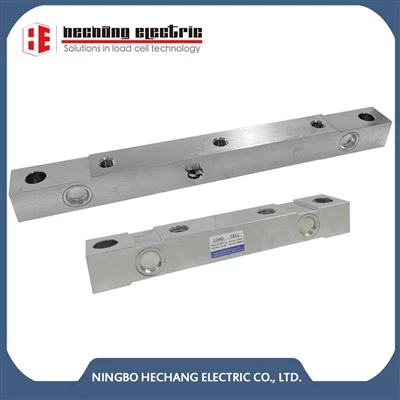
First, let’s start with the core design, because that’s where every other difference stems from. Mobile load cells are rugged, standalone devices engineered to function as the actual weighing platform, not an add-on. Think of a load cell as the “sensory core” of a scale: it’s a block of alloy steel (usually 17-4 PH stainless steel for corrosion resistance) fitted with strain gauges that bend ever so slightly under weight. When that happens, the strain gauges convert that tiny deformation into an electrical signal, which translates to a precise weight reading. A standard mobile load cell is roughly the size of a thick textbook—usually 8 to 12 inches in diameter, 3 to 4 inches tall, and weighs 15 to 25 pounds each—with a built-in junction box or wire connection to a display. You don’t set a load cell on a surface; you place it under something. For example, if you’re weighing a forklift, you drive the forklift’s wheels onto four mobile load cells, one under each tire. If you’re weighing a full semi-truck, you place a set of eight load cells (one per axle, two per tire) under each wheel assembly. They’re designed to distribute load evenly across their flat top surface, and their rigid steel casing protects the internal components from impact, dirt, and moisture.
Weighing pads, by contrast, are ultra-thin, flexible, and essentially a sheet of sensor material sandwiched between two layers of durable plastic or rubber. There’s no solid internal core—just a network of pressure-sensitive conductors printed between the layers, which change resistance when squeezed. A typical weighing pad is only ¼ to ½ inch thick, flexible enough to curve around a pallet corner or wrap around a small drum, and very lightweight (most weigh under 2 pounds per pad). They’re meant to sit on top of a flat, stable surface, not under heavy structures. You don’t place a pad under a truck’s axle; you lay it on the concrete floor of a warehouse, set a pallet on top of it, and get a reading. That flexibility is their biggest selling point, but it’s also their biggest limitation.
Next, accuracy, and this is where the gap becomes impossible to ignore for professional use. Mobile load cells are built for high precision, often with class III accuracy (±0.1% of full scale) or better—meaning a 10,000-pound load will weigh within 10 pounds of its true value. That’s non-negotiable for industries that rely on weight for compliance: trucking companies have to meet federal weight limits (in the U.S., 80,000 pounds gross vehicle weight), and a 15-pound error could mean a $1,000+ fine from state troopers at a weigh station. Mobile load cells are calibrated at the factory to maintain that accuracy over thousands of uses, and their rigid design minimizes “cross-talk”—when weight on one load cell distorts the reading on another. For example, if you place four load cells under a forklift, each will only measure the weight directly above it, with minimal interference from the other three.
Weighing pads, on the other hand, rarely exceed ±2% accuracy, and that number drops drastically in real-world use. That 10,000-pound pallet you’re weighing might be off by 200 pounds—enough to cause shipping delays, inventory discrepancies, or even overloading a rack. Why the inaccuracy? Two big reasons: first, their flexible design means they can warp if the surface they’re on isn’t perfectly flat, or if the load is uneven (like a pallet with one side heavier than the other). Second, the pressure-sensitive conductors in pads have hysteresis—meaning their readings change depending on how fast you apply weight, or how many times you use the pad. Use a pad 100 times in a month, and it might drift off calibration so much its readings are meaningless. I’ve seen a local construction company switch to weighing pads to save money, only to find they were consistently underweighing asphalt loads by 300 pounds, costing them $1,200 a month in fuel surcharges. They switched back to mobile load cells within three months.
Durability is another area that separates the two, and it’s tied directly to their design. Mobile load cells are built for heavy-duty, frequent use in harsh environments. Their steel casing can handle drops from forklifts, exposure to rain, snow, and road salt, and repeated impacts from heavy loads. Most quality mobile load cells have an IP67 rating, meaning they’re completely dust-tight and can be submerged in up to 1 meter of water for 30 minutes—ideal for loading operations at ports or gravel yards. A good set of mobile load cells will last 5 to 10 years with regular maintenance, which mostly just means cleaning the strain gauges and checking calibration once a year.
Weighing pads, by comparison, are disposable or near-disposable. Even the highest-quality weighing pads only have an IP54 rating, meaning they can handle small splashes but not immersion or heavy impact. Drop a pad from 3 feet onto concrete, and it’ll crack the internal sensor layer; run a forklift’s tire over it, and it’ll tear. They’re also sensitive to extreme temperatures: leave a pad in a truck bed during a 100°F summer day, and the sensor material will degrade; freeze it in a winter yard, and it’ll become brittle and break. Most weighing pads last 6 to 12 months with regular use, and many have to be replaced every few months if used for heavy loads. For a company that relies on daily weighing, that adds up to a lot of replacement costs—far more than the initial savings of buying a cheaper pad instead of a set of mobile load cells.
Use cases, then, are almost mutually exclusive. Mobile load cells are the go-to for portable, heavy-duty weighing where accuracy and durability matter. The trucking industry uses them for roadside weight checks when permanent scales are out of service; agriculture operations use them to weigh harvests, animal feed, or equipment that can’t be moved to a static scale; warehouses use them to weigh forklifts, pallets of heavy machinery, or containers too large to fit on a standard scale. They’re also modular: you can buy a single load cell to weigh small items like drums, or a set of 8 to 10 load cells for full semi-trucks. Many sets come with a portable display that syncs via Bluetooth to a phone or tablet, so you can take readings on the go without hauling a large scale to a job site.
Weighing pads, by contrast, are for light, low-stakes weighing where portability and flexibility trump precision. Think of a small business owner weighing a box to calculate shipping costs, a fitness enthusiast weighing equipment at home, or a retail store checking the weight of a small pallet of books to make sure it’s within shipping limits. They’re also used for temporary applications where you don’t want to modify a surface: if you’re staging a pop-up event and need to weigh display tables, or you’re moving and want to weigh boxes before renting a truck, a weighing pad works. But even then, it’s a niche use—if you’re a logistics manager at a Fortune 500 company, a weighing pad will never cut it for regulatory compliance or inventory tracking.
Now, let’s talk about cost, because that’s a big part of the decision for most businesses. A single standard mobile load cell (capable of weighing up to 10,000 pounds) costs $200 to $300. A set of four for a forklift runs $800 to $1,200, and a set of eight for a semi-truck runs $1,600 to $2,400. But remember, that’s a one-time cost, and a good set will last years. A weighing pad, by comparison, costs $20 to $50 each. That sounds cheap, until you realize you might need 10 or 15 pads for a full truck or warehouse floor, and you’ll have to replace them every few months. For example, if you replace 8 weighing pads every 6 months, that’s $160 to $400 a year—wait, no, that’s still cheap? Wait, no, I’m mixing up low-end pads with industrial pads. Heavy-duty industrial weighing pads, the kind used in warehouses, cost $100 to $200 each, so a set of 8 runs $800 to $1,600, same as mobile load cells. But then you have to replace them every 12 months, whereas mobile load cells last 5 years. So over 5 years, mobile load cells cost $1,600 upfront, no replacement cost, while weighing pads cost $800 a year in replacements, totaling $4,000. That’s the math that surprises a lot of people—they see the lower upfront cost of pads, but don’t account for recurring replacement fees and downtime when a pad fails mid-weighing.
Another key difference: calibration and maintenance. Mobile load cells require annual calibration, but it’s a simple process—you can do it with a set of known test weights, or send them back to a supplier like me for a professional calibration, which costs $50 to $100 per load cell. That’s a small cost for the accuracy and compliance it delivers. Weighing pads, on the other hand, can’t be calibrated easily. Their sensitivity drifts with use, so you have to test them against a known weight every time you use them, which is time-consuming and rarely done. Even if you do, the drift means the readings won’t get any more accurate than ±2% anyway, so it’s not worth the effort.
I don’t want to paint weighing pads as useless—they have their place. If you’re a small e-commerce business weighing packages, a $50 weighing pad works fine for your needs. But if you’re a fleet manager, a farm owner, or a warehouse supervisor who relies on weight for daily operations, mobile load cells are the only viable option. I’ve seen too many companies make the mistake of choosing pads to save a few dollars, only to end up with inaccurate readings, damaged loads, and regulatory fines that erase any initial savings.
That’s why when customers reach out to me asking about portable weighing solutions, the first question I ask is: what do you need to weigh, and how accurate does the reading have to be? If they answer “a pallet of boxes, to make sure it’s within shipping limits,” I might suggest a weighing pad for small, light use. If they answer “a semi-truck, to make sure we don’t get a $2,000 fine for overweight,” I recommend mobile load cells, and explain why the upfront investment will save them money in the long run.
At the end of the day, the confusion between mobile load cells and weighing pads comes down to marketing: manufacturers often call both “portable scales,” regardless of their actual capabilities. But as someone who’s worked with these products for years, I can tell you there’s no replacement for mobile load cells when you need reliable, accurate, heavy-duty weighing. Weighing pads are a great casual tool, but they’re not built for the demands of industrial or commercial use.
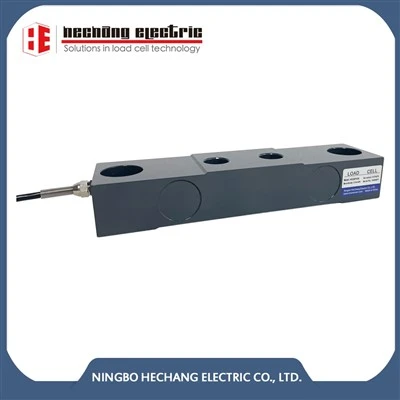
If you’re unsure which is right for your operation, or you’re looking to upgrade your current weighing hardware, don’t guess. Reach out to discuss your specific needs, whether that’s weighing trucks, forklifts, harvests, or heavy machinery, and I’ll help you find the solution that fits your budget and your requirements.
Canister Compression Load Cells References
- National Institute of Standards and Technology. (2022). Commercial Weighing and Measuring Equipment Handbook.
- Load Cell Central. (2023). Mobile Load Cell vs. Weighing Pad: Performance Comparison.
- American Trucking Associations. (2021). Federal Weight Limit Compliance Guide.
- Sensors Magazine. (2022). Pressure-Sensor Technology for Industrial Weighing Applications.
- Occupational Safety and Health Administration. (2020). Material Handling Equipment Safety Standards for Forklifts and Load Weighing.
Ningbo Hechang Electric Co., Ltd.
As one of the most professional mobile load cells manufacturers and suppliers in China, we also support customized service. We warmly welcome you to buy advanced mobile load cells for sale here from our factory. If you have any enquiry about cooperation, please feel free to email us.
Address: No.66 Yongmao West Road, Ningbo, China
E-mail: info@hcesensor.com
WebSite: https://www.hechangsensor.com/
