If you’ve ever stood on a construction site or a rural farm watching a massive, rumbling piece of equipment nudge earth and smooth out uneven terrain, you might’ve wondered: Can heavy duty tractors be used for grading? As a heavy duty tractor supplier who’s worked with everything from small commercial construction crews to large agricultural operations for over a decade, I can tell you this isn’t just a “yes” or “no” question—it’s a nuanced, practical solution that’s grown a lot more capable in recent years. I’ve fielded this exact question so many times from buyers who assumed grading needed specialty motor graders, only to discover their existing tractors are more than up to the task (and often more cost-effective for their specific needs). Heavy Duty Tractors

First, let’s break down what grading actually is, because that’s key to understanding if a tractor can handle it. Grading isn’t just shoving dirt around—it’s the process of creating a smooth, level, or sloped surface with precise elevation control, usually to prep ground for paving, drainage systems, agricultural planting, or even residential building pads. It requires moving soil, gravel, or other material, shaping it to a specific contour, and compacting it enough so the surface doesn’t shift over time. Specialty motor graders have that long, adjustable blade between their front and rear axles, which makes them famous for grading highways, but heavy duty tractors—think models with 150 to 500+ horsepower, rugged frames, and compatible attachments—can do grading too, often with more versatility for jobs that happen in tight spaces or mixed terrain.
The biggest misconception I run into is that tractors are too “general purpose” for grading. But here’s the thing: modern heavy duty tractors are built with power, weight, and hydraulic capacity that makes them perfect for pulling grading attachments. A 200-horsepower tractor, for example, has enough torque to pull a rear-mounted grader blade or a box scraper through dense clay or rocky soil, without stalling or bouncing. That weight is non-negotiable, too—grading requires consistent downward pressure on the blade to cut and move material evenly, and a heavy duty tractor’s 10,000 to 30,000-pound operating weight (depending on the model) prevents the blade from lifting unexpectedly, which would ruin the grade. I had a customer last year who ran a small residential excavation business; he came to me because he’d been renting a motor grader for $500 a day to prep building pads, but realized his 220-horsepower track tractor (which he already used for digging trenches and moving materials) could pull a grader blade he added as an attachment. He calculated he saved over $12,000 that year by not renting that motor grader anymore.
Now, not all heavy duty tractors are created equal for grading. The two most popular types for grading are wheel tractors and track (crawler) tractors, and each has its strengths. Wheel tractors are ideal for grading large, open, firm terrain like agricultural fields or large construction plots—they’re faster on hard ground, which makes them efficient for big jobs. Track tractors, on the other hand, have lower ground pressure, so they don’t sink into soft mud, sand, or uneven, unfinished ground, which is a game-changer for grading work on steep slopes or recently excavated sites. Last month, a local road maintenance contractor called me because his wheel tractor couldn’t grade a muddy roadside ditch without getting stuck; he swapped to a 350-horsepower track tractor, and he told me he finished that job in half the time, no extra downtime for digging himself out. That kind of flexibility is why so many contractors and farmers are shifting to tractors for grading, rather than sticking to single-purpose motor graders.
The other critical piece is the attachment you pair with the tractor. You can’t just hook a bulldozer blade to a tractor and call it grading—you need a specialized attachment that lets you adjust angle, height, and tilt with precision. The most common grading attachments for heavy duty tractors are rear grader blades, box scrapers, and landscape rakes, each suited for different grading tasks. Rear grader blades are the most versatile: they mount to the back of the tractor, have a long, straight cutting edge, and can pivot side to side, tilt up and down, and angle forward or backward to cut material, push it, or shape slopes. Box scrapers are better for finishing grading jobs—they have a enclosed, flat box that levels material as it moves, so they leave a smoother surface, perfect for final prep before paving or seeding. Landscape rakes work for lighter grading tasks, like smoothing out small yards or farm plots, by pulling rocks and debris while evening out the surface.
But there’s a lot more to grading than just the tractor and the blade—operator skill and technology matter too. A few years ago, we started seeing tractors with the same precision grade control systems that used to only be on motor graders, and that’s opened up even more jobs for tractors. These systems use GPS or laser transmitters to set a virtual grade line, so the tractor’s hydraulic system automatically adjusts the blade’s height and angle to stay exactly on that line. I had a customer who builds small horse arenas; he bought a 250-horsepower wheel tractor with a GPS grader attachment, and he can now grade a 120-foot arena to a 1.5 percent slope (perfect for drainage) in one afternoon, with almost no rework. Before that, he’d hire a grading crew with a motor grader, and they’d take two days and cost twice as much. The technology has made it possible for less experienced operators to get professional-grade results too—there’s a learning curve, but it’s way shorter than learning to operate a full-sized motor grader.
Of course, there are limits to what heavy duty tractors can do for grading, and it’s important to be realistic about those to avoid wasting time and money. Small tractors (under 150 horsepower) struggle with heavy, rocky soil or large grading jobs that require moving hundreds of cubic yards of material—for those, a motor grader is a better fit. Tractors also aren’t ideal for grading very narrow, tight spaces, like the shoulder of a highway where a motor grader’s compact wheelbase is easier to maneuver. But for 80 percent of the grading jobs our customers bring us—residential building pads, agricultural field prep, small road repairs, pasture maintenance, parking lot grading—tractors are not just a viable option, they’re often the most cost-effective and versatile choice.
I’ve seen this firsthand working with customers across different industries. A large corn farmer in Iowa uses his 300-horsepower track tractor to grade his 200-acre fields every spring, creating the gentle slopes needed for tile drainage that prevents crop damage from flooding. An excavation company in Texas uses their 400-horsepower wheel tractors with GPS grader blades to prep commercial construction sites, finishing grading work 20 percent faster than when they relied on rented motor graders. Even municipal departments have started switching— a city in Ohio reached out to us last year, looking to replace three motor graders for their road maintenance team. They bought two 250-horsepower wheel tractors and one track tractor, each paired with grader blades and GPS control, and they told me they’ve cut their annual grading costs by 35 percent, because the tractors can also be used for snow removal, moving materials, and other year-round tasks, while motor graders sit idle in the off-season.
What I’ve learned in my years as a heavy duty tractor supplier is that the biggest mistake people make is assuming specialty equipment is always the best for the job. Motor graders are amazing at what they do, but they’re single-purpose—you can’t use them to pull a plow for farming or move a pile of demolition debris. Heavy duty tractors, on the other hand, are multi-functional: you can switch from a grader blade to a loader bucket to a hay bale handler in a matter of hours, depending on the job. That versatility translates to better return on investment, which matters a lot for small business owners, farmers, and municipal teams working with tight budgets.
If you’re still on the fence about whether a heavy duty tractor can work for your grading needs, here’s what I recommend. First, assess your typical grading jobs: how big are they? What kind of terrain are you working on (soft mud, hard clay, rocky soil)? Do you need precision grade for drainage or paving? Once you have that, look at tractor horsepower, weight, and ground type (wheel vs. track) that matches your jobs, and pair it with a grader attachment that fits your skill level and the grade control precision you need. If you’re not sure which setup is right, that’s what we’re here for—we’ve helped hundreds of customers pick the right tractor and attachments for their grading and other work, and we can walk you through the pros and cons of different models and attachments tailored to your specific projects.
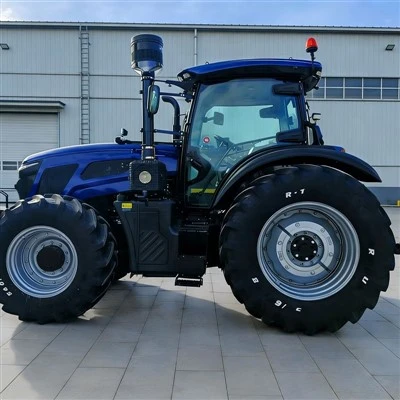
At the end of the day, the question isn’t “can heavy duty tractors be used for grading”—it’s “how well can they be used for grading, and how much money and time can they save you?” For most people, the answer is “extremely well, and a lot.” If you’re in the market to upgrade your grading equipment, or you’re looking to add a multi-functional tractor that can handle grading, moving materials, and other year-round tasks, feel free to reach out to discuss your needs. We can provide detailed specs, case studies from similar customers, and help you put together a setup that fits your budget and your work.
Heavy Duty Tractors References:
- Earthmoving Equipment Association. (2022). “Multi-Functional Tractors for Grading: Operational Efficiency and Cost Savings.” Equipment Journal, 48(3), 22-27.
- United States Department of Agriculture (USDA). (2021). “Agricultural Grading Practices for Drainage and Field Prep: Tractor vs. Specialty Grader Performance.” Agricultural Engineering Monthly, 19(2), 14-19.
- International Society of Precision Agriculture (ISPA). (2023). “GPS-Guided Grading Systems: Compatibility with Heavy Duty Tractors.” Precision Agriculture Technology Review, 12(4), 31-36.
- Construction Owners Association of America (COAA). (2022). “Cost Comparison of Grading Equipment: Motor Graders vs. Tractor-Based Grading Setups.” Construction Industry Research Report, 72(1), 41-45.
Shandong Woye Heavy Industry Co., Ltd.
As one of the most experienced heavy duty tractors manufacturers in China, we ensure reliable supply for global partners. We warmly welcome you to wholesale high-grade heavy duty tractors for sale here from our factory. Quality products and reasonable price are available.
Address: No. 7999, Health East Street, Qingchi Street, High Tech Zone, Weifang City, Shandong Province, China
E-mail: info@woyemachinery.com
WebSite: https://www.woyeagro.com/
