If you’ve ever held a crisp, vibrant print ad, a neatly packaged cereal box, or a detailed textile pattern, you’ve witnessed the quiet work of anilox rollers. As a ceramic anilox roller supplier with decades in the industry, I’ve seen how these unassuming cylindrical parts turn messy liquid ink into consistent, controlled layers that make printing work. Most people outside the press room never stop to wonder what anilox rollers do—they’re the unsung heroes of flexographic, gravure, and even offset printing, doing the heavy lifting that keeps every print job on spec. Let’s break down their core functions, how they’ve evolved, and why ceramic anilox rollers are the best choice for most modern printing operations. Ceramic Anilox Roller
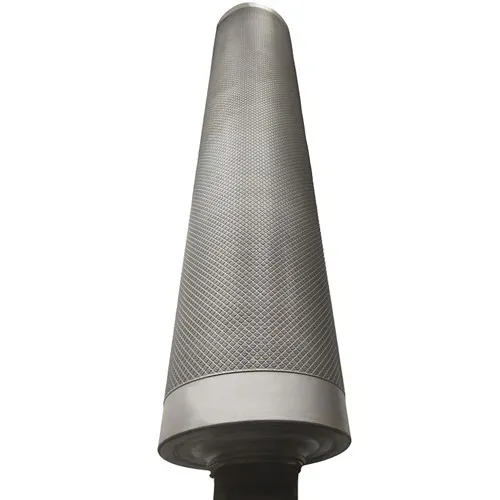
First, let’s start with the basics: without anilox rollers, you can’t have consistent ink transfer. Printing isn’t just slapping ink on a surface; it’s a precise process. Think of a flexo press: you have a plate cylinder with your design, a doctor blade to scrape excess ink off, and then the anilox roller sits right between the ink reservoir and the plate cylinder. Its whole job is to carry a measured, uniform amount of ink from the ink pan (or chambered ink system) to the printing plate. No anilox roller means too much ink gushing onto the plate, leading to smudges, runny text, or faded colors. Too little, and you get patchy prints that turn customers away. That’s the first, most critical function: metering ink. But it’s not just any metering—it’s hyper-specific, tailored to the type of print job. A high line count anilox roller works for fine detail, like a product photo on a cosmetics box, while a lower line count handles heavy coverage, like a solid black background on a shipping label. The cells engraved into the anilox roller’s surface hold exactly the right volume of ink for each job, so every square inch of the print gets the same amount.
Next, anilox rollers act as a bridge between the fluid ink and the rigid printing plate. Ink is a liquid, so it needs a way to be transferred evenly across a curved plate surface. The anilox roller’s engraved cells are designed to conform to the shape of the plate cylinder, so when the two roll against each other, every part of the plate picks up the same thin layer of ink. This eliminates “ink variation”—a common problem where one side of the print is darker than the other because the plate received more ink there. For long print runs, that consistency is non-negotiable. Imagine a snack manufacturer printing 10 million chip bags: a single ink variation on 10,000 bags is a costly mistake. Anilox rollers take that risk out of the equation by ensuring the transfer is uniform from the first impression to the millionth.
Then there’s a function that many people overlook: cleaning and maintaining print quality over the life of the roller. Wait—how does a part that holds ink clean itself? Well, not exactly, but the design of the anilox roller’s cells prevents ink from drying or building up in the wrong places. When a doctor blade presses against the anilox roller, it scrapes off all excess ink from the top of the roller, leaving only the ink trapped inside the engraved cells. That means no ink residue sits on the surface to cause blotches, and the cells themselves are sized so they don’t get clogged with dried ink or debris. Of course, that’s only true if the anilox roller is made of the right material. Early anilox rollers were steel, and they wore down quickly. After just a few runs, the cells would deform, leading to inconsistent ink transfer. Steel rollers also scratched easily, leaving permanent marks on the print. Ceramic anilox rollers changed all that by adding a hard, dense ceramic coating to the steel core. That ceramic layer is 10 times harder than steel, so it resists wear, is less prone to scratching, and the engraved cells stay sharp far longer. That’s why today, 80% of commercial printing operations use ceramic anilox rollers—they last longer, perform better, and save money in the long run.
Let’s dive deeper into the engineering of anilox rollers to see how these functions work. The two key specs for any anilox roller are line screen (LPI, or lines per inch) and cell volume (BCM, or billion cubic microns per square inch). Line screen determines the fineness of detail: a 180 LPI roller is for solid colors and thick lines, while a 600 LPI or higher is for fine text and high-resolution images. Cell volume is how much ink each cell holds, which directly translates to how much ink is transferred to the print. For example, a BCM of 1.5 is ideal for delicate photo prints, while a BCM of 3.5 is better for heavy text on corrugated boxes. When we engrave a ceramic anilox roller, we use laser engraving to create precise, uniform cells—no two cells are the same size, and they’re angled to fit perfectly with the doctor blade’s angle. That engraving has to be consistent across the entire surface of the roller, because even a 0.1% variation in cell volume can lead to a noticeable difference in print density.
One common misconception is that anilox rollers are one-size-fits-all. A roller that works for a flexo press won’t work for gravure, and a roller for packaging won’t work for textiles. Textile printing, for example, uses water-based inks that are thinner than standard inks, so the anilox roller needs shallower cells to hold less ink without running. Corrugated packaging uses thicker inks and heavier substrates, so it needs deeper cells to transfer enough ink to stick to the rough corrugated surface. That’s why a good anilox supplier doesn’t just sell a roller—they work with printers to match the roller to their specific press, ink type, and print job. For many small print shops, choosing the wrong anilox roller leads to reprints, wasted ink, and damaged plates. For large commercial operations, the wrong roller can bring a entire press run to a halt, costing thousands of dollars in downtime.
Another key function of anilox rollers is compatibility with different ink systems. Modern printing uses a range of inks: solvent-based, water-based, UV-cured, and even soy-based inks for sustainable packaging. Each ink has different viscosity, drying time, and adhesion properties, so the anilox roller has to be designed to work with it. UV-cured inks, for example, cure instantly when exposed to light, so the anilox roller needs cells that don’t trap cured ink residue. Ceramic anilox rollers are especially good for this because the smooth ceramic surface doesn’t bond to cured ink, making it easier to clean and extend the roller’s life. Steel rollers, by contrast, absorb small amounts of ink over time, leading to cell clogging and uneven transfer. That’s why switching to ceramic anilox rollers is one of the most common upgrades printers make to reduce waste and improve quality.
Let’s talk about the long-term impact of anilox rollers on a printing operation. A high-quality ceramic anilox roller can last 10 to 15 times longer than a steel roller, depending on usage. That means less frequent replacements, lower costs, and less downtime when changing rollers. For a print shop running 24/7, that adds up to significant savings. Also, because ceramic rollers provide more consistent ink transfer, the number of reprints drops. A 2022 study by the Flexographic Technical Association (FTA) found that printers using ceramic anilox rollers saw a 12% reduction in print defects and a 8% drop in ink waste compared to those using steel rollers. That’s not just a number—it’s real money for businesses. For a printer producing 1 million labels a month, a 12% reduction in defects means 120,000 fewer labels to reprint, and 8% less ink means hundreds of dollars saved every month on supplies.
I’ve seen first-hand how a good anilox roller can turn a mediocre print job into a standout one. Last year, a client who printed gourmet food packaging came to us frustrated because their steel anilox rollers were leaving faint white streaks on their product labels—streaks that made the organic design look unprofessional. They’d tried changing their ink and adjusting the press pressure, but nothing worked. We recommended a custom ceramic anilox roller with a 400 LPI line screen and a 1.8 BCM cell volume, matched to their water-based soy ink. Within the first run, the streaks were gone, and they told us their product sales went up 7% a month after switching, because the labels looked crisp and high-quality. That’s the power of a well-functioning anilox roller: it’s not just a part, it’s a tool that directly impacts a brand’s bottom line.
Of course, even the best ceramic anilox rollers need proper care to keep working. Clogged cells are the number one enemy of anilox rollers. When ink dries in the engraved cells, it can’t hold the right amount, leading to inconsistent transfer. Cleaning methods vary: manual brushing is fine for small rollers, but large commercial rollers need ultrasonic cleaning to get into the tiny cells without damaging the ceramic surface. Many printers forget that ceramic rollers are delicate—they can be scratched by hard cleaning tools, and scratches will transfer to the print. That’s why it’s important to work with a supplier that offers cleaning and maintenance services, not just selling the roller. As an anilox roller supplier, we offer in-house ultrasonic cleaning, roller profiling to check cell volume, and re-engraving services to extend the life of used rollers. That way, printers don’t have to buy a new roller every few months, cutting their costs even further.
Now, let’s address the shift in the printing industry towards sustainability. More and more brands are moving away from plastic packaging and toward recyclable, compostable substrates, and water-based or UV-cured inks. These inks are often thinner or more reactive, so they require anilox rollers with precise cell sizing and a non-porous surface—exactly what ceramic anilox rollers provide. Our team has worked with dozens of sustainable packaging brands to develop custom anilox rollers for their low-VOC inks and biodegradable substrates. The ceramic surface’s resistance to ink adhesion means less leftover ink is wasted, and the longer life of the roller reduces the number of parts that end up in landfills. That’s a triple win: better print quality, lower costs, and a smaller environmental footprint.
As someone who’s spent years in the anilox roller industry, I’ve seen how many printers undervalue this small part. They focus on the press, the plates, and the ink, but the anilox roller is the heart of the ink transfer process. Without it, even the best press can’t produce a consistent, high-quality print. For anyone running a printing operation, choosing the right anilox roller—specifically a ceramic one—is one of the most impactful decisions you can make to improve your work and your bottom line.
If you’re looking to upgrade your anilox rollers, need custom sizing for a specific print job, or have questions about cleaning and maintenance, don’t hesitate to reach out for procurement discussions. We’re here to help you find the right solution for your printing needs.
Embossing Roller References
Flexographic Technical Association. (2022). Anilox Roller Performance Benchmark Report.
Gravure Association of America. (2021). Ceramic Anilox Roller Durability and Ink Transfer Study.
International Corrugated Packaging Foundation. (2020). Sustainable Printing Practices for Packaging.
Kunshan Hanhan Co., Ltd.
We’re well-known as one of the leading ceramic anilox roller manufacturers and suppliers in China. We warmly welcome you to buy high quality ceramic anilox roller made in China here from our factory. If you have any enquiry about cooperation, please feel free to email us.
Address: No. 1093, B Zone, No. 2 Xugongqiao Rd, Huaqiao Town, Kunshan City, Suzhou, Jiangsu, China
E-mail: info@kshhroller.com
WebSite: https://www.kshh-roller.com/
