Hey everyone, it’s Sam from [Your Company Name]—just here to chat about something we get questions on all the time at the pole coils shop: how temperature messes with pole coil resistance. I know, sounds super technical, but stick with me—this stuff actually matters if you’re working with coils for motors, transformers, generators, even industrial heating. I’ve seen it firsthand out in the field, not just from textbooks, so I’ll keep it real, no stuffy jargon. Pole Coils
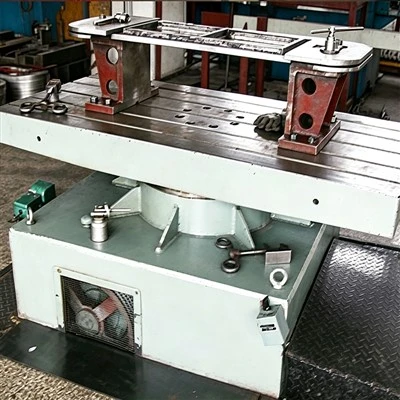
First off, let’s cut to the chase—what’s pole coil resistance, anyway? Quick recap for anyone who’s half-asleep during a tech meeting: pole coils are those copper (or sometimes aluminum) wrapped wire loops that create the magnetic field in electric motors, generators, and big transformers. Resistance is just how much the coil fights against the flow of electric current, right? Lower resistance = more efficient, less energy wasted as heat. Makes sense.
Now, here’s the big question: when the temp goes up or down, does that resistance change? You bet. I’ve had a customer call us at 2 a.m. once panicking because his motor died mid-production—turns out his pole coil heated up on the job, resistance spiked, and current dropped so low the motor couldn’t turn. That’s the kind of real stuff I want to talk about, not just equations you’ll forget by lunch.
Let’s break down why this happens. Most pole coils use copper wire—copper’s a metal, and metals have what’s called a “crystal lattice” structure, like a grid of atoms all packed together. When it’s cold, those atoms are hanging out nice and still, so electrons (the little things carrying current) can zoom through the wire without bumping into much. Less bumps = lower resistance. When it gets hot? Those atoms start wiggling like crazy at their grid spots—vibrating harder, moving around more. Now the electrons have to dodge all those wiggling atoms, so they slow down. More collisions = higher resistance. That’s the simple version, no fancy physics degree needed.
Wait, hold on—this isn’t the same for all materials, right? We use aluminum for some cheaper, lighter pole coils, and yeah, aluminum does the exact same thing. But the rate of change is a little different. Copper’s resistance goes up about 0.004% for every 1 degree Celsius it heats up, and aluminum is around 0.0043% per °C. Small number, but over a long run of operation, that adds up fast. Let’s do a quick example: if a coil’s running at 20°C when it starts, and after a few hours of work it’s up to 80°C (that’s a 60°C jump), copper resistance goes up roughly 24%—that’s a quarter more resistance than when it was cool. That’s massive for efficiency, trust me.
But what about cold temperatures? Like, if your pole coil is working in a freezer or up north in winter? Then resistance drops. That sounds good on paper—lower resistance means less heat waste, right? But wait, it’s not all sunshine. I once sold a set of coils to a customer who was testing a machine in Alaska in January. He called me complaining the motor was running way too fast. Turns out the super cold temps dropped the coil resistance so much that current spiked, which made the motor’s RPM skyrocket beyond what it was designed for. They had to add resistors to fix it. So yeah, cold changes things too—just the opposite direction of hot, but still impactful.
Now, let’s get into what this actually means for your pole coils, beyond just textbook facts. I talk to clients every week who are either overestimating or underestimating how temp will affect their coils. For example, if you’re designing a new motor that’s going to run 24/7 in a factory where ambient temp hits 50°C, you can’t buy a coil rated for room temp. If you do, it’ll overheat, burn out, and cost you downtime (we’ve replaced so many burned coils because of this). On the flip side, if your application is in a cold climate or a refrigerated environment, you can’t ignore the lower resistance either—you need to adjust your current levels or size your coils accordingly, not just pick whatever’s cheaper.
Another thing: pole coils don’t just get hot from the environment, right? The current flowing through them also generates heat. That’s called “Joule heating,” and it’s a loop—higher resistance means more heat from current, which makes resistance go up even more, which makes more heat. That’s a vicious cycle, and it’s how a lot of coils fail prematurely. We see this a lot in undersized coils—people buy a smaller, cheaper coil to save money, it runs hotter, resistance spikes, overheats, dies in a few months instead of years. It’s not worth cutting corners here, trust me.
Wait, what about if a coil is super hot—like, above 100°C? Does that follow the same rule? Kind of, but once you get way above their rated temp, the material starts to break down. Copper wire’s insulation can melt, the varnish holding the windings together can char, and then you’re not just dealing with resistance changes—you’re dealing with short circuits, coil failure, even fire hazards. I’ve seen a transformer fire at a distribution center once because the pole coil overheated so bad the insulation caught. Scary stuff, and all because someone didn’t account for temp-induced resistance changes.
Let me also clear up a common myth I hear all the time: people think resistance changes because the wire expands when it’s hot, so it’s longer. Yeah, metals do expand when heated, but that expansion is tiny—like, a copper wire only gets 0.0017% longer per °C. That’s not nearly enough to cause the resistance change we’re talking about. The main culprit is those wiggling atoms in the crystal lattice, not the wire stretching. Good to know, right? I used to think it was the length too until an old mentor of mine at the shop set me straight.
Now, what does this mean when you’re choosing pole coils for your specific job? First, give us (the suppliers) the full details of your application. Not just “I need a pole coil”—tell us where it’s running: ambient temp range, how long it’s on each day, how much current it’s carrying, even the environment (is it dusty, wet, cold, hot?). That way we can size the coil correctly, use the right wire material (copper vs aluminum), and even adjust the insulation type to handle whatever temps you’re dealing with. For example, if you’re working in a desert where temps hit 45°C, we’ll use thicker copper wire to offset the higher resistance at high temps, or add extra insulation that can handle up to 120°C so it doesn’t break down.
We also test every coil we ship for resistance at different temps, just to make sure it performs as expected. Last month, a customer ordered 50 coils for a mining operation out in Arizona—they told us the coils would be running outside in 110°F (that’s ~43°C) heat. We tested a sample coil at that temp, measured the resistance, and made sure it was within their required specs before shipping. Saved them from a huge headache when they got on-site and it worked perfectly on day one.
If you’re out there struggling with a pole coil that keeps failing, or just trying to pick the right one for a new project, don’t guess. That’s how you end up with downtime, lost money, or damaged equipment. I get it—there’s a lot of tech stuff, and it’s easy to gloss over the resistance-temp link, but it’s one of the biggest factors in how long your pole coils last and how efficient they are.
At the end of the day, pole coils are the unsung heroes of so much of the machinery we use every day, and temp-induced resistance changes are one of the most important (and overlooked) parts of getting them right. If you have questions about which coil will work for your temp range, or need to replace old coils that are failing because of heat, just reach out to us. We don’t do generic, one-size-fits-all coils here—we work with you to figure out exactly what you need, even if you don’t know all the tech jargon yourself.
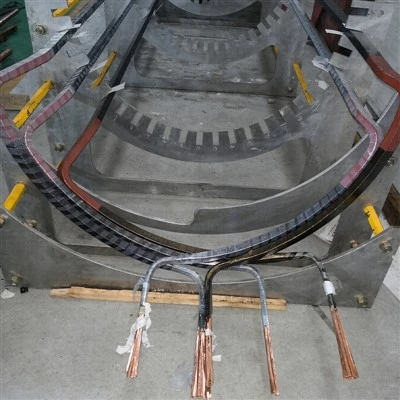
Don’t let temperature mess up your operations—let’s get your pole coils right from the start. Hit us up anytime to chat, no pressure, no sales pitch that feels like a robot wrote it. We’re here to help you keep your machines running smooth.
Motor Coils References
- Nave, C. R. "Electrical Resistance of Metals." HyperPhysics, Georgia State University, 2024.
- Hambley, Allan R. Electrical Engineering: Principles and Applications, 7th ed., Pearson, 2019.
- "Pole Coil Design and Application Guidelines." Industrial Electrical Association, 2022.
- Callister, William D. Materials Science and Engineering: An Introduction, 10th ed., Wiley, 2018.
- "Temperature Effects on Electrical Conductors." Institute of Electrical and Electronics Engineers (IEEE) Standards, 2021.
Hangzhou Purun Science & Technology Co., Ltd.
As one of the most professional pole coils manufacturers and suppliers in China, we have world-leading production equipment and strong manufacturing capabilities. Please rest assured to wholesale customized pole coils made in China here from our factory. Welcome to contact us for pricelist.
Address:
E-mail: Purun_sci_tech@163.com
WebSite: https://www.puruncoil.com/
