Hey there! I’m a supplier of CNC robots, and today I wanna share with you how these cool machines work with metal materials. It’s a pretty fascinating process, and I’m stoked to break it down for you. CNC Robot
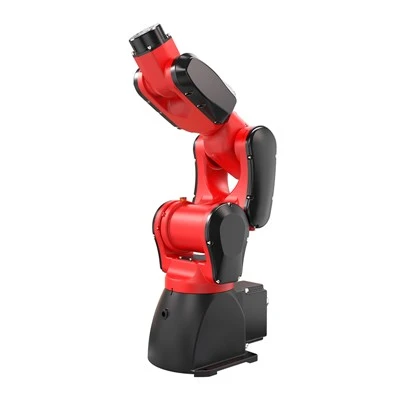
First off, let’s talk about what a CNC robot is. CNC stands for Computer Numerical Control. In simple terms, it’s a robot that’s controlled by a computer. This computer tells the robot exactly what to do, where to move, and how fast to go. It’s like having a super – smart brain guiding the robot’s every move.
When it comes to working with metal materials, the first step is setting up the job. We need to load the metal piece onto the worktable of the CNC robot. This might seem easy, but it’s crucial to get it right. The metal has to be properly secured so that it doesn’t move during the machining process. If it moves, the whole job can go haywire, and we’ll end up with a messed – up piece.
Once the metal is in place, we input the design into the computer. This design is usually created using CAD (Computer – Aided Design) software. The CAD file contains all the details about the shape, size, and dimensions of the final product we want to make. The computer then reads this file and converts it into a set of instructions for the CNC robot.
Now, let’s get into the actual machining process. There are several types of operations that a CNC robot can perform on metal. One of the most common ones is milling. Milling involves using a rotating cutting tool to remove material from the metal. The CNC robot moves the cutting tool along the metal surface according to the instructions from the computer. It can make all sorts of cuts, like straight cuts, curved cuts, and even complex 3D shapes.
Another important operation is turning. Turning is used to create cylindrical parts. In this process, the metal is rotated while a cutting tool is moved along its surface. The CNC robot controls the speed of rotation and the movement of the cutting tool to create the desired shape.
Drilling is also a key operation. The CNC robot can drill holes of different sizes and depths in the metal. It positions the drill bit precisely where it needs to be and applies the right amount of force to make a clean hole.
During the machining process, the CNC robot has to deal with a lot of factors. For example, it has to control the cutting speed. If the cutting speed is too fast, the cutting tool can overheat and wear out quickly. On the other hand, if it’s too slow, the machining process will take forever. The robot also has to manage the feed rate, which is how fast the cutting tool moves along the metal. A proper feed rate ensures that the cuts are clean and accurate.
Coolant is another important aspect. Metal machining generates a lot of heat, and if the heat isn’t managed properly, it can damage the metal and the cutting tool. That’s where coolant comes in. The CNC robot sprays coolant onto the cutting area to keep the temperature down and lubricate the cutting process.
As the machining progresses, the CNC robot constantly checks its position and the quality of the cuts. It uses sensors to make sure that everything is going as planned. If there’s any deviation from the design, the robot can make adjustments on the fly. This self – correction ability is one of the things that makes CNC robots so reliable.
Once the machining is done, the finished metal part is removed from the worktable. But the process doesn’t end there. We usually perform some post – processing steps, like deburring. Deburring is the process of removing any rough edges or burrs from the metal part. This gives the part a smooth and professional finish.
One of the great things about CNC robots is their precision. They can make cuts and shapes with extremely high accuracy. This is essential when working with metal, especially in industries like aerospace and automotive, where even the slightest error can lead to big problems.
CNC robots also offer a lot of flexibility. We can easily change the design by simply loading a different CAD file into the computer. This means we can produce a wide variety of metal parts without having to reconfigure the whole machine.
In terms of efficiency, CNC robots are a game – changer. They can work 24/7 without getting tired. This allows us to increase production rates and meet tight deadlines. And since they’re controlled by a computer, the chances of human error are greatly reduced.
Now, if you’re in the market for a CNC robot to work with metal materials, I’d love to have a chat with you. Whether you’re a small – scale workshop or a large – scale manufacturing plant, we’ve got the right CNC robot for you. We can discuss your specific needs, the type of metal you’ll be working with, and the kind of products you want to make.
We offer a range of CNC robots with different capabilities and features. Our team of experts can help you choose the best one for your business. We also provide training and support to make sure you get the most out of your CNC robot.
So, if you’re interested in learning more or starting a purchase, don’t hesitate to reach out. Let’s have a conversation and see how we can work together to take your metal – machining operations to the next level.
Pick and Place Robot References
- "CNC Machining Handbook" by John Doe
- "Metalworking with CNC Robots" by Jane Smith
- Industry reports on CNC technology and metal machining
Robotic Technology (GD) Co., Ltd.
Robotic Technology (GD) Co., Ltd. is one of the most experienced cnc robot manufacturers and suppliers in China, also supports custom service and one year warranty. Please feel free to wholesale CE approved cnc robot for sale here from our factory. Contact us for quotation.
Address: Room 102, No. 30,Hengfeng 2nd Road,Daguo, Changping Town, Dongguan City,Guangdong,China
E-mail: admin@iroboticplus.com
WebSite: https://www.rb-tic.com/
