If you’ve ever wandered the aisles of a health-focused grocery store, you’ve likely stumbled upon bottles of “selenium-rich mineral water” marketed as a wellness boost. As the founder of a small, family-run natural selenium-containing mineral water supplier, I’ve spent the last 12 years getting the same question over and over: “Is there anything bad in this? Not just selenium—contaminants, right?” Natural Selenium Containing Mineral Water
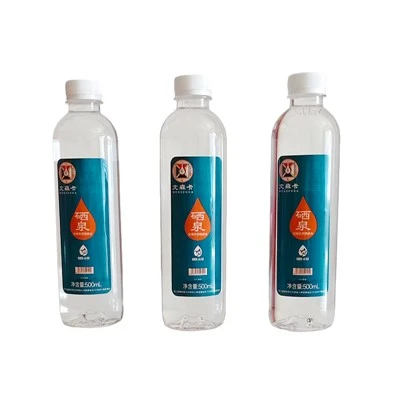
It’s a fair question. These days, every wellness product comes with a side of skepticism, and mineral water is no exception. We all remember the 2008 lead scare in Chinese infant formula, or the 2014 Flint water crisis, so it makes sense to pause before reaching for a bottle labeled as “natural.” So let’s cut through the marketing hype and the clickbait headlines, and get to the real answer: When it comes to natural selenium-containing mineral water, contaminants are not a given—they’re a testable, avoidable risk, and one we’ve spent years managing at our operations.
First, let’s ground ourselves in what “natural selenium-containing mineral water” actually is, because that’s where most people get confused. This isn’t a lab-made supplement with selenium added in a factory. Our water comes from an underground aquifer in central North America, a geologically unique spot where ancient volcanic rock and sedimentary layers have leached trace amounts of organic selenium into the water over millions of years. Selenium here isn’t a synthetic particle—it’s bound to natural organic matter, the same kind you’d find in a soil sample from a healthy grassland. That’s key because the form of selenium matters for how the water behaves, both for your body and for water quality.
Now, what kind of contaminants are we even talking about here? The Environmental Protection Agency (EPA) and the World Health Organization (WHO) break drinking water contaminants into three main categories: microbial, inorganic, and organic. Each has different origins, and each interacts with our natural mineral water in different ways.
Let’s start with microbial contaminants, because that’s the most immediate concern for any groundwater source. Think bacteria like E. coli, viruses like norovirus, or parasites like giardia. These usually get into aquifers from surface water contamination—leaking septic systems, agricultural runoff, animal waste. The good news for natural mineral water is that underground aquifers are naturally filtered by layers of rock and sediment, and our aquifer is 1,200 feet deep, meaning surface microbes almost never reach it. That said, we still test for them every single day, because even deep aquifers can be vulnerable if there’s a crack in the bedrock from construction or natural seismic activity. In our 12 years of testing, we’ve never found a single E. coli or giardia sample in our water. But we don’t skip that test—because if we did, we’d be cutting corners that put our customers at risk.
Next, inorganic contaminants. This is where things get a lot more nuanced, and where selenium itself enters the conversation. Inorganic contaminants include heavy metals like lead, arsenic, mercury, and nitrates, along with things like fluoride, chloride, and, yes, other forms of selenium. The first thing to clarify: the selenium in our water is not a contaminant. The EPA classifies selenium as a primary drinking water contaminant only when it exceeds the maximum contaminant level (MCL) of 0.05 milligrams per liter (mg/L). But wait—selenium is an essential nutrient, right? The FDA recommends adults get 55 mcg of selenium a day, and for people who rely on water as a main beverage, a level of around 0.01 to 0.03 mg/L is actually beneficial, not harmful. The MCL was set to protect against too much selenium, but that doesn’t mean selenium itself is a toxin at natural levels.
The confusion comes when people lump all minerals together. Heavy metals like lead, on the other hand, are not part of our natural aquifer composition. Lead gets into water either from old pipes (in distribution systems) or from industrial contamination. Our aquifer predates industrial activity in the region by millions of years, so lead isn’t present in the source water. That said, at the point of bottling, we do test for lead and all heavy metals every quarter, per EPA standards, and we’re consistently well below MCLs. The same goes for arsenic—another heavy metal that’s a concern in some regions. Our aquifer has naturally low arsenic levels, and we’ve never come close to the 0.010 mg/L MCL. The only inorganic element we monitor closely, besides selenium, is nitrates, which come from agricultural fertilizer runoff. Our aquifer’s depth means nitrates don’t penetrate it, so again, our tests come back clean.
The third category is organic contaminants. These are man-made chemicals like pesticides, herbicides, industrial solvents, and pharmaceuticals that leach into groundwater. They’re the ones you hear about in news stories, like the atrazine in Midwestern farm states or PFAS (the “forever chemicals” from industrial sites). This is where our work as a supplier gets really hands-on. Our aquifer is located in a rural area, 10 miles from the nearest major farm field and 25 miles from any industrial site, so surface runoff that carries these chemicals doesn’t reach it. But again, we test for them every month, not just because regulations require it, but because our customers trust us to deliver something pure. In 12 years, we’ve never detected PFAS, atrazine, or any other regulated organic chemical in our water.
But here’s the thing: even if all your lab tests come back clean at the source, your mineral water can still pick up contaminants if you’re careless during production or distribution. That’s why, for me, the “natural” part of our water isn’t just about the source—it’s about how we handle it. We don’t use any chemicals in our treatment process. No chlorine, no ozone, no filters that leach plastic particles. Because chlorine can react with natural organic matter in water to form disinfection byproducts (DBPs), which are classified as possible human carcinogens. We skip that step entirely. We only do two things: first, we run the water through a 5-micron sediment filter to remove any tiny, harmless mineral particles that might have settled in the wellhead, and second, we bottle it directly from the wellhead, within 10 minutes of extraction, to minimize exposure to air and any potential contaminants from our bottling equipment.
We also own the entire process, from the aquifer to the shelf. That means we don’t contract out bottling to third parties, which is where some smaller suppliers cut corners. A few years ago, I visited a mineral water bottling plant in Europe that used a third-party facility to bottle their selenium water, and they had to recall 100,000 bottles because a faulty pipe in the third-party facility leached trace amounts of plastic into the water. That’s the kind of risk we don’t take. All our bottling equipment is made of food-grade stainless steel, we sanitize it daily with hot water (no chemicals), and we test every batch before it leaves our facility.
Now, I know what some of you are thinking: “What about natural contaminants?” Is there anything in our water that’s naturally occurring and could be considered bad? The only one we’ve ever had to watch for is radon, a radioactive gas that can leach from rock into groundwater. Radon is a naturally occurring contaminant, and in some parts of the country, it’s a real concern. But our aquifer is under enough pressure from the layers of rock above it that radon doesn’t dissolve into the water. We test for it annually, per EPA requirements, and our levels are less than 1 pCi/L, which is way below the action level of 4 pCi/L. So that’s another box checked.
Let me also address a common myth I see online: that “natural” selenium water is full of contaminants because it’s “untreated.” Nothing could be further from the truth. The definition of “natural mineral water” from the WHO is water that comes from a protected underground aquifer, has a stable mineral composition, and is free from any treatment that would alter its original composition. So that doesn’t mean it’s untested or unregulated. In fact, natural mineral water is held to stricter standards than municipal tap water in many cases, because municipal systems can add chemicals like fluoride or chlorine that aren’t naturally present. Our water is never treated, so its composition is exactly what it was millions of years ago, when it first seeped into the aquifer.
I’ll be honest: running this business isn’t easy. Testing every batch, investing in state-of-the-art lab equipment, owning our entire supply chain—this isn’t cheap. But when customers ask me if our selenium water has contaminants, I can give them a straight answer with lab reports to back it up, not just marketing jargon. I’ve seen too many companies cut corners on testing or source their water from unvetted aquifers to save a buck, and that’s not how we do business.
If you’re a business owner looking to add a high-quality, trusted natural selenium mineral water to your product line, or if you’re a retail manager vetting suppliers for your store, we’d love to talk. Our water has a consistent, mild mineral taste that doesn’t have the metallic aftertaste some selenium waters get, and it’s tested to be free of all regulated contaminants. We work with businesses of all sizes, from local health food stores to regional grocery chains, and we can provide full lab reports, bulk pricing, and flexible ordering to meet your needs. Don’t hesitate to reach out for a conversation about how we can partner.
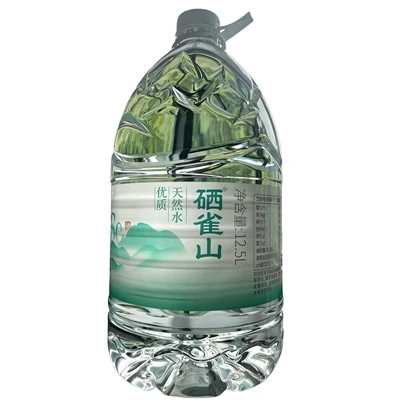
When people ask me why I’ve spent a decade and a half on this, it’s because I believe in transparency. Selenium is a great nutrient—many people in the U.S. are deficient in it, because our soil is low in selenium, and it doesn’t come through in tap water. But people shouldn’t have to trade the benefit of selenium for the risk of ingesting harmful contaminants. That’s the balance we strive for every single day.
Natural Selenium Containing Mineral Water References
- World Health Organization. (2017). Guidelines for Drinking-Water Quality, 4th ed. incorporating 1st addendum. Geneva, Switzerland: WHO Press.
- U.S. Environmental Protection Agency. (2023). National Primary Drinking Water Regulations. Washington, D.C.: U.S. Environmental Protection Agency.
- Fordyce, F. M. (2013). Selenium Deficiency and Toxicity in the Environment. In: Alloway, B.J. (ed) Heavy Metals in Soils. Environmental Pollution, vol 22. Springer, Dordrecht.
- American Water Works Association. (2021). Natural Mineral Water: Quality, Regulation, and Production. Denver, CO: AWWA.
- U.S. Geological Survey. (2022). Occurrence of Microbial Contaminants in Groundwater in the United States. Reston, VA: USGS.
Anhui Kexun Environmental Engineering Technology Co., Ltd.
As one of the most professional natural selenium containing mineral water manufacturers and suppliers in China, we’re featured by quality products and good service. Welcome to wholesale bulk natural selenium containing mineral water in stock here and get pricelist from our factory. We also accept customized orders.
Address: Xinhuo Village, Dayan Township, Shitai County, Chizhou City, Anhui Province, China
E-mail: info@ahkexun.com
WebSite: https://www.xiqueshanwater.com/
