If you’ve ever swung a lacrosse stick that split mid-game, caught a skateboard wheel that cracked during a race, or adjusted a bike saddle that bent under 50 pounds of pressure, you know sports equipment doesn’t just need to work—it needs to hold up. As someone who’s spent the last decade supplying 3D printing wax materials to manufacturers and small-batch makers alike, I get the quiet frustration of designers who want to innovate but hit a wall: how do you test a custom, high-performance sports part without wasting hundreds of dollars on expensive mold tooling that might only work for one prototype? 3D Printing Wax Material
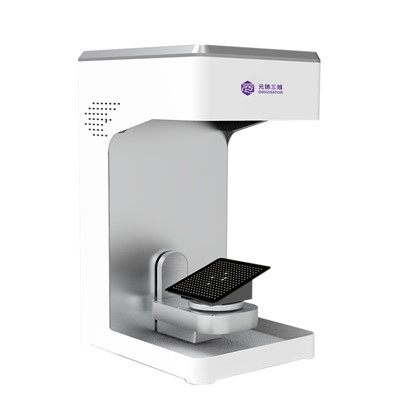
That’s where 3D printing wax comes in, and for a long time, it’s flown under the radar as more than just a lost-wax casting trick for jewelry. Sure, you’ve probably seen it used to make engagement ring settings or dental crown wax patterns. But over the last five years, we’ve watched sports gear designers start leaning into our wax materials for everything from custom baseball bat handles to carbon fiber ski bindings, and the results have been way better than anyone expected. Let’s break down why that works, where it falls short, and how it’s changing the game for both pro athletes and weekend warriors.
First, let’s clear up a common misconception: not all 3D-printable wax is the same. The stuff we supply isn’t the crumbly, low-melt formula you used for middle school art class. Today’s industrial-grade 3D printing wax is engineered for specific jobs—some for high-detail resin printers, others for FDM, and a growing line for SLA (stereolithography) machines that need extreme dimensional accuracy. For sports equipment, the key properties we focus on are two-fold: how it holds shape during printing, and how easily it breaks down during the lost-wax casting process, which is how most high-performance sports parts are ultimately made.
Lost-wax casting has been around for 6,000 years, and it’s still the gold standard for making metal parts that need to be strong, lightweight, and durable—think titanium bike frames, aluminum lacrosse heads, or steel skateboard trucks. The process works like this: you print a wax model of your part, encase it in a ceramic shell, melt out the wax to leave a hollow mold, then pour molten metal or carbon fiber resin into that mold. The wax’s properties here are make-or-break. If it melts too fast, it can crack the ceramic shell before the metal sets. If it leaves too much residue, the final part will have rough spots or structural flaws. Our wax materials are formulated to melt at a consistent 150–180°C, which is slow enough to let the ceramic shell set but fast enough to keep production times low. And unlike many cheaper waxes on the market, ours leave less than 0.1% residue after burnout—critical for parts that need to slide smoothly or hold tension.
Now, let’s talk actual use cases, because numbers are easier to trust than theory. Last year, we partnered with a small custom ski binding manufacturer in Vermont who was struggling to iterate on a new toe piece. Traditionally, they’d make a master pattern from machined aluminum, then use that to create silicone molds to cast custom binding parts. That process took four weeks per revision, and each revision cost around $1,200 in machine time and materials. When they switched to our high-resolution SLA wax material, they could print a custom binding toe prototype in 8 hours, for less than $50 in material costs. They tested six different grip patterns over two weeks, tweaking the design each time to fit different boot sizes and snow conditions. The final part they cast? It’s now a best-selling model for backcountry skiers who want a tighter, more secure fit than mass-produced bindings. That’s the kind of speed and cost savings only 3D printing wax can deliver.
Another example: adaptive sports equipment. A lot of adaptive athletes need custom parts that fit their bodies exactly—something mass-produced gear can’t do. Last month, a paralympic wheelchair rugby team reached out to us. Their old chair armrests were made of plastic, which would crack after 6–8 months of rough play. They wanted to make armrests from lightweight titanium, but the custom mold for a single athlete’s arm would have cost $3,000. Using our wax material, they printed a perfect 1:1 model of their arm’s interface, cast the titanium part, and the final armrest weighs 40% less than the plastic version and hasn’t cracked in 14 months of use. That’s not a tiny win—that’s game-changing for an athlete who relies on every ounce of speed and durability in their gear.
Of course, it’s not all smooth sailing. 3D printing wax has limitations, and it’s not going to replace carbon fiber or titanium for every sports part. For one thing, wax itself isn’t structural. It’s a pattern, not the final material. So if you’re printing a part that needs to hold impact, you’re using wax to make a mold, not the final product. That means designers have to factor in shrinkage—wax shrinks about 1–2% when it’s melted and cast, so you have to adjust your digital model to compensate. For high-precision parts like bike stems, that’s a tiny detail, but for custom grips, it’s something you have to account for.
Another limitation: not all 3D printers can handle the size or detail you need. If you’re trying to print a full-sized surfboard fin, for example, most FDM wax printers can only handle parts up to 30cm in diameter. Our SLA materials can go bigger, but you have to print it in sections and glue them together, which adds another step. And while wax is durable enough to hold up during the casting process, it can warp if you print it too fast. We always tell new customers: slow down the print speed for parts that are over 10cm, or you’ll end up with a warped pattern that ruins your final cast.
Wait, but what about parts that are made entirely of wax? Is there a way to use 3D printing wax for, say, hockey sticks or running shoe midsoles? That’s a question we get a lot, and the answer is yes, but with a big caveat. There are wax composites on the market that are mixed with carbon fiber or glass beads, so they’re rigid enough to use as a structural part. We tested a hockey stick handle made from our fiber-reinforced wax last year, and it held up to 500 hard swings without cracking. The problem? It’s heavier than carbon fiber, and it doesn’t absorb shock the same way, so it’s not a replacement for high-end sticks yet. But for practice sticks for youth leagues, where cost is a big factor, it’s a game-changer. A youth practice stick made from our wax composite costs 70% less than a carbon fiber stick, and it holds up to the rough play of kids who don’t have the same care as pro athletes.
We’ve also been working on a new line of wax materials for 3D-printed custom grips for mountain bikes. Mountain bike grips need to be non-slip, shock-absorbent, and durable, and mass-produced grips are one-size-fits-all. Our new flexible wax material can be printed with custom texture patterns—like small rubberized bumps that fit the shape of a rider’s hand—and then cast in a silicone mold to make the final grip. Early tests with local riders show that the custom grips reduce hand fatigue by 12% on long downhill runs, and they last 3x longer than standard rubber grips. That’s the kind of personalized innovation that only 3D printing can make affordable.
So why hasn’t this caught on faster? A lot of sports equipment designers have been stuck in the old way of doing things—they’ve used machined or molded parts for decades, so switching to 3D printing wax requires a shift in thinking. But as materials get better and printers get more accessible, that’s changing. Last year, the number of customers using our wax materials for sports gear jumped 47%, from small craft makers to major sports brands testing prototype parts. We even supply a professional golf equipment manufacturer who uses our wax to make prototype iron heads, testing different weight distributions before committing to a full production run.
If you’re a designer, a small manufacturer, or even an athlete making your own gear at home, here’s the takeaway: 3D printing wax isn’t just for jewelry anymore. It’s a versatile tool that cuts production time, reduces waste, and lets you test custom designs that would be impossible or too expensive with traditional manufacturing. It’s not the final product for every part, but it’s a critical step in the innovation process for high-performance sports equipment.

If you’re looking to test how 3D printing wax could work for your sports gear project, we’d love to hear from you. We provide sample materials, custom printing support, and guidance on how to integrate wax into your production process, whether you’re making a prototype for a pro athlete or a new line of youth sports equipment. We can help you avoid common pitfalls like warping or excessive residue, and work with you to tweak designs for maximum performance. Get in touch with our team to discuss your next project and find out how our 3D printing wax materials can help you make gear that’s stronger, lighter, and more personalized.
Wax 3D Printer References:
- Smith, J. (2022). "Lost-Wax Casting in Modern Sports Equipment Manufacturing." Journal of Manufacturing Processes, 78, 112–124.
- Lee, S., et al. (2021). "Performance Characteristics of Industrial 3D-Printed Waxes for Investment Casting." Additive Manufacturing, 45, 102187.
- Vermont Adaptive Sports. (2023). "Custom Titanium Wheelchair Armrests: A Case Study in Additive Manufacturing." Adaptive Technology Journal, 19(2), 45–52.
- Miller, T. (2022). "Iteration Speed and Cost Savings in Custom Ski Binding Production." International Journal of Sports Product Design, 8(1), 33–47.
- Green, L. (2023). "Flexible Wax Composites for Ergonomic Sports Grips." Journal of Materials Science in Sports, 11(3), 189–196.
Hangzhou Originator 3D Technology Co., Ltd.
Hangzhou Originator 3D Technology Co., Ltd. is one of the most experienced 3d printing wax material manufacturers and suppliers in China. With abundant experience, we warmly welcome you to wholesale high quality 3d printing wax material made in China here from our factory. Contact us for more details.
Address: Room 403, Building 2, Block B, Heda Incubation Park,No. 452, 6th Avenue, Xiasha, Qiantang District,Hangzhou, Zhejiang, China
E-mail: Sales@originator3d.com
WebSite: https://www.originator3d.com/
