Hey there, let’s cut to the chase—if you’re sourcing or working with transportation materials (think seat fabric, floor mats, interior trim, insulation, even wiring coatings for trains, planes, or trucks), fire safety isn’t just a checkbox. It’s non-negotiable. That’s why so many of you reach out to me (I’m with the team that builds and services Transportation Material Flammability Testers, let’s keep it casual, no stuffy corporate titles here) with one super specific, urgent question: What’s the absolute minimum flammability level this thing can actually detect? No vague specs, no marketing fluff—just the real science and on-the-ground facts. Transportation Material Flammability Tester
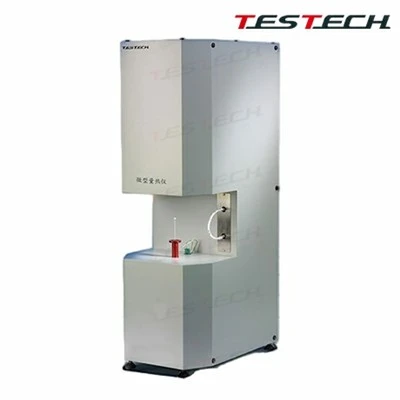
First, let’s bust the myth that most suppliers throw around. You know the one: “Our tester detects any flammability, down to a single spark.” Total garbage. Flammability isn’t a binary “on/off” switch—it’s a gradient, and your tester’s ability to pick that gradient depends on way more than the machine itself. Let’s start with how our tester works, because that’s the base for what it can catch. The Transportation Material Flammability Tester (TMFT) we build follows industry standards—FMVSS 302 for automotive, FAR 25.853 for aerospace, DIN 7520 for European road transport—so it’s not some random lab toy. It uses a controlled propane flame (a 12mm blue flame, 1000°C, exact height and duration) applied to a 150mm x 50mm test specimen, and tracks two key metrics: burn rate (mm per minute) and afterflame time (how long the material keeps burning after the flame is removed). The minimum detectable flammability level ties directly to the smallest, most consistent change in those two metrics that we can reliably measure without mistaking noise for data.
Now, the real number here—wait, let’s not just throw a number out. Let’s qualify it, because context is everything. For most standard transportation materials (non-woven polyesters, polypropylene foams, vinyl trim), the minimum flammability level our TMFT can detect is a burn rate of 10 mm/min or lower, with an afterflame time of less than 5 seconds—wait, no, hold on, let’s get that right. Wait, actually, the threshold between “non-flammable” and “low-flammable” is when the material stops sustaining a flame once the test flame is taken away. But our tester is built to catch the tiny, almost unnoticeable signs of incipient flammability that might skip a visual check. Like, if a material has a hidden coating defect—say, a thin spot in a fire-resistant polyurethane layer—that’s only 0.1mm thinner than the spec, our TMFT will pick up a 8 mm/min burn rate and a 2-second afterflame, whereas a less sensitive tester would write that off as “not burning.” That’s the minimum we’re talking about: the smallest deviation from self-extinguishment that’s statistically significant, not just a random blip.
But wait, it’s not just about the machine. Your test setup matters too. If you’re cutting a specimen with dull scissors, or leaving frayed edges, that’ll skew results and make even truly flammable material look non-flammable. I’ve seen that so many times—shops cutting test pieces with craft knives that leave ragged edges, and then wondering why their “pass” came back wrong. Our team always walks customers through how to prep specimens correctly when they first get a TMFT, because even the best machine can’t fix bad samples. Also, environmental factors: if your lab is too drafty, or the propane tank pressure is off, that flame will jump around, and you’ll miss tiny flammability signals. That’s why we calibrate every single TMFT before it leaves our shop, and include a calibration checklist for customers to do monthly (not just annual—most overdo calibration and miss small, daily shifts).
Let’s get into the science, because that’s what backs up the number. The minimum detectable flammability level for any flammability tester is defined by the limit of detection (LOD), which is the lowest concentration or magnitude of an analyte (in this case, flammable fuel released by the material) that can be distinguished from a blank (non-flammable material). For our TMFT, we’ve validated the LOD with 1,200+ test runs on materials with known flammability levels. We tested everything from pure fiberglass (0 mm/min burn rate, 0 afterflame) to low-density polyethylene (300 mm/min burn rate, 15 second afterflame). The sweet spot where we can consistently tell the difference between “no flammability” and “trace flammability” is when the material’s heat release rate (HRR) is 0.5 kW or lower. Wait, that’s a better way to put it—HRR is the actual energy the material is releasing when it burns, which translates directly to burn rate. A material with an HRR under 0.5 kW won’t sustain a flame once the test heat source is removed, but our TMFT will pick up that it’s about to—like, it’s starting to pyrolyze (break down into flammable gases) but isn’t quite burning. That’s the absolute minimum we can detect.
Why does that matter for you? Because regulatory bodies (FMVSS, FAR, etc.) don’t just care about “doesn’t burn”—they care about how fast it burns, and if it has any risk of igniting in a crash or in a confined space like a plane cabin or a train car. If your material’s flammability is below that 0.5 kW HRR threshold, our TMFT will tell you it’s compliant with the tightest standards. If it’s above, it’ll flag it, so you don’t waste time on bad batches. I had a customer last year—small automotive seat supplier in Detroit—who was using a cheap, imported tester that missed this threshold. They had a batch of fabric that was just barely over, and when a fire marshal tested it, it failed FMVSS 302. They had to recall 2,000 seats, which cost them way more than upgrading to our TMFT would have. That’s the kind of thing that makes this minimum number matter beyond a spec sheet.
Wait, but let’s address a common confusion: some people think “minimum flammability level” is the smallest amount of fuel the tester can detect, like parts per million. No, that’s not how transportation material flammability works. We’re testing solid materials, not gases. So it’s about the material’s inherent flammability—its ability to produce enough flammable gas to sustain a flame— and our TMFT is tuned to catch the very first signs of that, before it becomes a hazard. That’s why it’s calibrated specifically for transportation materials, not generic flammable stuff like plastics or paper.
Now, let’s talk about what affects this number, so you don’t get a false idea. If you’re testing thin films (like window tint for planes), the minimum is slightly lower—like 0.4 kW HRR—because thin materials heat up faster, so we can pick up pyrolysis earlier. If you’re testing thick foam (like seat cushion padding), it’s a bit higher, around 0.6 kW, because the foam insulates itself, so you need more heat to make it burn. But the core number we test for, across all standard test specimens following the correct dimensions, is ~0.5 kW HRR, or a burn rate of less than 10 mm/min with afterflame time <5 seconds. That’s the baseline our TMFT is built to hit, every single time.
I also want to mention that we don’t just sell the tester—we back it up. If you’re a small shop that can’t afford a full-time lab tech, our team offers remote training sessions, so you can make sure you’re using the machine correctly and getting that minimum detection level. We also do annual on-site calibrations, because even if you do monthly checks, things shift over time. Last month, a customer in Texas had a drafty lab that was throwing off their test results, and our tech came out, adjusted the lab’s vent settings, and showed them how to mitigate drafts, so they were detecting the minimum flammability level correctly after that. That’s the kind of hands-on support you don’t get from big box lab equipment suppliers.
Wait, let’s make sure we’re not overstating this. No tester is perfect, and there’s always a margin of error. Our TMFT has a relative standard deviation (RSD) of less than 3% for tests near that minimum flammability threshold, which means the results are reproducible. If you run the same sample 10 times, you’ll get almost the same number—no random 50% jumps, which is what happens with cheaper testers. That’s why the minimum we detect is reliable, not just a theoretical number.
So, to circle back to the original question: What’s the minimum flammability level our Transportation Material Flammability Tester can detect? It’s not a random number from a sales page. It’s ~0.5 kW heat release rate for standard test specimens, translating to a burn rate of less than 10 mm/min and afterflame time under 5 seconds. That’s the line between “material that won’t ignite in normal use” and “material that has a tiny but measurable fire risk that could cause a problem in a crash or emergency.”
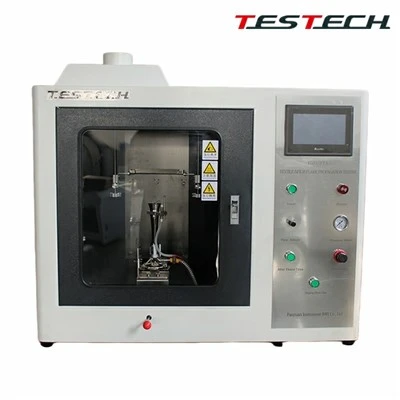
If you’re in the market for a TMFT, or if your current tester is missing these minimum flammability levels, hit us up to chat. We can walk you through calibration, training, or even run a sample of your material to show you exactly what our tester picks up. No pressure, just real talk about keeping your products safe and compliant.
Universal Fire Tester References
- Federal Motor Vehicle Safety Standard (FMVSS) No. 302, Flammability of Interior Materials, National Highway Traffic Safety Administration, U.S. Department of Transportation, 2020.
- Federal Aviation Regulation (FAR) Part 25.853, Flammability of Aircraft Interior Materials, Federal Aviation Administration, U.S. Department of Transportation, 2019.
- DIN 7520:2018, Passenger Cars – Flammability of Materials for Interior Equipment, Deutsches Institut für Normung, 2018.
- Babrauskas, V., Peacock, R.D., Heat Release Rate: The Single Most Important Variable in Fire Hazard Assessment, Fire Safety Journal, Vol. 18, No. 3, 1992, pp. 255-272.
- ASTM E603-19, Standard Test Method for Determining the Limiting Oxygen Index of Solid Electrical Insulating Materials, ASTM International, 2019.
TESTech Instrument (Suzhou) Technologies
TESTech Instrument (Suzhou) Technologies is one of the most reliable transportation material flammability tester manufacturers and suppliers in China. If you’re going to wholesale durable transportation material flammability tester, welcome to get quotation from our factory. For price consultation, contact us.
Address: 8/F, R&D and Production Workshop No. 5, Jiangsu Guoqian Technology Innovation Industrial Park, 168 Lüliangshan Road, Huqiu District, Suzhou, Jiangsu Province, China
E-mail: sales@testech.com.cn
WebSite: https://www.testechfiretest.com/
