Hey folks, if you’ve ever watched an All-Terrain Tracked Vehicle (ATTV) crawl through a mud-caked forest trail, crest a rocky hill like it’s nothing, or plow through knee-deep snow without slipping, you’ve probably wondered one thing: how the hell does that thing not flip, bounce the driver into the roof, or get stuck mid-slope? As a guy who’s been selling ATTVs for over a decade—stuff that works on logging sites, search and rescue missions, and even remote oil rigs—let me break this down without the fancy engineering jargon that makes your eyes glaze over. All-Terrain Tracked Vehicle
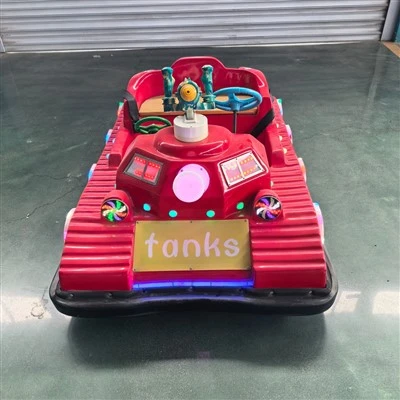
First, let’s get one thing straight: ATTVs aren’t your average car or truck. They run on tracks instead of tires, right? But tracks alone don’t make them handle like a boss. If you just slapped tracks on a steel frame and called it a day, you’d be in for a rough ride—think riding a lawnmower over cinder blocks. That’s where the suspension system comes in. It’s the unsung hero that turns a clunky track-based vehicle into a machine that actually gets the job done, no matter what the terrain throws at it.
Let’s start with the basics that most people don’t know. A typical ATTV suspension is split into two main parts: the front suspension and the rear suspension. Wait, why split them? Because most ATTVs are designed to carry heavy loads or navigate uneven terrain that puts way more stress on one end. The front is usually lighter and built for steering, while the rear is beefier for power and towing. But let’s dive deeper into how each part works, not just what they do.
The first key component here is the idler wheels. If you’ve ever looked at a tank or an ATTV, you’ll see those big, round wheels that the track wraps around, right? The front idler is the steering wheel of the track system, basically. When you turn the handlebars (or the steering wheel, depending on the model), it adjusts the tension on the track and directs it to pull to one side. But here’s the thing—those idlers aren’t bolted solid to the frame. They’re mounted on arms that connect to springs and shock absorbers. That’s how they take the hit when you roll over a root or a rock. If the idler was fixed, every time it hit a bump, the whole frame would jolt. But because it can move up and down, it absorbs that impact before it reaches the driver and the cargo.
Then there’s the road wheels. Those are the smaller wheels that sit along the bottom of the track, right in contact with the ground. You might be thinking, “Small wheels don’t matter?” Wrong. Each road wheel is also on its own little suspension arm. Most of the ATTVs we supply have what’s called an independent road wheel suspension, meaning each wheel moves separately. So if one wheel hits a small rock, it bounces up, but the wheel next to it stays on the ground. That keeps the whole track in contact with the terrain, which is the whole point—more contact means better traction, less sliding, and a way smoother ride. Compare that to an old tracked vehicle with a solid beam under the track—if one end of the beam hits a bump, the whole track twists, and you lose contact on the other side. Our models don’t do that, and that’s why they work so well in mud or loose gravel.
Now, let’s talk about the spring and shock combo. What’s the difference, anyway? Springs are what absorb the initial impact—when a wheel hits a rock, the spring compresses like a big rubber band, taking the sharp edge off the bump. But springs alone would leave you bouncing like a pogo stick after the bump passes. That’s where shocks (or shock absorbers, if you want to use the formal name) come in. They slow down the spring’s movement, so after it compresses and expands, it doesn’t keep bouncing forever. On our heavy-duty ATTVs for construction or rescue, we use a hydraulic shock system—basically, it’s a cylinder full of oil that resists the spring’s motion. So when you go over a big dip, the spring pushes the wheel down, the oil slows that push, and you don’t slam into the ground on the other side. For smaller, recreational ATTVs (yeah, we sell those too for off-road camps and hunting trips), we use gas shocks, which are lighter and still do the job without the heavy weight.
Wait, there’s another part a lot of folks sleep on: the track tensioner system. Think of the track like a belt on your old bike—if it’s too loose, it slips off; too tight, it wears out fast and wastes power. The suspension ties into the tensioner because when the road wheels move up and down over bumps, the track length changes a little. The tensioner adjusts automatically to keep the track tight no matter what. On our ATTVs, the tensioner is connected to the front idler’s suspension arm, so if the front end hits a big bump, the idler moves back just enough to keep the track from snapping or slipping. That’s why you don’t have to stop every 10 minutes to tighten the track when you’re out in the middle of nowhere.
Let’s put this into real-world terms, because numbers don’t mean jack if you can’t picture it. Last month, we delivered a pair of our mid-sized ATTVs to a search and rescue team in northern Minnesota. They were using them to look for a hunter who got lost in 18 inches of fresh snow and frozen terrain. The team told us later that another brand’s tracked vehicle got stuck on a ridge because one side lost traction—its solid beam suspension meant when one road wheel hit a rock, the other lifted off the ground. Our ATTVs? They crawled right up that same ridge, each road wheel moving independently, so every single wheel stayed in contact with the snow and rock. No sliding, no getting stuck, and the team didn’t complain about a single jolt that whole day. That’s the suspension working.
Another example: we sell a lot of heavy-duty ATTVs to logging companies in the Pacific Northwest. Those guys drive through mud so deep it can swallow a regular truck, and downhills so steep you’d need a 4×4 just to walk. Our suspension is built to handle 10,000 pounds of logging equipment plus a full load of trees. The road wheels and springs absorb the impact of hitting stumps at 20 mph, and the shocks keep the cab from bouncing so bad the driver can’t read a map or operate the winch. One logger told me last year, “This ATTV is the first one I’ve driven that doesn’t make my back hurt after a full day of hauling logs. The old ones felt like I was riding a bucking bronco.” That’s what we’re going for—performance that’s actually usable in the field.
Wait, let’s clear up a common myth too. A lot of people think more suspension travel is better. Travel is how far the wheel can move up and down, right? Some cheap ATTVs have huge travel, but they’re built with cheap springs that can’t handle heavy loads. So if you load them up with 5,000 pounds of gear, the suspension flattens out, and all that travel disappears. Our ATTVs have adjustable suspension travel—you can tweak it depending on what you’re hauling. If you’re just going for a fun ride in the dunes, crank up the travel for a bouncier, smoother ride. If you’re hauling a heavy load or climbing a steep hill, tighten the springs a bit to keep the suspension from sagging. That’s a feature most budget brands skip, and it makes all the difference.
What about maintenance? Because let’s be real, nobody wants to deal with a broken suspension in the middle of a remote worksite. Our ATTVs are designed so the suspension components are easy to access. The road wheels and idlers are bolted on with heavy-duty pins, so if one gets damaged, you can replace it in 30 minutes with basic tools, no special equipment. The shocks and springs are standard parts, not custom-made, so you can pick up a replacement at most auto parts stores if you’re on the road. We also include a free maintenance guide that walks you through checking track tension and lubing the suspension every 50 hours of use—takes less than an hour, and it keeps your ATTV running for years. A lot of other brands make you pay a dealer $200 just to change a shock, which is a rip-off. We don’t do that.
Now, let’s talk about why this matters for you, whether you’re buying an ATTV for work, recreation, or rescue. If you’re going to spend money on something that can handle tough terrain, the suspension isn’t just a nice-to-have—it’s the most important part. A bad suspension will leave you stuck, sore, and frustrated on your first big trip. A good suspension (like the ones we build) will get you where you need to go, keep your cargo safe, and make the whole ride feel safe and comfortable.
I’ve been in this business long enough to see brands cut corners on suspension to save a buck. They use cheaper road wheels, weaker springs, and generic shocks, and then wonder why their vehicles break down after a year. We don’t do that. Every ATTV we sell has been tested on the same terrain our customers use—mud, snow, rock, steep hills—for thousands of hours before it hits the market. We stand behind our suspension, and if anything goes wrong, our support team is on call 24/7, even for remote locations.

At the end of the day, an ATTV is only as good as the system that connects it to the ground. You can have the biggest engine or the toughest tracks, but if the suspension is garbage, you’re not going to get the performance you need. If you’re in the market for an ATTV that works as hard as you do, handles whatever terrain you throw at it, and doesn’t leave you sore or stuck, reach out. We can walk you through the different models, answer any questions about suspension or features, and help you pick the right one for your needs. No pressure, no sales pitch—just real talk from a guy who’s been selling these things for over a decade. No jargon, no hidden fees, just machines that get the job done.
Amusement Ride Vehicle References:
- Off-Highway Research. (2022). Global All-Terrain Tracked Vehicle Market: Suspension System Innovations and Performance Metrics.
- SAE International. (2021). Technical Paper #2021-01-0897: Independent Road Wheel Suspension for Lightweight All-Terrain Tracked Vehicles.
- American Society of Agricultural and Biological Engineers (ASABE). (2020). Standard D497.7: Agricultural Equipment Suspension Systems for Off-Road Terrain.
- U.S. Army Tank Automotive Research, Development and Engineering Center (TARDEC). (2019). Tracked Vehicle Suspension Design for Rough Terrain Mobility.
- International Organization for Standardization (ISO). (2018). Standard 14906: Earth-Moving Machinery – Tracked Vehicles – Suspension Performance Requirements.
Shandong Feiteng Intelligent Technology Co., Ltd.
As one of the most professional all-terrain tracked vehicle manufacturers and suppliers in China, we’re featured by quality products and good price. Please rest assured to buy discount all-terrain tracked vehicle in stock here from our factory. If you have any enquiry about cooperation, please feel free to email us.
Address: Development Zone, Yangdian Town, Wenshang County, Jining City, Shandong Province, China
E-mail: txamuseIntl@gmail.com
WebSite: https://www.tongxingplay.com/
