Hey everyone! If you’ve ever walked past a workspace where a cobot’s working alongside actual human workers, you’ve probably thought: “How the heck does that not go wrong?” Like, one second the robot’s tending a bin of parts, the next a staffer reaches in to grab a tool, and suddenly there’s no crash, no chaos, just… calm. That’s all emergency-stop mechanisms working overtime—one of the biggest reasons collaborative robots (cobots) aren’t just factory novelties, they’re the backbone of modern small-batch manufacturing and light industrial work these days. Collaborative Robot
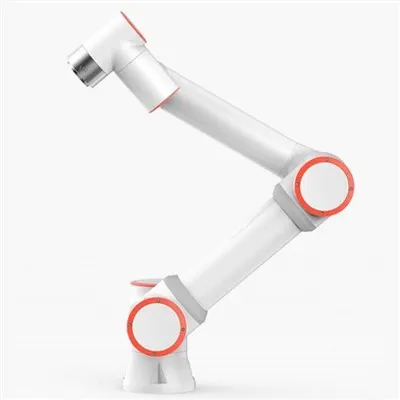
I run a cobot supply company, so I get way too many questions about safety (way more than about payload or reach, to be honest) from shops that just made the switch from old-school industrial robots. Those old guys would blast around a safety cage like they owned the place—you’d get within 10 feet and the whole thing would lock up mid-cycle, no finesse. But cobots? They’re built to work with people, not separate from them, and their emergency-stop (E-stop) systems are tailored to that vibe. Let’s break this down like I’d explain it to a new customer who’s got their first quote in front of them and is staring at the “safety features” line item like it’s rocket science.
First off, let’s get the basics straight: E-stop mechanisms for cobots aren’t just a big red button you hammer when something looks off (though that button’s definitely still there, don’t worry). We’re talking layered systems, right? Because one layer might fail, so you need backups. Let’s start with the most obvious one, but the one people overlook sometimes—hardwired E-stops. These are the physical, red, mushroom-shaped buttons you see mounted on the cobot’s control box, the teach pendant (that little hand-held remote programmers use), and even sometimes on the work cell’s frame itself. I always tell customers to stick one right at the entrance to the cell, so if someone’s walking by and sees a problem before they even reach the robot, they can hit it without fumbling. The key here is these buttons are hardwired, not over Wi-Fi or Bluetooth—so even if the entire control screen glitches out, this still works. No lag, no signal dropout, just instant power cut. That’s non-negotiable, in my book. But here’s the thing: people sometimes think hitting that button is the only E-stop. Nah, cobots have more tricks up their sleeve.
Next up: force and torque sensing. This is the secret sauce that makes cobots way safer than their old industrial cousins. Every single cobot joint has tiny little sensors that measure how much force is being applied at any given time. If the arm bumps into something—say, a human hand reaching in to adjust a part, or a stray cardboard box left in the path—those sensors pick up the pressure in milliseconds. No need for someone to hit a button; the robot just stops. I’ve seen this in action at a customer’s shop last month: their new UR10 was loading metal stamps, and a part helper accidentally shifted a fixture a little while the robot was moving. The joint sensor felt the extra resistance, the cobot froze mid-motion, and the guy just laughed and fixed the fixture without any panic. The industry standard here is usually around 150 Newtons of force for high-speed moves, but we let customers tweak that if they’re working with heavier parts or slower, more precise tasks. Important to note: this isn’t just “stop when you hit something”—it’s adjustable, so it’s not going to trigger a false stop every time the arm moves over a bin full of parts. That’s a huge win for productivity, right? You don’t want your robot halting every two seconds because it’s just picking up parts.
Then there’s speed and separation monitoring. This is a more advanced E-stop feature, and it’s super popular for shops where the cobot’s moving at a faster pace or working in a shared space with multiple people. Here’s how it works: you mount little safety scanners around the work cell—like the same kind you use for shoplifting sensors, but way more precise. These scanners track how far a person is from the cobot at all times. If someone gets too close, the cobot doesn’t just stop cold; it slows down first. If they keep moving closer, it stops. We can set the distance based on the task, too. If the cobot’s doing a delicate operation like placing tiny electronics, we set a larger buffer zone. If it’s working with heavier, slower parts, we can shorten it a bit. Last year, a small electronics assembly shop told us this was their favorite feature because their team didn’t have to keep jumping out of the way every time the cobot moved—they could work in the same space, just keep an eye on their work and the scanners did the rest. No more wasted time waiting for the robot to finish a cycle because someone was in the way.
Wait, let’s not forget about the control system’s built-in safety circuits. Even if all the sensors and buttons work, if the robot’s main controller glitches, you’re in trouble. So every cobot has a redundant safety circuit—think of it as a backup brain that’s only in charge of stopping the robot. It runs parallel to the main controller, so even if the main software crashes or a programming error causes the robot to go rogue, the safety circuit kicks in instantly and cuts power to the motors. We’ve had a couple of customers accidentally delete a program while the cobot was moving, and the redundant safety circuit shut it down before the arm even got close to a wall or a person. It’s that fail-safe layer that makes cobots reliable, not just safe.
Also, let’s talk about power loss E-stop. If the shop’s power goes out mid-cycle, what happens? Old robots would power down, their arms would droop, and if they were holding a heavy part, that could be a hazard. Cobots have built-in brakes on each joint that engage automatically if power drops. That means the arm freezes in place right where it was, not crashing to the floor or swinging around. We tested this at our warehouse last year—we cut the power to a cobot loading pallets, and it stayed perfectly still. No broken parts, no danger for anyone walking by. That’s a big one for small shops that might have spotty power or work in areas where power outages are common (like near loading docks, where trucks kick up dust and can sometimes knock out circuits).
But here’s the thing I always tell customers: E-stop mechanisms aren’t one-size-fits-all. What works for a bakery using a cobot to package cookies is way different from a metal shop using a cobot to weld parts. For example, if you’re working with high temperatures or sharp edges, you might need extra physical E-stop buttons that are more durable—metal ones instead of plastic, ones that can handle heat. If you’re working with food, you can’t have harsh chemicals on the sensors, so you need food-grade coatings on the force sensors. We customize every cobot’s E-stop setup based on the task environment, because one size definitely doesn’t fit all.
I get it, safety can feel like a big headache when you’re trying to get a new line up and running. But here’s the truth: the right E-stop mechanisms aren’t just about avoiding OSHA fines or injuries. They’re about productivity. When a cobot can work safely alongside your team, 24/7, without needing a giant safety cage that takes up half your shop, you’re getting more done. No more waiting for the old robot to finish a cycle because someone can’t get near it. No more downtime from accidents. The E-stop system is the foundation of that reliability.
Wait, I should address a common myth, too—some people think that cobots’ E-stops are too sensitive, that they trigger all the time and slow down work. Yeah, that might be the case if you buy a cheap cobot that cuts corners on sensor quality or safety layers. But all the cobots we supply have calibrated sensors and adjustable settings, so you can tweak the E-stop sensitivity to fit your exact workflow. If you’re doing a task where the robot needs to move through close spaces, you can lower the force threshold so it doesn’t stop every time it brushes against a fixture. If you’re doing a high-speed pick-and-place, you can adjust the scanners to recognize that the bin is part of the workspace, not an obstacle. It’s all about customization, which is what makes cobots way better than the old industrial ones for small to mid-sized shops.
Another thing: training. Even the best E-stop system in the world is useless if your team doesn’t know how to use it. We always offer a free, hands-on training session with every cobot we supply, where we walk your team through every E-stop button, how the force sensors work, what the scanners detect, and how to test the system. We had a customer a few months ago who thought the big red button on the control box was the only E-stop, so their team was always running over to the box instead of hitting the button right at the cell entrance. After training, they cut their response time to stops by half, which made their workflow way smoother.

At the end of the day, collaborative robots’ E-stop mechanisms are what make them game-changers for any shop that wants to automate without sacrificing safety. It’s not just a button—it’s a network of sensors, circuits, and systems that work together to keep people safe and keep productivity high. If you’re thinking about adding a cobot to your team and you’re worried about how the safety systems will work for your specific task, don’t hesitate to reach out. We can walk you through all the E-stop options, customize the setup to fit your shop, and make sure you feel confident that your team and your cobot can work together without any headaches.
Collaborative Palletizing Robot References
- International Organization for Standardization (ISO). ISO 10218-1:2011, Robots and robotic devices — Safety requirements for industrial robots — Part 1: Robots.
- Robotic Industries Association (RIA). Collaborative Robot Safety Guidelines: A Practical Guide for Implementing Cobots in Shared Workspaces.
- Universal Robots. Collaborative Robot Safety Handbook: Force Torque Sensing and E-Stop System Specifications.
Xinweilai Intelligent Technology (Shandong) Co., Ltd.
As one of the most professional collaborative robot manufacturers and suppliers in China, we’re featured by quality products and good service. Please rest assured to wholesale bulk customized collaborative robot from our factory. For pricelist and quotation, contact us now.
Address: Jinghua Road, Economic and Technical Development Zone, Dezhou City, Shandong Province
E-mail: liujiqing@xinweilaiznkj.com
WebSite: https://www.xinweilaiznkj.com/
