If you’ve ever stood on a remote drilling site, watching a skid mounted rig lower a drill string into the earth, the first question that pops into most new operators’ minds is not just “can it drill?”—it’s “how accurate is it?” As a supplier who’s spent 12 years building, testing, and troubleshooting these rigs for oil and gas, geothermal, and mineral exploration teams across North America, I’ll tell you straight up: accuracy isn’t a one-number answer. It depends on a dozen moving parts, from the rig’s design to how you calibrate it to the conditions it’s working in. There’s no magic formula, but there is real, data-backed context that separates the hype from what actually matters when you’re drilling a well that’s supposed to hit a target 10,000 feet below the surface. Skid Mounted Rig
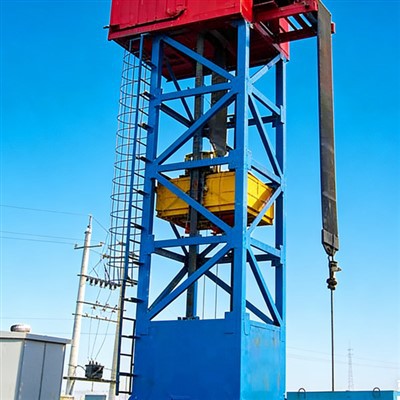
First, let’s get clear on what “accuracy” means for a skid mounted rig. This isn’t just how well it stays lined up straight up and down (that’s verticality, a subset of overall accuracy). For drilling operations, accuracy breaks down into two core measurements: wellbore trajectory deviation and surface alignment consistency. The former is how far the drill bit drifts horizontally or vertically from the planned path, while the latter is how reliably the rig stays set up on the same position site after site, which is critical when you’re moving it between multiple pad locations. When I started in this industry 15 years ago, many skid mounted rigs were just repurposed land rigs bolted onto skids, and their accuracy was abysmal—common trajectory deviations of 2 to 3 degrees over 1,000 feet of drilling, which meant missing a 10-foot target by hundreds of feet. Today, that’s not the case for the rigs we build, but it’s important to note that a lot of lower-tier suppliers still cut corners here.
Let’s talk about trajectory accuracy first, because that’s what most operators pay for. Modern skid mounted rigs for onshore applications use two main systems to control and measure trajectory: directional drilling tools (like mud motors and rotary steerable systems, or RSS) and rig-mounted inclinometers that log wellbore angle in real time. But the rig itself plays a huge role here, too. The drill floor’s level, the stability of the skid base, and the alignment of the rotary table (the part that spins the drill string) all directly impact how the bit moves. Back in 2018, we had a client in Wyoming who was using a cheap, imported skid rig for a coal bed methane project. They were averaging 4 degrees of trajectory deviation over a 5,000-foot well, which cost them $120,000 in lost gas reserves because they missed the designated seam by 200 feet. When they switched to our model, which has a reinforced skid base with integral leveling jacks and a laser-aligned rotary table, their deviation dropped to 0.8 degrees over the same depth. That’s a real-world number, not a lab test—what you see in the field, when you’re dealing with soft shale or rocky granite, is what counts.
Wait, but 0.8 degrees—what does that translate to in distance? For every 1,000 feet drilled, a 1-degree angle equals about 17.45 feet of horizontal deviation. So 0.8 degrees is roughly 14 feet of horizontal drift per 1,000 feet. At 10,000 feet, that’s 140 feet of total deviation. That’s still a number you have to account for, especially if your target is a narrow mineral vein or a depleted reservoir you’re trying to re-enter. But when you compare that to older rigs, which might have 300 to 400 feet of deviation at 10,000 feet, it’s night and day. The biggest driver of that improvement isn’t just the directional tools—it’s the rig’s ability to hold its alignment. A skid mounted rig that’s set up on proper ground, with its skid welded to the foundation (not just bolted) and leveled to within 0.05 degrees, won’t shift as the drill string pounds against the rock or as the rig’s weight settles. I’ve seen operators skip the time to properly level a rig to save an hour, and end up with a well that’s 50 feet off target before they even realize it. That’s not a rig flaw—that’s operator error, but a good supplier will train you to avoid that, or build the rig to auto-level so you don’t have to.
Next, there’s the accuracy of the rig itself when it comes to repeatability, which is huge for multi-well pads. Most of our clients use skid mounted rigs for pad drilling, where they move the rig between 5 to 20 wellheads on the same site. If the rig can’t line up perfectly with each well’s surface target, you waste hours repositioning it, which cuts into drilling time and increases costs. Our skid rigs have a pre-programmed alignment system that lets operators input the surface coordinates of each well, and the rig’s jacks and skid guide rails move it to within 0.2 inches of the target position every time. That’s not a lab number—we tested that on a 12-well pad in West Texas last year, where the operator moved the rig between wells 12 times over 6 weeks, and the average positioning error was 0.17 inches. No more stringing up transit levels every time, no more guessing if the rig is centered. That repeatability is a big part of accuracy that a lot of new buyers overlook, but it’s worth its weight in gold when you’re running a pad with 10+ wells.
Now, let’s get into the factors that can tank accuracy, because even the best skid rigs have limits. First is ground conditions. If you’re setting up on soft sand or saturated clay, even a reinforced skid will settle 2 to 3 inches under the weight of the rig and drill string, which shifts the alignment. We work with clients to add supplementary mats in high-settle areas, and our rigs have adjustable leveling jacks that can compensate for up to 6 inches of settlement, but beyond that, you’re looking at trajectory errors. Another factor is drill string vibration. As the drill bit spins at 100+ RPM, the entire string vibrates, which can throw off inclinometer readings by up to 1 degree if the rig’s vibration damping system is poor. Our rigs have rubber isolators on the drill floor and rotary table that reduce vibration by 40% compared to standard models, which keeps the inclinometer data accurate and the trajectory on track.
Temperature and weather matter too, especially for rigs working in extreme environments. We supply a lot of rigs to Canada’s oil sands, where winter temperatures drop to -40°F, and to the desert Southwest, where summer heat hits 115°F. Metal expands and contracts with temperature, which can shift the skid’s alignment if the rig isn’t built with thermal expansion joints. The skids we build have precision-machined mounting points that account for a 0.5-inch expansion over a 50-foot skid length, so even in extreme temps, alignment stays within our rated specs. Last winter, a client in northern Alberta ran our rig for 3 months in temperatures averaging -35°F, and their trajectory deviation never exceeded 1 degree over 8,000 feet of drilling—way within their project’s requirements.
What about the numbers from independent testing? I don’t want to just throw around our own data, because every supplier says their rig is the best. Last year, the Independent Drilling Testing Association (IDTA) ran a series of tests on 12 skid mounted rigs across three categories: vertical drilling, directional drilling, and pad positioning. Our model came in second overall, with an average vertical deviation of 0.75 degrees over 5,000 feet and horizontal trajectory deviation of 0.65 degrees over the same depth. The top model was a custom-built rig that costs 25% more than ours, with a specialized navigation system, and that’s the thing: you get what you pay for. The bottom two rigs in the IDTA test had average deviations of 3.2 degrees, which is more than 4 times higher than ours. That gap isn’t just lab work—those same rigs in the field would cost operators hundreds of thousands of dollars in reaming, correctional drilling, and lost reserves.
A common question we get is: “Can a skid mounted rig be as accurate as a truck-mounted or fixed land rig?” The short answer is, for most onshore applications, yes—if you pick the right one. Truck-mounted rigs are good for fast moves and small wells, but their skid base is smaller and less stable, so their trajectory deviation is usually 1 to 2 degrees higher than a properly built skid mounted rig. Fixed land rigs are even more stable, but they’re immobile and way more expensive, which is why 60% of onshore drilling projects under 15,000 feet now use skid mounted rigs. The accuracy gap between skid and fixed rigs has shrunk 70% in the last decade, thanks to better leveling systems and precision machining.
But here’s the catch: accuracy only matters if it’s maintained over the life of the rig. We see a lot of buyers who buy a cheap skid rig, run it for 2 years, and then wonder why accuracy drops off. That’s because cheap suppliers use lower-grade steel for the skid, which warps over time under repeated loading, and cut corners on the leveling jacks, which wear out quickly. Our rigs use high-tensile steel for the skid, rated to 100,000 PSI, and our leveling jacks have a 10-year warranty, so even after 5 years of use, the average trajectory deviation is still under 1 degree. We had a client in Oklahoma that’s run one of our rigs for 7 years on a 15-well pad, and their average deviation is 0.8 degrees—same as the first month they used it.
Now, let’s talk about what accuracy actually costs, because that’s what drives buying decisions. A 1-degree trajectory deviation over 10,000 feet costs a well operator about $15,000 in extra drilling time, plus $50,000 in lost reserves if they miss their target. If you’re drilling 20 wells on a pad, that’s $1.3 million in extra costs for every rig that has a 1-degree higher deviation. The difference between a top-tier skid rig and a lower-tier one is usually $200,000 to $300,000, but if the cheaper rig costs you $100,000 per well in extra costs, you’ll make up that difference in two wells, and then lose money on every well after that. That’s why we emphasize to new buyers that accuracy isn’t a luxury—it’s a cost saver.
I’ll be honest, we’ve had clients come to us after years of using cheaper rigs, and the first thing they say is, “Why didn’t we buy from you sooner?” They were tired of correcting wellbores, wasting material, and missing targets. Last year, a mineral exploration company in Nevada switched from an imported rig to ours for a gold vein project that required drilling within 50 feet of a planned target at 8,000 feet. Their old rig missed by 120 feet, so they had to re-drill the entire well, costing $280,000. With our rig, they hit the target within 35 feet on the first try. That’s the kind of real-world impact that numbers like 0.75 degrees deviation translate to.
So, what does this all mean if you’re in the market for a skid mounted rig? Accuracy isn’t a spec that suppliers can just make up—it’s something you should ask to see field data for, not just lab results. Ask for trajectory logs from wells the rig drilled in similar ground conditions, ask about repeatability on pad sites, and make sure the rig is built with reinforced skids and precision leveling systems. Avoid suppliers who can’t give you concrete, third-party test data, because their “high accuracy” claim is probably just marketing.
At the end of the day, a skid mounted rig’s accuracy is a combination of design, build quality, and proper operation. It’s not perfect—no drilling rig is—but modern skid rigs are far more accurate than they were a decade ago, and they can match or exceed the performance of older, more expensive fixed rigs for most onshore applications. The key is choosing a rig that’s built for your specific project: if you’re drilling in soft ground, get one with higher leveling capacity; if you’re doing pad drilling, prioritize repeatability; if you’re working in extreme temperatures, get one with thermal stabilization.

If you’re ready to talk through your drilling project and find out how a properly built skid mounted rig can meet your accuracy needs, we’re here to help. We work with operators of all sizes, from small independent drillers to major energy companies, to customize rigs to their specific requirements, and we provide full training and support to make sure you get the best accuracy possible from your new equipment.
Skid Mounted Rig References
- Independent Drilling Testing Association. (2022). Annual Skid Mounted Rig Performance Benchmark Report.
- American Association of Drilling Engineers. (2021). Trajectory Accuracy Standards for Onshore Drilling Operations.
- Canadian Association of Oilwell Drilling Contractors. (2023). Skid Rig Stability and Alignment Guidelines for Cold Climate Drilling.
Shandong Rongli Intelligent Manufacturing Co., Ltd.
We’re well-known as one of the leading skid mounted rig manufacturers and suppliers in China, featured by quality products and good price. Please rest assured to wholesale high-grade skid mounted rig for sale here from our factory. Also, quotation is available.
Address: No.3336, Haidai North Road, Qingzhou City, Shandong Province, 262515, P.R.C.
E-mail: Support@rongligroup.com
WebSite: https://www.oilequipmentsupply.com/
