If you’ve ever installed a metal bracket to hold a heavy shelf, a garage door track, or even a ceiling fan, you’ve probably taken for granted that it won’t snap loose after a few months—let alone years—of use. But for anyone who sources metal brackets, whether for construction, automotive, aerospace, or even consumer goods, that reliability doesn’t happen by accident. The biggest test a bracket faces over time isn’t a single heavy load; it’s the repeated, constant stress that builds and ebbs with every use. That’s where fatigue resistance comes in, and as a metal bracket supplier that’s worked with projects ranging from small retail store displays to large industrial warehouses, I’ve seen firsthand how much this one property can make or break a product. Metal Brackets
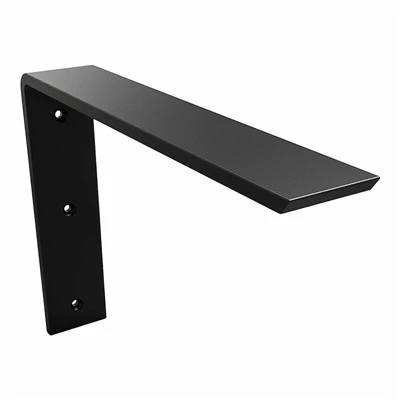
Let’s start with the basics, because fatigue resistance is a lot more nuanced than just “how much weight something can hold.” When we test a new bracket, the first number we get is usually static strength—the amount of force it takes to bend or break it in one go. That’s important, but most brackets don’t get that kind of sudden, extreme stress. Think about the metal brackets that hold up a patio awning: every time the wind blows, it pulls and pushes on the awning, which tugs on the bracket. Or the brackets in a car’s interior that hold the dashboard in place; every time you hit a pothole, the frame vibrates, and those brackets flex just a tiny bit. Even something as simple as a shelf bracket in a home kitchen gets flexed hundreds of times a day when you load or unload dishes, pots, and pantry items. That repeated, small flex is fatigue load, and over time, it can cause a bracket to crack or fail even if it never comes close to its static breaking point.
Fatigue failure happens in three stages, and I’ve watched all three play out in real-world projects over the years. First, there’s crack initiation. Even the smoothest, most polished metal has tiny micro-cracks or imperfections in its surface—little scratches from machining, small pores left over from casting, or stress marks from bending during fabrication. Every time the bracket gets stressed, those tiny imperfections act like starting points, and tiny, almost invisible cracks start to grow. Second, crack propagation: those small cracks get a little bigger with each cycle of stress, until they’re noticeable enough to affect the bracket’s strength. Finally, sudden fracture—when the remaining, intact part of the bracket can’t hold the load anymore, and it snaps. The scary part is that this whole process can happen so gradually you don’t notice it until it’s too late. I once worked with a small construction company that used generic brackets for a balcony railing in an apartment building. A year later, we got a call that a section of railing had pulled loose, and when we inspected the brackets, we found tiny cracks along the bolt holes—exactly the result of repeated vibration from foot traffic and weather expansion and contraction. Those generic brackets had barely any fatigue testing, and they showed it.
Now, what makes a metal bracket have good fatigue resistance? It boils down to three main factors: the type of metal used, how the bracket is designed, and how it’s manufactured. Let’s start with metal type, because that’s the foundation. Not all metals handle repeated stress the same way. We use a lot of carbon steel for most of our standard brackets, but we always specify high-strength, low-alloy (HSLA) carbon steel instead of mild steel when fatigue is a concern. HSLA steel has small amounts of elements like chromium, nickel, or vanadium added to it, which strengthen the grain structure of the metal and make it much better at resisting crack growth. For projects that need extra corrosion resistance, like marine applications or outdoor signs, we turn to 304 or 316 stainless steel. 316 stainless is especially good for fatigue because it has higher tensile strength and a more uniform grain structure than standard stainless, and it doesn’t corrode as easily—corrosion actually makes fatigue worse, because rust pits act like tiny stress raisers that speed up crack initiation. We’ve also worked with aluminum brackets for light-duty applications, like shelf brackets in a retail clothing store, but we only use 6061-T6 aluminum here. It’s heat-treated to be much stronger and more fatigue-resistant than regular cast aluminum, which would crack easily after repeated use.
Design plays a huge role too, and this is where a lot of people cut corners to save a few bucks. The shape of the bracket, how the load is distributed, and how it attaches to whatever it’s holding all affect fatigue life. For example, a bracket with sharp corners is way more likely to fail from fatigue than one with rounded, smooth edges. Sharp corners create stress concentrations—places where the force is focused in a tiny area, instead of spread out evenly. I’ve seen clients come to us with designs they made themselves that had 90-degree corners, and when we adjust those to 1/8-inch or larger radius corners, the fatigue life of the bracket jumps by 30% or more, based on our testing. Also, where you place bolt holes or welds matters. If a weld is too close to the edge of the bracket, that spot will have extra stress when the bracket is loaded, leading to cracks. We always make sure welds are placed in areas where the load is evenly distributed, and we grind down any rough weld edges to eliminate those stress points. Another design tip: avoid overloading the bracket’s cross-section. A bracket that’s too thin will flex more with each load, which means more stress cycles and faster fatigue. We work with every client to calculate the maximum expected load, then size the bracket so it operates at no more than 20-25% of its static breaking point. That safety margin might seem large, but it’s exactly what prevents that gradual crack growth over time.
Manufacturing processes are the third big piece of the puzzle. How you shape the metal can either improve or hurt fatigue resistance. For example, bending a metal bracket instead of cutting and welding parts together has a hidden benefit: work hardening. When you bend metal, the outer layer of the metal gets compressed, which actually makes it stronger and more resistant to crack growth. On the other hand, if you machine the bracket with rough, sharp tools, you’ll leave deep scratches on the metal surface that act as stress raisers, shortening fatigue life. That’s why we use precision CNC machining for most of our custom brackets, and we follow every machining step with a light polishing to smooth out any surface marks. Welding is another spot where manufacturing quality matters. If a weld has pores, gaps, or uneven thickness, it’s a perfect spot for a fatigue crack to start. We use certified welders and non-destructive testing for all welded brackets to make sure there are no internal defects that will cause failure down the line. Even surface finishing plays a role: a powder-coat finish that’s applied correctly will not only protect the metal from corrosion, but it also seals the surface and helps prevent small surface scratches from turning into cracks. We’ve tested brackets with the same base metal and design, but one with a powder coat and one without. The powder-coated ones had a 15% longer fatigue life, because the finish acted as an extra barrier against stress raisers.
Testing is how we verify all of this, and it’s a step we never skip for brackets that will see heavy or repeated use. We have a fatigue testing machine in our workshop that can apply a repeating load to a bracket thousands, even millions, of times in a matter of days. For our standard brackets used in residential shelving, we test them to 100,000 load cycles, which is roughly equal to 10 years of regular use. For industrial brackets used in warehouses, we test to 1,000,000 cycles, because those brackets are being loaded and unloaded multiple times a day, every day. When we test, we look at two key numbers: the fatigue limit and the fatigue life. The fatigue limit is the maximum load a bracket can handle indefinitely without failing, as long as the load is below that number. Not all metals have a fatigue limit, but most steels and aluminum alloys do, which is why they’re so reliable for brackets. The fatigue life is how many load cycles a bracket can handle at a specific load before it fails. For example, a 12-inch HSLA steel shelf bracket might have a fatigue limit of 150 pounds, meaning it can hold 150 pounds forever, and it will have a fatigue life of 500,000 cycles at 200 pounds. That’s exactly the data we share with our clients when they’re deciding what bracket to order.
I’ve seen too many projects go wrong because someone chose a bracket with poor fatigue resistance to save a little money. A few years ago, a local retail chain ordered cheap, mild steel brackets for their new store displays. Within six months, multiple display shelves had sagged and broken, and we were called in to fix them. The issue? Those brackets had no fatigue testing—mild steel has a much lower fatigue limit than HSLA steel, so even the regular load of store displays and occasional customers leaning on the shelves was enough to cause cracks. We replaced all their brackets with our HSLA steel brackets, and three years later, they haven’t had a single issue. That’s the value of fatigue resistance: it’s not an extra feature, it’s what makes a bracket last.
So, what does this mean if you’re in the market for metal brackets? First, don’t just look at price. Ask about the metal type, the design (especially corner radius and load distribution), and the testing that was done on the brackets. A bracket that’s slightly more expensive up front will save you way more in replacement and repair costs down the line. Second, be honest about the use case. If the bracket is for a patio awning that gets wind stress all year, specify outdoor-rated stainless steel, not generic carbon steel. If it’s for a warehouse shelf that’s loaded and unloaded daily, ask for fatigue-tested brackets with a 1,000,000 cycle rating. Third, work with a supplier that understands fatigue, not just how to cut metal. A good supplier will help you design a bracket that’s not just strong, but built to last through the repeated stress it will face.

At the end of the day, metal brackets are one of those parts that people don’t think about until they fail. But as a supplier, that’s exactly why we focus so much on fatigue resistance. We know that a bracket that works consistently for years is more valuable than one that’s cheap upfront but breaks in a year. If you’re working on a project—whether it’s residential, commercial, industrial, or anything in between—and you need metal brackets that are built for real-world use, with proven fatigue resistance to stand up to repeated stress, we’re here to help. We can walk you through material options, design adjustments, and testing data to make sure you get brackets that will work for as long as you need them. Reach out to our team to start a conversation about your specific needs, and we’ll help you find the right solution for your project.
Metal Brackets References:
- ASTM E466-21, Standard Test Method for Force Control Axial Fatigue Testing of Metallic Materials, ASTM International, West Conshohocken, PA, 2021.
- Degarmo, E. P., Black, J. T., & Kohser, R. A. (2011). Materials and Processes in Manufacturing (11th ed.). John Wiley & Sons, Inc.
- Schijve, J. (2009). Fatigue of Structures and Materials (2nd ed.). Springer Netherlands.
- ASME B30.20-2022, Below-the-Hook Lifting Devices, American Society of Mechanical Engineers, New York, NY, 2022.
Qingdao Xinding Huiyuan Industry and Trade Co., Ltd.
We are one of the most experienced metal brackets manufacturers and suppliers in China. With a professional production team, we are able to meet the needs of the majority of our customers. Please rest assured to wholesale customized metal brackets at competitive price from our factory.
Address: No.149, Yuyuan Street, Chenggang Road, Laizhou City, Yantai City, Shandong Province
E-mail: lin@lzhdwj.cn
WebSite: https://www.hdmetalparts.com/
