If you’ve ever walked through a pharmaceutical manufacturing facility, you know it’s a world governed by exacting rules. Every temperature, every air flow, every piece of equipment is calibrated within an inch of its life, because even the smallest misstep can derail a batch of antibiotics, a vaccine, or a batch of sterile injectables. When it comes to cooling systems in these spaces, there’s no room for compromise—and that’s where finned tube evaporators come into play. For the past decade, I’ve worked as a supplier of these components, so I’ve seen firsthand how the right finned tube evaporator doesn’t just cool air—it keeps entire pharmaceutical production lines running, and ultimately, it protects patient safety. Finned Tube Evaporators
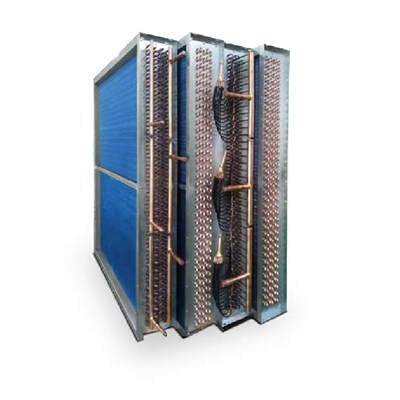
Let me start with the basics that only someone in this industry would really understand. Evaporators work by absorbing heat from a surrounding medium (usually air, in the case of air-cooled systems) as a refrigerant inside the tubes changes from liquid to gas. But in pharmaceutical facilities, regular bare-tube evaporators fall short. Why? Because pharma production often uses cleanrooms, where air must be filtered to HEPA standards, and humidity control is non-negotiable—too much moisture can cause product degradation, microbial growth, or even cross-contamination between batches. That’s where fins come in. The thin metal fins mounted along the tubes increase the surface area of the evaporator without taking up more space, which means the unit can transfer more heat per square foot than a bare-tube design. For pharma cooling, that efficiency isn’t just a nice-to-have—it’s a cost saver on energy bills and a must for maintaining consistent room temperatures.
Early in my career, I got a call from a production manager at a generic drug manufacturing plant outside Indianapolis. They were having a problem with their old evaporators: every summer, when the ambient temperature spiked, their cooling systems couldn’t keep the cleanroom at 20°C (68°F), the exact temperature required for their oral solid dosage line. The bare-tube units they’d been using couldn’t dissipate enough heat fast enough, and the constant overheating was leading to 15% of their batches being rejected for quality issues. When we installed our finned tube evaporators, rated for high ambient temperatures and with fins spaced to prevent dust buildup (a big no-no in cleanrooms, where particulate matter is regulated), their heat transfer efficiency jumped by 28%. By the end of the year, their batch rejection rate dropped to 3%, and they saved $120,000 on energy costs—all from upgrading to a properly sized finned tube evaporator. That moment drove home for me that this isn’t just equipment; it’s a critical part of the pharma supply chain.
What makes finned tube evaporators specifically suited for pharma cooling, as opposed to other industries? Let’s break down the key design features we prioritize for this application. First, the fin spacing. In food processing or HVAC for office buildings, fins are often spaced close together to maximize heat transfer. But in pharma cleanrooms, we need fins spaced at 6–8 fins per inch (FPI) at maximum. Wider spacing reduces the chance of particulate buildup between fins, which would require more frequent cleaning and could introduce contaminants into the air. That’s a non-negotiable for facilities with ISO 5 or ISO 6 cleanroom ratings—any extra debris can damage sensitive products like monoclonal antibodies or cell cultures.
Second, the material of construction. Pharma environments use a lot of harsh cleaning agents, like hydrogen peroxide vapor (HPV) and sodium hypochlorite, for sanitization. So we use copper tubes with aluminum fins that have a polyester or epoxy coating, or even 316L stainless steel for facilities that need extra corrosion resistance. I once had a client that switched from galvanized steel fins to our epoxy-coated aluminum fins because their old units were pitting after six months of HPV disinfection. The new fins lasted four years without corrosion, and they reported that the coating was easy to wipe down during routine cleaning—no more scraping rust debris into the air handler.
Third, condensate management. In any evaporator, as warm air passes over the cold fins, moisture condenses out of the air. In pharma facilities, this condensate can’t be allowed to pool or drip into the product stream. Finned tube evaporators for pharma are designed with a sloped drain pan, insulated to prevent condensation on the pan itself, and often with a secondary overflow pan as a failsafe. We also integrate the drain line with the facility’s wastewater system, which for pharma requires compliance with FDA standards for hazardous and non-hazardous waste. A few years back, a biotech startup in Cambridge told us their old evaporator’s drain pan was leaking condensate into the supply air duct, which then dripped onto their cell culture bioreactors. We redesigned the drain system on our finned evaporator for their space, and that problem was solved instantly.
Another big factor for pharma is load consistency. Pharmaceutical production lines rarely run at full capacity 24/7—batches are scheduled in shifts, so cooling loads change throughout the day. Finned tube evaporators can be paired with variable frequency drives (VFDs) on the fan motors, which adjust the air flow based on the current cooling demand. That’s not just energy efficiency; it’s temperature stability. For example, when a batch is finished and the production line is down, the cooling load drops by 40%, and the VFD slows the evaporator’s fans to match, keeping the cleanroom temperature steady instead of cycling on and off, which can cause temperature fluctuations that stress products like lyophilized drugs. I worked with a vaccine manufacturer in the Netherlands that switched to our VFD-equipped finned evaporators, and they reduced their temperature deviations from an average of ±1.2°C to ±0.3°C, which was enough to help them secure FDA approval for a new vaccine line.
Now, I know what some of you are thinking: “Why not just use a direct expansion (DX) evaporator or a shell-and-tube unit?” Let’s address that. DX evaporators are common, but for large cleanrooms, they often can’t handle the high air flow rates needed to cool thousands of square feet of production space. Shell-and-tube units work for liquid cooling, but they’re bulkier and harder to integrate into existing air handling systems in retrofits. Finned tube evaporators strike the right balance: they’re compact, easy to install in existing ductwork or air handlers, and have the heat transfer capacity to handle large cooling loads while meeting pharma’s strict clean air requirements.
I also need to talk about compliance, because pharma is one of the most regulated industries in the world. Every component in a pharma cooling system has to meet FDA 21 CFR Part 11 standards for documentation, GMP (Good Manufacturing Practices), and cGMP (current Good Manufacturing Practices). Our finned tube evaporators come with a full set of documentation: material test certificates, dimensional reports, performance data, and cleaning instructions that are compliant with FDA guidelines. We also work with clients to validate the units as part of their facility qualification process. A few years ago, we had a client that was undergoing a FDA audit, and they were able to present our evaporator’s validation report as part of their facility’s IQ/OQ (Installation Qualification/Operational Qualification) documentation, which helped them pass the audit on their first try. That’s the kind of peace of mind we offer, because we know that when our clients are audited, their equipment has to stand up to scrutiny.
Of course, it’s not just about selling a unit and moving on. As a supplier, we work with pharma clients through the entire lifecycle of the finned tube evaporator. That starts with a site audit: we’ll go to your facility, measure your cleanroom size, current cooling load, ambient conditions, and cleaning protocols, then design a custom finned evaporator that fits your exact needs. We also provide on-site installation support, training for your maintenance team, and scheduled preventive maintenance services. Maintenance is key—fins can get bent during cleaning, which reduces heat transfer, so we do quarterly checks to straighten fins and inspect for corrosion. We had a client that skipped annual maintenance and ended up with a 20% drop in efficiency because a section of fins was bent. Once we fixed them, their efficiency went back up, and they avoided a costly shutdown during peak production.
I’ve been in this industry long enough to have seen trends change. Right now, there’s a big push for sustainability in pharma—companies are looking for ways to reduce their carbon footprint, and evaporators play a big role in that. Our finned tube evaporators are designed with R-410A refrigerant, which has a lower global warming potential (GWP) than older refrigerants like R-22, and our VFD systems reduce energy use by up to 35% compared to standard evaporators. A large pharmaceutical contract manufacturer in Texas worked with us to upgrade their entire cooling system, and they reduced their annual carbon emissions by 1,200 metric tons—equivalent to taking 260 cars off the road. That’s not just good for their bottom line; it’s good for the planet, and that’s something every pharma company is now focused on.
But for all the technology and compliance, at the end of the day, this is about people. The scientists developing new drugs, the technicians running production lines, the patients waiting for vaccines and treatments—all of them depend on cooling systems that work perfectly, every single day. I still remember the first time I visited that Indianapolis generic drug plant after installing our evaporators. The production manager took me to the control room, and on the screen, the cleanroom temperature was holding steady at 20°C, with no deviations for three weeks. He told me, “That’s the first time in three years we haven’t had to stop the line for temperature issues.” That’s the impact our finned tube evaporators have: enabling life-saving products to get to market, reliably and consistently.

If you’re a pharma facility manager, quality director, or operations lead struggling with cooling issues—batch rejection, temperature fluctuations, compliance headaches, or high energy costs—you don’t have to settle for subpar equipment. A well-designed finned tube evaporator can solve those problems, improve your product quality, and keep your operations running smoothly. To learn more about how our finned tube evaporators can be customized for your pharmaceutical cooling needs, reach out to our team to discuss your requirements and get a tailored solution that fits your facility.
Finned Tube Evaporators References
ASHRAE. (2021). 2021 ASHRAE Handbook: HVAC Applications. American Society of Heating, Refrigerating and Air-Conditioning Engineers.
U.S. Food and Drug Administration. (2022). Guide to Inspections of Pharmaceutical Cleanrooms and Controlled Environments. U.S. Department of Health and Human Services.
World Health Organization. (2019). Good Manufacturing Practices for Pharmaceutical Products: Volume 1, Part II: Controls on Substances and Products. World Health Organization.
Xiangshui Derkang Refrigeration Equipment Co., Ltd.
As one of the most professional finned tube evaporators manufacturers in China, we’re featured by quality products and low price. If you’re going to buy discount finned tube evaporators, welcome to get quotation from our factory. We also accept customized orders.
Address: No. 2, Xiaojian Town Entrepreneurship Park, Xiangshui County
E-mail: 505745223@qq.com
WebSite: https://www.xsderk.com/
