Hey guys, it’s Jake here from the team that builds the complex parts nobody else wants to touch. If you’re a design engineer or production manager, you know that bringing a super intricate part from a napkin sketch to a finished piece that actually works? It’s like trying to put together a 1,000-piece puzzle in the dark—you’re gonna hit snags, waste time, and probably redo 3 steps along the way. Over the last 7 years, we’ve cranked out everything from tiny aerospace turbine blades with 12 internal cooling channels to medical device housings that have to fit a 0.002mm gap, and we’ve screwed up enough times to figure out how to optimize designs so they don’t turn your production line into a disaster. Let’s break this down like we’re chatting over a coffee (no fancy jargon, promise). Complex Parts
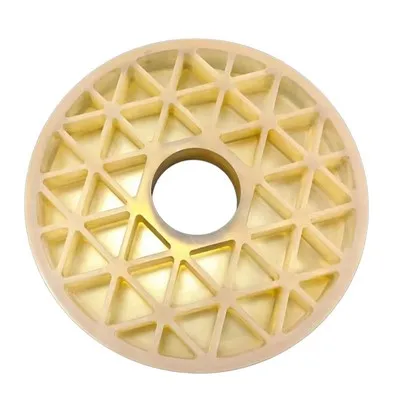
First off, stop treating design and production like they’re separate teams. I’ve seen so many projects where the design team locks in a part, hands it off to us, and then we have to play catch-up because they didn’t realize the geometry would cause a headache for our CNC machines. Last year, a guy called us panicking because his part had a curved internal cavity that his design tool said was “super easy” to machine—turns out, it required a 10-hour custom tool path and we’d have to swap out 3 different bits mid-job, doubling the cost and delivery time. The fix here? Bring your production partner (hi, that’s us!) into the design phase before you finalize anything. We don’t care if your part is for a rocket or a coffee maker—we’ve got 5-axis mills, EDM machines, and a team that’s messed up enough complex parts to spot a design flaw before it turns into a $10k mistake. We even recently added a free 15-min design check for first-time clients because we’d rather flag that the undercut you wanted would take 2x longer than planned now than when you’re already halfway through a production run.
Next up, simplify where you can— but don’t dumb it down. It’s easy to get carried away with tiny features because you can, but every little notch or hole adds time to machining, inspection, and even post-processing. A client came to us a few months ago with a hydraulic manifold that had 17 tiny, non-uniform holes for fluid flow. His CFD said it’d perform perfectly, but when we ran a quick design for manufacturability (DFM) check, we noticed that 12 of those holes were totally unnecessary—combining them into 3 larger, uniform holes cut the production time by 30% and made inspection way easier. Wait, but I hear you—“but Jake, I need that exact dimension for performance!” That’s why this is a collaborative chat, not a “you need to change everything” lecture. We’ll point out what’s a nice-to-have vs a must-have, and sometimes we can even tweak the feature to keep your performance intact without the production pain. For example, that curved cavity I mentioned earlier? The engineer thought he needed a perfect radius, but he could’ve gotten the same performance with a slightly modified radius that’s compatible with standard tooling—we just had to show him the numbers.
Material choice is another big one, and it’s way more impactful than most people think when you’re dealing with complex parts. I’ve seen projects where someone picked a high-end, super strong alloy because it sounded “better,” only to realize it’s way too brittle for the geometry and cracks during machining, or it takes 3x longer to machine than a more compatible material. For complex parts, you need to balance performance requirements with machinability, not just grab the most expensive stuff on the list. Let’s say you’re making a part that needs to hold up to high temperatures—you might think Inconel is the only way, but there are newer grades of stainless steel that have similar heat resistance and machine 40% faster. We keep a running list of materials that work well for intricate parts (and which to avoid) because we test them on our machines all the time—no random guesswork, just real-world data. Also, don’t forget about post-processing—some materials are way harder to polish or coat without messing up the tight tolerances you need. Titanium is great for strength, but its surface oxidizes really easily during heat treatment, so you’ve got to factor that into your design if you need a smooth finish.
Tolerances—everyone gets hung up on these, but they’re not a one-size-fits-all thing. I get it, you want your part to fit perfectly, but if a tolerance of ±0.001mm works for 90% of the part, why specify ±0.0005mm for a feature that doesn’t actually affect performance? That extra tight tolerance adds so much work—you’ve got to use specialized tools, check each part multiple times, and even scrap some that don’t hit the mark. Last year, a medical device client gave us a tolerance of ±0.0008mm for an outer flange, but when we did a quick functional test, we found that a ±0.002mm tolerance worked just as well for their assembly. The difference? That small change cut their production cost by 25% and got them their parts a week earlier, no drop in quality. The key here is to link tolerances to function—ask: does this feature actually need to be that precise? If not, loosen it up. We also use coordinate measuring machines (CMMs) that can hit super tight tolerances, so we’re not saying you have to sacrifice quality, we’re saying you don’t have to over-specify things just because you can.
Additive manufacturing (AM) isn’t always the answer, no matter what you might’ve heard online. A lot of people think 3D printing is the fix for every complex part, but it’s not—sometimes traditional machining is faster, cheaper, and gives a better surface finish. We’ve had clients come to us asking for AM parts because they think it’s “cool,” but when we run the numbers, machining is 50% faster and the part has way less internal stress. That said, AM is great for parts with internal lattices or super complex geometries that can’t be machined. A aerospace client worked with us last year to make a turbine blade with a lattice inside it for weight reduction—there was no way to machine that lattice, so AM was the only way, and we optimized the lattice design to be stronger, lighter, and easier to print without warping. The takeaway here is to pick the right process for your part, not the trendiest one. We have both machining and AM capabilities, so we can test both and tell you which is actually better for your specific design—no sales pitch, just the facts.
Testing early and often is non-negotiable. I’ve seen projects go 3 months deep before anyone tests a prototype, only to find out the part breaks under pressure or leaks fluid, and then you have to redesign and re-prototype, adding months to your timeline. For complex parts, test a prototype before you finalize the design. We work with a lot of clients to make quick, low-cost prototypes so they can test fit, function, and material compatibility way earlier in the process. Last quarter, a automotive client sent us a prototype that had a weird vibration issue when it was assembled—we did a quick breakdown and found that the internal geometry was causing a resonance problem. We changed the thickness of one small wall, fixed the resonance, and he was able to lock in his design without any last-minute disasters. Also, we do in-process testing too—every part gets checked at multiple steps of production, not just when it’s done, so if something starts going wrong with machining, we catch it early before you waste materials.
Communication, at the end of the day, is the biggest optimization of all. I can’t tell you how many projects we’ve messed up (early in our time) because we didn’t ask enough questions, or the client didn’t share all their requirements. Now, we assign a dedicated point person to every project—someone who knows both production and your industry, so you’re not talking to a random sales rep who doesn’t get your part. We check in every step of the way, send photos of each stage, and answer every question, no matter how small. If you’re working on a complex part, you shouldn’t feel like you’re talking to a black box—you need a partner who’s invested in making your part work, not just filling an order.
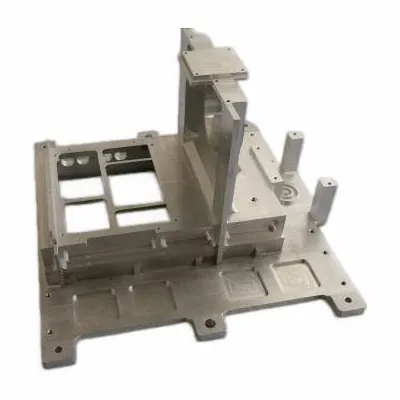
So, to wrap this up, optimizing designs for complex parts isn’t about making huge, fancy changes—it’s about collaborating early, simplifying where it makes sense without losing performance, picking the right materials and processes, not over-specifying tolerances, testing early, and talking openly with your production partner. If you’re working on a part that’s giving you headaches, or you just want to get a second opinion on your design before you pull the trigger, reach out to our team. We don’t do generic parts, we live for the tricky ones, and we’ll help you make your complex part production way smoother, faster, and cheaper.
Optical Test Equipment References
- American Society of Mechanical Engineers. Design for Manufacturability: A Practical Guide. 2021.
- AWS International. Additive Manufacturing for Complex Industrial Components. 2022.
- ISO 9001:2015. Quality Management Systems – Requirements, Clause 8.2. Design and Development Planning.
- Machining Data Handbook. 6th ed. Society of Manufacturing Engineers, 2018.
- Journal of Manufacturing Processes. "Tolerance Optimization for Intricate Machined Parts." Vol. 48, 2020, pp. 112-121.
Xi’an Zhongke Lead Ir-Tech Co., Ltd.
We are one of the most experienced complex parts manufacturers in China, specialized in providing high quality OEM products with the industrial grade. We warmly welcome you to wholesale high performance complex parts at an affordable price from our factory.
Address: Building 8, Hard Technology Enterprise Community No.3000, Biyuan 2nd Rd, High-Tech Zone Xi’an, Shaanxi, China
E-mail: sales@lead-ir.com
WebSite: https://www.leadinfrared.com/
