As a rolling tool case supplier, I’ve spent the last decade talking to construction crews, electricians, automotive techs, and HVAC specialists who all share the same frustrating problem: their tools are either scattered across a work truck bed, stuffed into a too-small bag that tears at the zippers, or so heavy they can barely haul them up three flights of job-site stairs. A few years back, a regular customer—an electrician named Mike who’d been in the trade for 18 years—stopped by our warehouse with a dented hard-shell case that had broken wheels and compartments that overflowed so badly he was taping them shut. “I need something that grows with my job,” he’d said. That comment stuck with me, and it’s what led our team to dig deep into designing rolling tool cases with extendable compartments—products that aren’t just tool storage, but solutions for the chaos of modern work. Rolling Tool Case
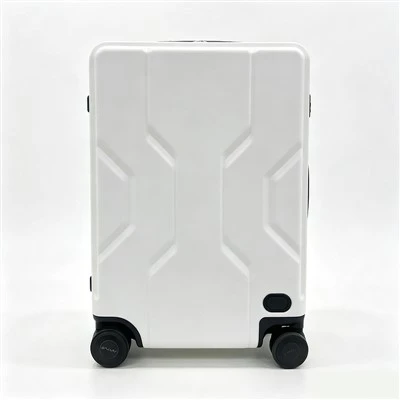
First, let’s break down what exactly this product is, because “extendable compartments” is a term that gets thrown around a lot, often to describe cheaply made bags that stretch a few inches and tear after a month. A quality rolling tool case with extendable compartments is a wheeled storage unit built to organize, protect, and expand to fit variable tool loads. Unlike standard rolling tool boxes that lock into a fixed size, its primary feature is one or more compartment sections that slide out, lift up, or pull apart to add vertical or horizontal space, depending on how many tools you’re carrying that day. It marries the portability of a rolling case (built with heavy-duty wheels, telescopic handles, and durable exteriors) with the flexibility of modular storage—something that adapts, not just holds.
What makes these extendable compartments different from the flimsy add-ons you might find at a big-box store? For starters, the engineering is focused on load capacity and stability, not just stretch. Most reputable models, like the ones our team develops, use reinforced plastic or aluminum framing for the extendable sections, so when you pull a compartment out to add space, it doesn’t sag or tip to one side. We test our designs by loading them with 150 pounds of tools, pulling them across concrete and gravel, and extending each compartment 50 times in a row to make sure the sliders don’t jam or break. The best extendable compartments also have locking mechanisms—clasps or latches that keep sections secure when collapsed, so you don’t have to worry about a compartment popping open while you’re rolling it across a job site, and release levers that let you expand or collapse the space with one hand, which is a huge win when you’re carrying a drill or a ladder in your other arm.
Let’s talk about who these cases are for, because they aren’t one-size-fits-all, and that’s something I see a lot of suppliers miss. Our customers range from independent contractors who do residential remodeling to large electrical crews that carry 100+ tools between them. For a residential plumber who only needs a handful of pipe wrenches, a drain snake, and a pressure gauge for small jobs, the fixed base of the rolling case is enough—they can keep their most-used tools in the lower compartments, and collapse the upper extendable section when they don’t need extra space, cutting down on bulk while they’re moving between job sites. But for a large commercial HVAC technician who’s doing a full system install in a warehouse, they can extend multiple compartments to fit duct tools, refrigerant gauges, and extra parts, without having to lug a separate tool bag or tote. The extendable feature solves a pain point I hear constantly: workers showing up to a job site missing a tool because they couldn’t fit it in their fixed-size case, or having to leave a tool behind because their case is too heavy once it’s full.
I also want to address a common misconception: rolling tool cases with extendable compartments are just for big, bulky jobs. That’s not true. We supply cases for trades like carpentry, where you might carry a tape measure, a level, a few saws, and a box of screws for a small deck build one day, and add a circular saw, a nail gun, and extra lumber fasteners for a kitchen reno the next. The extendable compartment lets you adjust to both, without investing in two separate cases, saving workers money in the long run. And for someone who works in a smaller space—like an automotive tech who works in a tight garage bay, or an electrician who works in crawl spaces—being able to collapse the case to a compact size makes it easier to fit into the back of a work truck, while still having room for all their essential tools.
Over the years, we’ve also learned that the best rolling tool cases with extendable compartments balance expandability with organization, not just extra space. It’s not enough to have a section that slides out; that section needs built-in pockets for screwdrivers, pliers, or hex keys, so tools don’t jostle around when you’re rolling the case. Many of our designs have adjustable dividers inside the extendable compartments, so you can customize the space to fit long items like extension cords or short wrenches. We also add weather-resistant linings in the extendable sections, because a job site is unpredictable—rain, dust, or mud can turn a metal tool into a rusty mess in a matter of hours. The extendable compartments on our cases seal tightly when collapsed, keeping tools clean and dry, while the materials we use (hardened polypropylene, scratch-resistant aluminum) stand up to being dropped off a work bench, or rolled over loose gravel.
I should also mention how these cases compare to other tool storage options, because that’s something a lot of workers ask when they’re shopping. A standard rolling tool box is great for a fixed shop, but it’s too bulky to haul to job sites. A backpack tool bag is portable but can’t hold large tools, and it strains your back after a full day. A rolling tool case with extendable compartments hits that middle sweet spot: it’s portable enough to roll up a construction site ramp, compact enough to store in a work truck, and flexible enough to adapt to whatever tools you need for the day. The extendable feature is the key differentiator—you don’t have to choose between a small, light case for quick jobs and a large, heavy case for big jobs; this one does both.
We’ve tested this out with Mike, that electrician I mentioned earlier. After he brought in his dented old case, we gave him a prototype of our first extendable compartment rolling case. A year later, he came back to our warehouse with another case to recommend to his crew. “Before, I’d leave my voltage tester at home half the time because my case was too full,” he told me. “Now, when I’m running a new house, I extend the top compartment, and I can fit my multimeter, my fish tape, and even a spare outlet tester. When I’m just doing a quick repair, I collapse it, and it’s half the size. I don’t have to carry two cases anymore.” That’s the kind of feedback that matters to us, because it’s not about selling a product—it’s about solving a real problem that tradespeople face every single day.
Another point we emphasize as a supplier: durability, not just novelty. Too many extendable compartments on the market are designed to be a fun add-on, not a long-term investment. We build our cases to last 5+ years of daily use, because a tool case is a tradesperson’s most important piece of equipment, right up there with their drill or their saw. The extendable sliders on our units are designed to handle up to 50,000 extend-and-collapse cycles, which is about 20 times a work week, for 50 weeks a year. We use sealed bearings in the wheels so they don’t fill with sawdust or mud and jam, and the telescopic handle is reinforced so it doesn’t bend when you’re pulling a full case up a curb.
Let’s also talk about small, practical features that make these cases stand out. Many rolling tool cases with extendable compartments have a padded top handle, so if you need to lift the case over a threshold or into a storage closet, you don’t have to grip the hard plastic edge. Some have side pockets for water bottles or tape measures, which are easy to reach when the case is collapsed. The extendable compartments themselves often have carry handles, so you can pull the extra section out and use it as a small tote for tools you need on a job site, instead of carrying the whole heavy case across a parking lot. That’s a detail I didn’t even think about early on, but Mike pointed it out after using the prototype. “I can grab the extendable section for my hand tools when I’m heading into a basement that’s too tight for the whole case,” he said. “That saves me so much time.”
As the market for these products grows, there are a lot of knockoff brands that cut corners, so it’s important to know what to look for when you’re shopping. First, check the load capacity: a quality rolling tool case with extendable compartments should be able to hold at least 100 pounds when collapsed, and at least 150 when extended. If a product’s load capacity is only listed when collapsed, that’s a red flag—most cheaply made units can’t handle the extra weight of extended sections without breaking. Look for locking mechanisms on the extendable compartments, so you don’t have to worry about them opening accidentally during transport. And check the warranty: reputable suppliers will offer at least a 2-year warranty on rolling cases, and up to 5 years on the extendable compartment parts, because they stand behind their engineering.
At the end of the day, a rolling tool case with extendable compartments isn’t just a storage solution—it’s a tool for the modern tradesperson. It adapts to your workload, saves you time, reduces wear and tear on your back, and makes sure you never leave a tool behind because your case is too small or too bulky. After 10 years in this industry, I’ve seen a lot of tools come and go, but the best ones are the ones that make a tradesperson’s job easier, not harder. That’s why our team pours so much time into refining these cases, listening to feedback from Mike and other customers, and making sure every extendable compartment works as hard as the people who use them.

If you’re a tradesperson tired of juggling multiple tool bags, or a shop manager looking to upgrade your team’s storage, reach out to us to discuss your needs. We can walk you through our designs, test how a case would work for your specific tools, and help you find a solution that fits your job, your budget, and your workflow. The best tool case is the one that works with you, not against you—and that’s exactly what these extendable compartment rolling cases are built to do.
Outdoor Luggage References:
- Occupational Safety and Health Administration. (2022). Ergonomics for Trades: Reducing Musculoskeletal Injuries in Construction. U.S. Department of Labor.
- National Tool, Hardware, and Agricultural Implement Association. (2023). Tool Storage and Mobility Trends for Skilled Trades. NTIA Industry Report.
- American Foundry Society. (2021). Durability Standards for Industrial Tool Storage Equipment. AFS Engineering Guidelines.
Guangdong Meijiamei New Material Technology Co., Ltd.
As one of the most professional rolling tool case manufacturers and suppliers in China, we also support customized service. Welcome to wholesale bulk high quality rolling tool case made in China here from our factory. If you have any enquiry about quotation and free sample, please feel free to email us.
Address: Building 6, No.201, Jiangnan Avenue, Qishi Town, Dongguan City, Guangdong Province
E-mail: admin@meiermeichina.com
WebSite: https://www.cnmeijiamei.com/
