If you’ve ever stopped to admire a metal landscape bridge winding through a community park, over a small creek, or along a hiking trail, you might’ve wondered: how long will this structure stand strong? As a landscape bridge supplier who’s worked with these structures for more than 15 years, I’ve answered this question dozens of times for homeowners, city planners, and trail managers. The answer isn’t a simple number—it’s a mix of material science, maintenance, design, and even the environment the bridge calls home. Today, I’ll break down exactly what determines a metal landscape bridge’s lifespan, what you can do to extend it, and why choosing the right metal for your project makes all the difference. Landscape Bridge
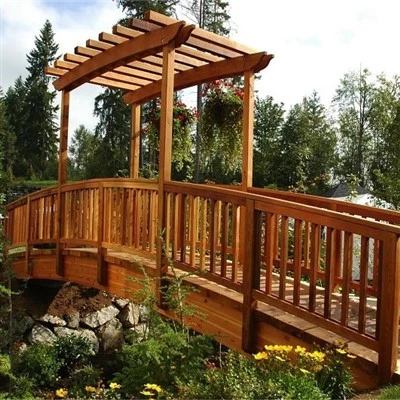
First, let’s get clear on what we mean by a metal landscape bridge. These aren’t the heavy-duty steel bridges that carry 18-wheelers across interstates. We’re talking about structures designed for pedestrian use: connecting park sections, crossing small waterways, or creating a focal point in a residential garden. Most are made from either aluminum, weathering steel (COR-TEN), or hot-dipped galvanized steel—three materials each with their own pros, cons, and lifespans.
Let’s start with the most common material we use: hot-dipped galvanized steel. If you’ve ever picked up a steel nail that’s slightly silvery and rough, that’s galvanized steel. The process involves dipping steel into molten zinc, which creates a protective layer that prevents rust. For a standard pedestrian landscape bridge made from this material, with proper installation and routine care, the average lifespan is 40 to 70 years. That’s a huge range, I know—let me explain why it’s not a single number. Back in 2007, we installed a 30-foot galvanized steel bridge over a shallow creek in a state park in northern Minnesota. The park does a weekly check: they wash off road salt runoff (a big enemy of galvanized steel) from the bridge twice a month in winter, and every 10 years they do a quick touch-up of the zinc coating in the most worn areas, like the handrails where visitors grip constantly. Last year, that bridge was still as sturdy as the day we installed it, and the park estimates it has at least another 50 years left. But I also remember a bridge we put up in a coastal development in southern Florida in 2008. The site had high salt air, and the developer skipped the regular washings because they thought it was “just a park bridge.” By 2018, we noticed small rust spots along the bottom of the beams, and by 2020, the structure needed a full re-coating. That same bridge now has a projected lifespan of less than 30 years—half of what it should be. That’s the biggest takeaway for any metal bridge: environment and maintenance aren’t afterthoughts, they’re the biggest factors that shorten or extend a bridge’s life.
Next, weathering steel, or COR-TEN. This is the one I love for landscape projects because it ages into that rich, rust-colored patina that looks like it’s always been part of the landscape, not just a man-made structure. Unlike regular steel, weathering steel doesn’t need paint or a zinc coating to stay protected. When it’s exposed to rain and air, it forms a thin, stable layer of rust that seals out moisture and prevents further corrosion. For a weathering steel landscape bridge, a properly designed and installed one in a moderate climate (think: a park in Ohio or a hiking trail in Colorado) can last 75 to 100 years. Wait, that’s even longer than galvanized? It’s true—if you get the design right. But there’s a catch. If weathering steel is in an area with constant moisture, like a permanently flooded creek crossing, or if it’s exposed to heavy industrial fumes that can break down the patina, the protective layer won’t form properly. I learned that lesson the hard way in 2012. A small town in Texas reached out to us for a bridge over a seasonal creek that fills with water every spring. They wanted the weathering steel look, so we designed it for their average rainfall. But that year, the creek flooded twice as much as usual, and the bridge’s lower beams were submerged for two straight months. The patina never formed evenly on those submerged parts, and within five years, we had to do a major repair to stop corrosion from spreading. If we’d adjusted the design to raise the beams above the high water mark, we would’ve avoided that problem. So weathering steel’s longevity depends on making sure it doesn’t get too much constant contact with water when it’s young—before that protective patina is fully set.
Then there’s aluminum. Aluminum is lightweight, rust-proof (it forms its own invisible protective oxide layer on contact with air), and it doesn’t need any coatings or touch-ups. For that reason, it’s a go-to for projects where weight is a concern—like bridges that go over soft, uneven ground where heavy footers would be hard to install, or residential garden bridges that don’t want a bulky steel structure. The lifespan of an aluminum landscape bridge is actually the longest of the three, right up there with weathering steel: 80 to 100 years, in most cases. We installed an aluminum bridge in a backyard garden in Seattle in 2010, and the homeowners have done almost no maintenance besides wiping off bird droppings once a year. When we checked in for a routine inspection last year, the bridge’s beams and handrails were completely free of corrosion, and it still has the same smooth finish it did when we installed it. The only time aluminum has issues? If it’s in a very acidic environment, like near a mine site where runoff has a high pH, or if it’s constantly exposed to harsh chemicals, like a bridge near a chemical plant. But for most landscape projects—parks, trails, residential gardens—aluminum is one of the lowest-maintenance, longest-lasting options you can choose.
Now, let’s talk about what can shorten a metal landscape bridge’s lifespan, because it’s not just the material. I’ve seen perfectly good galvanized steel bridges go bad in 10 years, and weathering steel bridges fail in 15, all because of avoidable factors. First, improper installation. A lot of people think metal bridges are just heavy boxes you set on posts, but that’s not true. If the foundation isn’t dug deep enough to account for freeze-thaw cycles, the bridge will shift over time, putting stress on the beams and joints. If the fasteners are the wrong material—like regular steel bolts instead of galvanized or stainless steel bolts—those will rust first, weakening the entire structure. We once had a client in Wisconsin who installed a bridge we’d built, but they used standard steel lag bolts to attach it to their wooden posts. Within three years, the bolts were so rusted they needed to replace every one, and the bridge had shifted 2 inches off its original alignment. That’s a $100 mistake (the bolts) that ended up costing them $3,000 in repairs.
Second, lack of regular maintenance. I know, no one wants to think about maintaining a bridge that’s meant to just sit in the park. But small, routine checks add up. Every year, check for debris buildup on the bridge’s deck or understructure—leaves, sticks, and mud trap moisture against the metal, causing rust. Every 5 to 10 years, depending on the material, do a quick inspection of joints, handrails, and any areas that get a lot of foot traffic. For galvanized steel, touch up any small rust spots with a zinc-rich paint, which is designed to bond with the galvanized layer. For weathering steel, just make sure the patina is forming evenly—if there are shiny, bare spots, a quick wipe with a weak acid solution (like white vinegar) will help the rust layer form there. For aluminum, just wash it with a mild soap and water twice a year to remove dirt and bird droppings, which can eat at the finish over time.
Third, overloading the bridge. Landscape bridges are designed for pedestrian use—about 100 pounds per square foot, which is enough for people walking, maybe a dog or a stroller. But I’ve seen people put picnic tables, garden tools, or even small playground equipment on these bridges, especially residential ones. That extra weight puts stress on the beams that wasn’t accounted for in the design, and over time, that can cause warping or cracks. We always include a label on every bridge we install that says “Pedestrian Use Only” and we advise clients to communicate that to park visitors or neighbors—small signs that remind people not to load more than the bridge is meant for go a long way.
Now, let’s talk about what you can do to maximize your bridge’s lifespan, no matter which material you choose. First, match the material to your environment. If your project is in a coastal area with high salt air, aluminum or galvanized steel is a much better bet than weathering steel. If you want that natural rust look, weathering steel works great in moderate climates away from constant water exposure. If you’re working with a tight budget, galvanized steel is still a solid choice—you just need to commit to regular maintenance. Second, invest in professional installation. We’ve seen so many clients try to cut costs by installing the bridge themselves, and they end up with a structure that’s not safe, or that doesn’t last nearly as long. A professional installer will account for your site’s soil type, drainage, and weather conditions to build a foundation that keeps the bridge stable for decades. Third, set up a maintenance schedule. Even something as simple as a yearly 30-minute check by your team can catch small problems before they become big, expensive ones. We give every client a free maintenance guide when we deliver their bridge, and we’re always available to answer questions if they notice something off.
I get asked sometimes, “Is a metal bridge worth the cost compared to wood?” That’s a fair question. A wooden landscape bridge has an average lifespan of 15 to 25 years, if it’s treated with preservatives. So even though metal bridges have a higher upfront cost, they last two to four times longer, which actually saves you money in the long run. Plus, metal bridges are more resistant to pests, fire, and extreme weather—wood can rot, termites can eat it, and a stray spark from a campfire can destroy it, but metal bridges stand up to all of that.
Last year, we worked on a project in a national park in Wyoming. They wanted a bridge over a stream that would blend into the mountain landscape, and they chose weathering steel. We designed it to sit above the high water mark, and we included a regular maintenance schedule where park rangers check the patina every spring. The park projected that the bridge will last at least 80 years—longer than the park’s own buildings, which need repairs every 50 years. That’s the value of a well-made metal landscape bridge: it’s not just a structure, it’s a piece of the landscape that will be there for generations of visitors to enjoy.
If you’re planning a landscape bridge for a park, trail, or residential garden, and you want to know more about which material is right for your project, or how to maximize its lifespan, we’re here to help. We’ve worked on hundreds of projects across the country, and we can tailor a design to fit your site, budget, and needs. Whether you’re looking for a small aluminum garden bridge, a weathering steel focal point for a community park, or a durable galvanized steel bridge for a hiking trail, we can help you choose the right option and ensure it lasts for decades. To discuss your project, reach out to our team to learn more.
Engineered Wood Beams References
- American Association of State Highway and Transportation Officials (AASHTO). "Guide Specifications for Weathering Steel Structures." 2018.
- National Association of Corrosion Engineers (NACE). "Corrosion Costs and Preventive Strategies in the United States." 2016.
- Forest Products Laboratory. "Wood vs. Metal Bridge Lifespan Comparison." U.S. Department of Agriculture, 2020.
- International Code Council (ICC). "Pedestrian Bridge Design and Maintenance Standards." 2021.
Zendekin Low-Carbon Technology Co., Ltd.
We are one of the most professional landscape bridge manufacturers and suppliers in China. With abundant experience, we warmly welcome you to wholesale customized landscape bridge from our factory. If you have any enquiry about quotation, please feel free to email us.
Address: Building 3, Yincheng INC Center, No.59 Tianyuan West Road, Jiangning District, Nanjing, Jiangsu, China.
E-mail: zdqeco@163.com
WebSite: https://www.zdqeco.com/
