Hey there, Water Cooled Motor
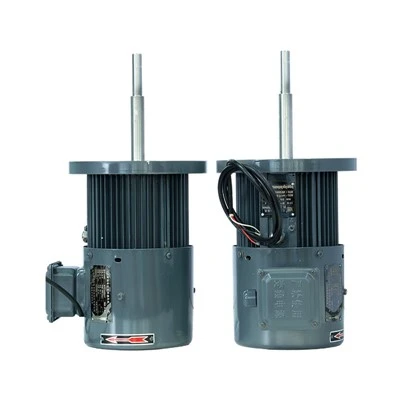
If you’re running a water cooled motor—whether it’s for a heavy-duty industrial pump, a marine propulsion system, or even a high-powered HVAC unit—you already know how critical that cooling loop is. I’m the guy who’s been supplying water cooled motors for over a decade now, and let me tell you: one of the most overlooked maintenance steps that keeps these motors alive longer? Flushing the cooling jacket.
I’ve seen it too many times. A client calls panicking because their motor’s overheating mid-shift, and we crack open the pump to find gunk, scale, and even rust clogging the cooling passages. Most of the time, all they needed was a proper flush. It’s not rocket science, but skip doing it right, and you’re looking at premature bearing failure, winding burnout, or thousands in downtime.
Let’s break this down like I’d walk a customer through it on a service call—no fancy jargon, just what actually works.
First, why even bother flushing? Your water cooled motor’s cooling jacket isn’t just a pipe; it’s a series of tight, winding passages around the stator and rotor. Over time, regular tap water adds mineral scale, process run-off picks up sludge, and even closed-loop systems get bacterial growth or corrosion debris. That gunk acts like insulation—your motor’s heat can’t escape, so it runs hotter than it was designed to. Hotter operation = shorter lifespan, lower efficiency, and way more repairs down the line. For reference, a study from the Hydraulic Institute found that unmaintained cooling loops can reduce motor efficiency by 5-15%—that’s money straight out of your pocket every month.
Now, before you grab a hose and start spraying water into the jacket, let’s get the prep right. You can’t just jump in here—skip prep, and you’ll either make a bigger mess or damage the motor. Here’s what you need to do first:
- Kill power, and I mean KILL it. This is non-negotiable. Unplug the motor, lockout/tagout the breaker if it’s hardwired—don’t take chances. A water flush means you’re dealing with liquid near electrical parts, so this step saves lives.
- Drain the old fluid completely. Locate the drain plug on the lowest point of the cooling jacket (it’s usually a brass plug on the side of the motor housing). Set a bucket under it, unscrew it, and let all the old water/antifreeze slosh out. If your system has a heat exchanger, drain that too—trapped fluid there is just leftover gunk waiting to mix in.
- Inspect the passages quick. If you can see the inside of the cooling jacket through the inlet/outlet ports, take a glance. If you spot thick, black sludge or caked scale, you might need a chemical cleaner, not just a water flush. If it’s just light discoloration, plain water might work.
Okay, prep done. Now, how to flush—this is where people mess up. Two methods work, depending on how bad the gunk is:
Method 1: The Basic Water Flush (For Light Build-Up)
This is what you do if your loop is just a little cloudy, no thick gunk. Grab a garden hose (or a low-pressure water line—don’t use high pressure, it can crack the jacket!) and hook it up to the motor’s water inlet port. Leave the outlet port open. Turn the water on slow at first, then gradually increase pressure to around 20-30 PSI (think gentle garden hose pressure, not a pressure washer). Let it run for 5-10 minutes, watching the water coming out the outlet. If it’s clear and free of debris, you’re good. If it’s still murky, keep going a few more minutes. Once it runs clean, turn off the water, disconnect the hose, and drain the motor again to get any leftover loose gunk out.
Wait, a quick pro tip here: never use hot water for a basic flush. Hot water can make mineral scale soft but not dissolve it, and it might shock the motor’s metal parts if they were cold from sitting. Stick to room temp water.
Method 2: The Deep Flush (For Stubborn Sludge & Scale)
If the basic flush didn’t work, that’s when you need a little more oomph. Don’t go buying random chemicals from the hardware store—ask your motor supplier or a cooling system specialist for a non-corrosive, motor-safe descaling solution. Some people use vinegar, but for industrial motors, vinegar can be too mild or even corrosive on aluminum jackets (super common in modern water cooled motors).
Here’s how to do the deep flush:
- Mix the descaler per the instructions—usually 1 part solution to 4 parts water. Don’t overdo it, that’s how you etch the inside of the jacket.
- Fill the cooling jacket with the solution, making sure all passages are full (you might need to top it off a few times as air escapes). Let it sit for 30-60 minutes—no longer, unless the instructions say so. If you see bubbles or foam coming out, that’s the solution breaking down the gunk, which is normal.
- After soaking, drain the solution completely—this stuff is full of debris, don’t just leave it sitting. Then, do the basic water flush we talked about, running clean water through until it runs totally clear. You’ll want to flush twice here to make sure no leftover solution is in the passages—acidic descaler can eat at windings if it’s not fully rinsed.
And one thing I can’t stress enough: never use a pressure washer. I’ve seen guys come back with a cracked motor housing because they cranked up the pressure washer to clean the jacket. The cooling passages are narrow, so high pressure can exert too much force on the walls, causing leaks or even breaking the jacket entirely. Stick to low pressure, always.
Once you’re done flushing, you need to refill the loop—this step ties it all together. What you refill with matters a lot. For closed-loop systems (most industrial ones are closed, to prevent evaporation and contamination), use a 50/50 mix of water and ethylene glycol antifreeze, or a propylene glycol if you’re in a food-grade facility. Antifreeze does more than just prevent freezing—it also adds corrosion inhibitors that protect the cooling passages from new scale. For open-loop systems (like a motor hooked up to a municipal water line), use a water treatment additive to prevent new mineral build-up.
Refill slow, and keep an eye on the air vents—trapped air in the jacket will cause overheating just as bad as clogged passages. Once it’s full, run the motor for 10 minutes at idle, then turn it off and check the level again. Top it off if needed.
Now, how often should you do this? I get asked that all the time. For open-loop motors (hooked up to tap water), flush every 6 months. For closed-loop, it’s every 12-18 months. If your motor runs in a dirty environment (like a construction site or near a factory with heavy dust), cut that time in half. Regular flushing isn’t a one-and-done chore—it’s part of keeping your motor running efficiently.
Wait, let’s address a common myth I hear: “If I use distilled water, I don’t need to flush.” Nope, wrong. Distilled water doesn’t have minerals, but it still can get bacterial growth over time, and even distilled water has trace elements that will build up over a year. Flushing is still necessary. Another myth: “Flushing will remove all scale, so I don’t need to do anything else.” Flushing removes loose debris, but for really heavy scale, you might need to pull the motor apart and clean the jacket manually. That’s when it’s time to call a pro, not try to do it yourself.
From a supplier’s perspective, I’ve seen first-hand what happens when you skip this step. A guy had a 500HP motor running his rock crusher, and he skipped flushing for 3 years. The cooling passages were so clogged, the motor burned out mid-shift—cost him $12k in a new motor, plus $8k in downtime. If he’d flushed twice a year, he’d have spent less than $200 a time on maintenance. That’s the difference between proactive and reactive.
If you’re not sure how to check if your motor needs a flush, here’s a quick warning signs: your motor is running hotter than its usual operating temp (check the manufacturer’s spec, usually around 180-200°F for most industrial motors), you see leaks around the cooling ports, or your energy bills are going up without any change in usage. Those are all signs the cooling loop is compromised, and a flush is probably the fix.
Look, I know maintenance can feel like a hassle, but it’s way cheaper than replacing a motor. I supply water cooled motors for all kinds of applications—marina operators, factory managers, construction companies—and the number one thing I recommend to keep their motors going long is a regular flush.
If you’re still unsure about how to do this safely, or you need a replacement motor if yours does fail, don’t guess. Reach out to the experts. We don’t just sell motors—we help you keep the ones you have running. Whether you need a step-by-step walkthrough for your specific model, or you’re looking for a reliable replacement, we’re here to help with no pressure, just straight talk.

Don’t wait until your motor overheats on the busiest day of the year. Schedule your next flush, or connect with our team to get all the details you need.
Long Shaft Motor References
Hydraulic Institute. (2022). Industrial Cooling Loop Maintenance Best Practices.
National Electrical Manufacturers Association (NEMA). (2021). Guidelines for Water Cooled Motor Operation & Maintenance.
American Society of Mechanical Engineers (ASME). (2020). Cooling System Maintenance for Rotating Equipment.
Dongguan Xingya Mechanical and Electrical Equipment Co., Ltd.
As one of the most experienced water cooled motor manufacturers in China, we have world-leading production equipment and strong manufacturing capabilities. Please feel free to buy bulk customized water cooled motor made in China here from our factory.
Address: 1st Floor, Building 14, Morgan Industrial Park, No.328 Zhenhua Road, Dongguan City, Guangdong Province,China.
E-mail: gldzsm@outlook.com
WebSite: https://www.xingyamotor.com/
