Hey there, it’s Jake from [your road bike frame supplier name]—you know, the crew that’s been building those lightweight, performance-driven frames you’ve been crushing Strava segments on lately. I get it: nothing stings harder than leaning your bike against a lamppost, or nudging it too hard in the basement, and glancing down to see a crack in your frame. Maybe it’s a tiny hairline near the bottom bracket, or a chip in the carbon right where your wheel clears the down tube. Before you panic and start eyeing a whole new bike (or a custom frame order from us that’d have you waiting 12 weeks), let’s talk about what actually works for fixing road bike frame damage—whether it’s a scratch, a small crack, or even a mild dent. I’ve worked with riders who’ve fixed frames mid-tour, and even helped a few buddies patch up their investment after a race mishap—no fancy shop tools required for most of these fixes. First off, let’s cut through the noise: not all damage is fixable. That creak you thought was a loose headset? Might actually be a hidden crack that’s already shifted. If your frame is a aluminum one (super common for entry-level to mid-range road bikes) and the crack is longer than a quarter, or if it’s on a high-stress area like the head tube or seat stay junction, swap it—aluminum doesn’t flex well, and a crack there can snap mid-climb. Same with carbon fiber: if you can see fabric popping through the outer layer, or if the damage is near the bottom bracket (where all your power transfers) or the dropouts, don’t mess around—hit us up for a new frame. But if it’s a superficial scratch, a tiny hairline crack under the clear coat, or a mild dent that didn’t penetrate the inner core? Let’s dive in. Road Bike Frame
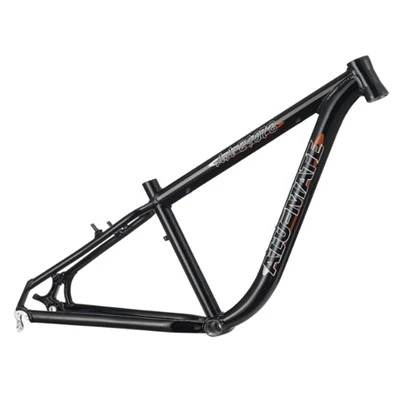
First up, let’s split this into two big categories: aluminum frames (most entry-to-mid range) and carbon fiber frames (pro-level, lightweight builds, high-end hybrids). I’m not gonna lie—carbon feels scary to fix, but it’s doable for small stuff, and way cheaper than a new frame. Let’s start with the easiest fix first: superficial clear coat scratches. These aren’t structural at all—they’re just the clear layer getting scraped when you slid your bike into the car rack, or a rock kicked up from a rider ahead. For these, grab some microfiber cloth, rubbing compound (the non-abrasive kind for clear coats, not car wax that’ll leave swirls), and a little elbow grease. Dab a tiny bit of compound on the scratch, rub in circular motions for 10-15 seconds, wipe off, and check. If it’s still faint, repeat—most small, shallow scratches disappear completely with this. Pro tip: skip the colored touch-up pens unless you’re 100% sure the scratch doesn’t go through the clear coat. If you use a pen on a structural scratch, you’re sealing in moisture and making the crack worse.
Next, small hairline cracks. Let’s do aluminum first, since it’s stiffer and less forgiving. For aluminum, if the crack is under an inch long, not on a high-stress spot, and no paint is flaking, you can do a temporary fix for short rides, but here’s the thing: aluminum cracks propagate fast when you put power to them. So this is only for if you’re stuck on a tour, not for your daily commute or races. Grab some two-part epoxy (the kind that sets in 5 minutes, not the industrial stuff that takes 24 hours), clean the crack with isopropyl alcohol to get rid of any grease or dirt, squeeze a tiny bead of epoxy into the crack, smooth it flat with a plastic card, let it cure for the full time (don’t ride it early!), then sand it down smooth and touch up the paint. But again—this is a band-aid. For real, long-term fixes on aluminum, you need a TIG welder, and that’s not a DIY job. If you’ve got a mid-range aluminum frame with a crack, hit us up—we can walk you through local repair options, or even help you decide if a new frame is worth it (and trust me, we’re not gonna upsell you if your old frame can work).
Now for carbon, which is where most riders get nervous. Small hairline cracks on carbon—same rule: under an inch, no fabric exposure, not on high-stress areas. This stuff is doable at home if you’re patient. First, prep: use isopropyl alcohol to clean the entire area, make sure it’s totally dry. If there’s any clear coat flaking, gently sand it with 2000-grit sandpaper to smooth the edge, so your repair adheres. Next, grab carbon fiber repair resin (not regular epoxy—this stuff is formulated to bond with carbon fabric), a tiny piece of matching carbon fabric (you can cut it from an old scrap, or pick up a cheap repair kit online), and some mixing sticks. Mix the resin per the instructions, spread a thin layer over the crack, lay the carbon fabric over it, spread another thin layer of resin on top, make sure there’s no air bubbles (those are bad—they’ll weaken the repair), and let it cure for the full time (usually 24 hours, no shortcuts here). Once it’s cured, sand it smooth with 2000-grit, then 3000-grit to get it shiny, and top it with clear coat to match the rest of the frame. I’ve had a buddy do this on his carbon road frame after a race crash, and he’s put 2,000 miles on it since—no issues. But if you’re not the DIY type, don’t stress: most local bike shops do carbon repairs these days, or we can connect you with trusted service providers if you hit us up.
Wait, what about dents? Mild dents, the kind that don’t make a loud crunch when you nudge your frame, just a little dip in the down tube. For aluminum, small dents (less than an inch) that don’t affect the tube shape don’t need repair at all—aluminum is pretty resilient, and that dip won’t cause a crack. If the dent is bigger, same rule as cracks: check if it’s on a high-stress spot, and if you’re not sure, bring it to a shop. For carbon dents, this is trickier. If the dent is just in the clear coat, no structural damage—buff it out with rubbing compound, same as a scratch. If the dent goes into the carbon, check if you can push on it and see if it flexes (if it doesn’t, it’s structural). If it does, and there’s no fabric exposure, a lot of times you can do a resin fill same as a small crack—just sand the dent smooth, add resin and carbon fabric if needed, cure, sand, clear coat. But if the dent is deep, or feels soft when you push on it, that means the inner carbon core is damaged—don’t ride that frame, it’s a safety hazard.
Now, let’s talk about the big mistake I see riders make all the time: ignoring damage. That tiny hairline crack near the bottom bracket? It might not hurt on a 10-mile ride, but when you’re cranking out a 200-watt interval on a hill, that crack will spread, fast. I had a customer last year who waited three weeks to fix a tiny crack on his carbon seat stay, and it snapped during a century ride—he crashed, broke his wrist, and the frame was totaled. That’s the worst case, but it’s preventable. The rule of thumb: if you can see the damage, and it’s not just a superficial scratch, get it checked out. If you’re not sure, send us a photo—our team of frame engineers (we don’t just sell frames, we know every inch of carbon and aluminum road frames) can tell you in 5 minutes if it’s fixable at home, needs a pro repair, or if it’s time for a new frame.
Speaking of new frames: if the damage is too bad to fix, we’ve got you covered. Our road bike frames are engineered to be lightweight, stiff, and durable—we test every single one for stress points, so you don’t have to worry about hidden cracks from manufacturing. Whether you’re a weekend warrior looking for an aluminum frame under $1,000, or a pro racer needing a custom carbon frame for your specific fit, we’ve got options. And here’s the thing: we know bike frames are personal. That frame you’ve had for 5 years has miles of memories, so if you can save it, we’re gonna help you do that. If you can’t, we’ll help you pick a frame that fits your riding style, your budget, and all the little tweaks you love (like that slightly sloped top tube you swear by for climbing).
Let’s recap the do’s and don’ts so you don’t mess up a small repair: Do clean the damage area with isopropyl alcohol before any fix—grease or dirt will make the repair fail. Do follow the cure time on your resin or epoxy—riding early is the #1 reason DIY repairs go wrong. Do ask for help if you’re unsure—most bike shops or frame suppliers (like us) are happy to give free advice over email or chat. Don’t use regular epoxy for carbon repairs—carbon-specific resin is non-negotiable for strength. Don’t try to repair high-stress damage (bottom bracket, head tube, seat stays) by yourself—those areas need precision that a pro has. Don’t ignore any damage that looks like it’s getting worse—hairlines spread fast, especially when you add load from riding.
I get it, looking at a damaged frame is stressful. You spent good money on that bike, or put years into choosing the right frame for your goals. But most of the time, it’s fixable—you just need to know what to do, and when to call in the experts. If you’ve got a damaged frame, shoot us a message, send a few clear photos (close-ups of the damage, the full frame, and where the damage is located—like “left down tube, 2 inches from the bottom bracket”), and our team will walk you through whether you can DIY it, need a local repair, or if it’s time for a new frame. We’re not just a supplier—we’re riders too, we’ve all had that moment where we look at our bike and go “oh no, what did I do?” and we’re here to help. No pushy sales pitches, no jargon, just real advice from people who ride as much as we build frames.

At the end of the day, road bike frame damage doesn’t have to be a death sentence for your favorite ride. Whether it’s a tiny scratch you can buff out in 5 minutes, or a small crack that needs a weekend of work, or even a total replacement—you’ve got options. Don’t let a small mishap keep you off the road. And if you’re in the market for a new frame, or just have questions about repairing your current one, hit us up anytime. We’re here to help you keep riding, keep chasing those segments, keep logging those miles. That’s what this whole thing is about, right?
E-cargo Bike Frame References
- Carbon Fiber Repair Guide, Road Bike Action, 2022
- Aluminum Frame Damage Assessment, Bicycling Magazine, 2021
- US Department of Transportation, Bicycle Frame Safety Standards, 2020
ALU-MATE Metal Industrial Co., Ltd.
As one of the most professional road bike frame manufacturers and suppliers in Taiwan, we have world-leading production equipment and strong manufacturing capabilities. We warmly welcome you to wholesale advanced road bike frame from our factory. Contact us for customized service and OEM service.
Address: NO.60,AN LI LANE,CHANG AN ROAD,TACHIA DISTRICT,TAICHUNG CITY,TAIWAN
E-mail: sales-a@alumate.com.tw
WebSite: https://www.alu-mate.com/
