If you’ve ever found yourself scrolling through pet care forums at 1 a.m., debating whether to stir up a batch of chicken and rice for your tabby or grab the nearest bag of kibble from the shelf, you’re not alone. As someone who’s spent the last eight years running a commercial cat food supplier, I get the tension: pet owners want the best for their cats, and homemade recipes often feel like the “pure” choice—no weird additives, no mystery ingredients. But after thousands of consultations with vets, cat nutritionists, and countless customers who’ve swapped between homemade and commercial, I’ve learned the answer isn’t as black and white as it might seem. Let’s break this down, from science to real-world pitfalls, and what actually matters for your cat’s long-term health. Cat Food

First, let’s start with what makes a cat’s diet unique. Unlike dogs, which are omnivores, cats are obligate carnivores—meaning they can’t survive without nutrients that only come from animal tissue. Taurine, an amino acid, is the big one: a deficiency causes irreversible heart damage and vision loss. Commercial cat food formulas are required by organizations like the AAFCO (Association of American Feed Control Officials) to hit exact taurine levels, because they’ve spent decades researching how to synthesize and supplement it safely. Homemade recipes? They often skip taurine entirely, or use plant-based ingredients that don’t deliver the bioavailable version cats need. I’ve seen too many homemade diet failings at my supplier: a customer whose shorthair developed dilated cardiomyopathy after a year of homemade turkey and vegetables, or a kitten that lost vision because her owner measured chicken breasts but forgot to add taurine. That’s not to say homemade can’t include taurine—but it takes precise, tested measurements, not just a “healthy” recipe from a Pinterest post.
Protein quality is another make-or-break point. Commercial cat food relies on high-quality animal proteins—chicken meal, salmon meal, turkey protein concentrate—that are processed to retain essential amino acids without excess fat or filler. Wait, I know what you’re thinking: “Commercial uses ‘meal’ which is just byproducts!” Let’s clear that up: for pet food, animal meal is actually rendered animal tissue (muscle, organs, clean bone) that’s been cooked and dried, removing excess water and fat. It’s a concentrated, affordable protein source that’s far more nutrient-dense than, say, a homemade recipe that uses only lean chicken breast—because a lot of that chicken is water, so your cat would need to eat twice as much to get the same protein. By contrast, homemade diets often rely on single, lean proteins, which can lead to nutrient gaps if not balanced. For example, if you feed only chicken, you might miss out on the omega-3 fatty acids found in salmon, which are critical for a cat’s skin, coat, and joint health. Commercial formulas are balanced to include a mix of proteins, plus the necessary vitamins and minerals that would require you to stock 10 different supplements if you went homemade.
But here’s where homemade can actually have an edge: commercial food’s processed nature can sometimes lead to sensitivities. For cats with food allergies (more common than many pet owners realize), the bulk ingredients in mass-produced kibble—like corn, soy, or wheat—are frequent triggers. Many homemade recipes use single, novel proteins (duck, rabbit, venison) that don’t include those common fillers, which can help cats with sensitivities thrive. A customer of mine came to me last year whose 3-year-old siamese had constant digestive issues and rashes; she’d tried 4 different commercial brands, all of which made symptoms worse, until she switched to a homemade duck and sweet potato diet. But here’s the catch: that customer worked closely with a veterinary nutritionist to formulate the recipe—something most people don’t do. When I ask customers who ask for homemade advice, I always tell them: if you’re going to go the homemade route, skip the random blog recipes and pay for a veterinary nutritionist to tailor a plan. Even then, you’ll need annual blood work to make sure your cat’s levels of taurine, vitamin E, and other key nutrients are on track. For most busy owners, that’s a lot of extra work that commercial suppliers already handle.
Another big factor: safety. Homemade food, if not stored or prepared correctly, can harbor harmful bacteria like Salmonella or E. coli—especially when it’s raw, which is a popular homemade choice. The FDA has reported dozens of cases of pet (and human) illness from raw homemade diets over the last 5 years, from cats developing bacterial infections to family members getting sick from handling raw meat. Commercial pet food, by contrast, undergoes strict testing and processing to kill pathogens, even for raw commercial formulas (which are regulated to include pasteurization steps). I’ve seen pet owners brush this off, but for a cat with a weakened immune system, a single bacteria exposure can lead to serious illness. That’s not to say commercial food is 100% risk-free, but the protocols are standardized and monitored.
Now, let’s talk about cost and consistency. A typical healthy commercial cat food runs $0.50 to $1.50 per day for a 10-pound cat, depending on the quality. A homemade diet? Let’s do the math: a 10-pound cat needs about 200 grams of protein per day, which would cost around $3 to $5 in chicken, salmon, and supplements—far more expensive, and that doesn’t count the time you spend chopping, cooking, and storing meals. For many families, that’s not feasible long-term, especially if they have multiple cats. Commercial food also has consistent nutrient levels every time you open a bag; homemade can vary wildly depending on how you cook the meat, where you source it, or if you accidentally leave out a tablespoon of calcium supplement one week. That consistency matters for cats, especially kittens, seniors, or cats with chronic health conditions.
But wait—what about the “fresh” factor? I often have customers who swear their cat has more energy and shinier fur on homemade food. For some cats, that’s true, especially if the commercial food they were eating was low-quality, full of fillers, or past its expiration date. But many premium commercial brands (like the ones we supply) use fresh, whole animal proteins, and skip unnecessary fillers like artificial colors, flavors, and preservatives. I’ve tested this with our own cats: we have three, two on premium commercial food and one on a homemade vet-formulated diet. Over two years, the commercial cats have the same energy levels, coat quality, and vet check results as the homemade one. The difference comes down to formulation, not whether it’s homemade or commercial.
So who should choose which? Let’s break it down by case. If you have a healthy cat, and you have the time, money, and access to a veterinary nutritionist to create a balanced homemade diet, it can work. But for most people—especially busy owners, multi-cat households, or owners of cats with existing health issues—commercial food is the more reliable choice. The key is not “homemade vs. commercial,” but choosing a commercial food that meets AAFCO standards, uses high-quality animal proteins, and avoids unnecessary additives. At our company, we invest heavily in nutritional research to make sure our formulas are not just tasty, but biologically appropriate for cats. We work with veterinarians to test every batch, and we source our proteins from trusted suppliers who follow humane, sustainable practices—something many homemade recipes can’t guarantee in terms of consistency and quality.
If you’re still weighing the options, the first step is to talk to your vet. Ask about your cat’s specific needs: a kitten will need extra calories and DHA for brain development, while a senior cat may need less fat and more joint-supporting nutrients. If you’re interested in homemade, make sure you get a personalized recipe, not a generic one. If you’re leaning toward commercial, look for the AAFCO statement on the bag—that’s your guarantee it’s nutritionally complete.
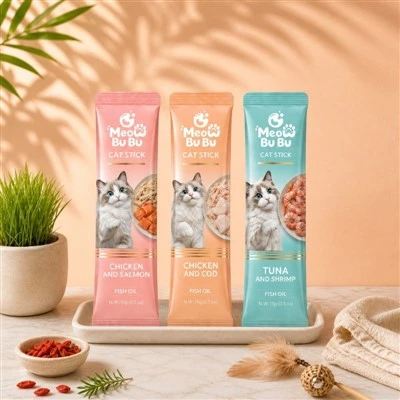
For anyone looking to source high-quality, vet-approved commercial cat food that aligns with the nutritional needs you care about, we offer tailored options for all cat life stages and dietary sensitivities. Whether you’re a small animal clinic, a pet retail chain, or a multi-cat household, our team can work with you to find the right formula. To learn more about our products and discuss your specific needs, get in touch with our sales team to set up a consultation.
Dry Cat Food References
- International Society of Feline Medicine. (2022). Nutritional Requirements of Obligate Carnivores.
- Association of American Feed Control Officials (AAFCO). (2023). Pet Food Nutrient Profiles.
- FDA Center for Veterinary Medicine. (2021). Risk Assessment of Raw Pet Food and Human Health.
- Journal of Veterinary Internal Medicine. (2020). Taurine Deficiency in Domestic Cats: Clinical Presentation and Management.
- American Animal Hospital Association. (2022). Commercial vs. Homemade Pet Diets: Evidence-Based Recommendations.
Zhejiang Yufine Bio-technology Co., Ltd.
As one of the leading cat food manufacturers and suppliers in China, we warmly welcome you to buy high quality cat food at competitive price from our factory. For free sample, contact us now.
Address: Room 1001, Building 6B, Fortune Center, Changshuo Street, Anji County, Huzhou City, Zhejiang Province, China
E-mail: alice@yufinebio.com
WebSite: https://www.yufinepet.com/
