If you’ve ever stood behind a retail counter during a weekend rush, watching an hour of sales vanish because a best-selling shirt that rang up on your register was actually out of stock on the floor, you know exactly how disjointed old-school inventory management can sink a small store. As a POS display supplier who’s worked with independent boutique owners, neighborhood grocery stores, and local specialty shops for the past seven years, I’ve seen firsthand how cash registers with clunky manual inventory logs or separate, disconnected spreadsheets turn simple operations into a nightly chore. The solution isn’t just flashy displays to show off products at checkout—it’s the integrated POS display systems that tie sales, stock counts, and customer behavior together, turning guesswork into actionable, real-time decisions. Let’s break down exactly how these systems change retail inventory for the better, based on the stories and struggles of the store owners I work with every day. POS Display

First, let’s get one thing straight: a POS display isn’t just the screen you tap to ring up a customer. It’s a full, integrated system that combines the point-of-sale hardware (the display, card reader, receipt printer), the software that tracks every transaction, and the inventory tools that update stock levels automatically. Before I started this business, I worked as a store manager for a small outdoor gear shop in Portland, Oregon, and I remember the chaos of our old setup. We had a cash register that only rang up sales, a paper binder where we wrote down inventory counts every Friday, and a separate tablet for tracking seasonal items. Every Monday, I’d spend three hours cross-referencing sales from the week with binder counts, only to find that a popular hiking boot we sold 25 pairs of was listed as having 12 in stock—we’d missed that a shipment arrived on Wednesday and didn’t get logged. That’s the problem with siloed systems: they create gaps that lead to overselling, lost sales, and wasted time. A POS display integrates all these pieces, so every time an item is scanned and sold, the inventory count updates instantly. This is the most basic, and most impactful, way it improves inventory management. Take Maria, who owns a small home goods boutique in Austin—she told me last year that switching to a POS display system cut her weekly inventory checks from 8 hours to 45 minutes. “Before, I’d close up shop on Sunday and count every single mug, candle, and linen by hand,” she said. “Now, when a customer buys a ceramic bowl, I don’t have to write anything down later. The screen automatically subtracts it from my stock. I still do a spot check once a month, but I’m not staying up until 1 a.m. anymore to fix mistakes.” That’s the power of real-time inventory tracking tied directly to your sales: it eliminates the “phantom stock” that plagues so many small retailers, where an item is listed as in stock but is actually long gone.
Another big pain point I hear from store owners is the cost of inventory mistakes. Overselling an item is a top one—if you list a jacket as having 5 in stock and a customer buys the last one, only to find out the fourth one got damaged in the back and not logged, you end up promising a customer something you can’t deliver. That leads to frustrated customers, bad reviews, and even lost sales when the customer goes to a competitor. A POS display system prevents that because it locks stock once an item is rung up. If a customer tries to buy a shirt that’s already sold out, the POS screen will flash a notification before you process the sale, so you can offer to order it instead of disappointing them. Last year, I worked with a skate shop in Denver that was losing an average of $1,200 a month in oversold products before switching to a POS display. Their owner, Jake, said that within three months, that number dropped to under $100. “We used to have customers show up for a board they saw online, and we’d have to tell them we were out,” he explained. “Now, our POS display shows us exactly how many boards are in the back, how many are on the floor, and even if there’s a pending shipment coming in next week. We can either sell what we have, or tell the customer we can get it for them, which actually makes more sales, not less.” This type of system also helps with receiving new shipments, which is another huge part of inventory management. When you get a delivery, you can scan each item directly into the POS display, and it automatically adds to the stock count—no more writing down on paper and losing the note. For a grocery store that gets a daily produce delivery, that means you can log apples, bananas, and bread in minutes, instead of spending an hour writing each item down. That time saved is time you can spend helping customers or organizing the store, not correcting inventory errors.
One of the most underrated ways a POS display helps with inventory is by giving you insights into which items are actually selling, and which are just taking up space. A lot of small store owners buy stock based on gut feeling or what worked last year, but POS display systems track sales data over time, so you can see trends you’d never notice otherwise. For example, a clothing boutique might notice that their floral dresses sell three times faster on Saturdays than on Tuesdays, or that the small size of a popular sweatshirt is always out of stock within a week, while the extra large only sells two a month. That data lets you adjust your inventory orders so you’re not wasting money on items that don’t move. Take Tom, who owns a specialty pet supply store in Chicago. Before he used a POS display, he’d order the same amount of each dog toy every quarter, based on what he thought was popular. Last year, after six months of using the system, he realized that his grain-free dog treats were selling 10 times faster than his regular treats, and his cat beds were almost a dead item. “I was spending $800 a month on cat beds that only made $200 in sales,” he said. “I cut back on how many I ordered, and used that money to buy more of the grain-free treats, which increased my sales by 15% in six months. The POS display didn’t just tell me how much stock I had—it told me what stock I should be buying more of, and what I should stop buying.” This kind of data is game-changing for small retailers, who often have tight budgets and can’t afford to tie up money in slow-moving inventory. A POS display turns that raw sales data into simple, easy-to-read reports on your screen—no fancy analytics degree required. Most of the systems I supply have pre-built reports that show top-selling items, slow-moving stock, and even sales by day or time, so you don’t have to spend hours sorting through spreadsheets to get the information you need.
Another area where POS display systems help is with multi-location inventory, even if it’s just two stores or a shop with an online component. A lot of retail stores have a brick-and-mortar location and sell items on Instagram or Facebook, and keeping track of stock across both channels is a nightmare without an integrated system. If you sell an item on your Instagram shop, and someone buys it, you need to make sure your in-store stock doesn’t show that item as available. A POS display that’s connected to your online store will automatically update stock across both channels, so you don’t oversell. I worked with a boutique in Phoenix that sold handmade jewelry in-store and on their website. Before switching to a POS display, they had about 20 orders a month where an item was listed as in stock online, but was actually sold at the store that same day. “We’d have to apologize to customers, refund their money, and lose their trust,” said their owner, Lila. “Now, when someone buys a necklace on our website, the POS display at the store shows it as sold, and vice versa. We haven’t had an oversold order in over a year. That’s not just about inventory—it’s about keeping customers happy.” For stores that have a single location, this still helps if you have a back room or a separate storage area. The POS display can track stock across multiple locations within your store, so you don’t have to hunt through the back room to find an item. If a customer asks for a specific mug, you can check the POS screen and see if it’s on the shelf, in the back room, or even on display at the front of the store. That saves you time and makes the customer experience smoother.
Let’s talk about the less obvious, but still important, way POS display systems reduce inventory-related stress: they automate routine tasks that take up so much time. For many small store owners, inventory management is a second full-time job. When your POS display updates stock automatically, generates low-stock alerts when an item is running low, and even suggests reorder quantities based on past sales, you don’t have to do all the work manually. For example, if your best-selling shampoo is down to 2 units, the POS display will send you a notification on your phone or the screen, so you can reorder before it sells out. No more checking every item every day to see what’s low. A lot of store owners I work with tell me that this automation is the biggest benefit of all, because it frees up their time to focus on what they love: running their store, helping customers, and growing their business, not counting inventory. Sarah, who owns a children’s bookstore in Seattle, said that before her POS display, she’d spend 10 hours a week on inventory tasks. Now, that’s down to less than two hours. “I used to dread Mondays, because that was when I’d do inventory,” she said. “Now, I get a list of items that are running low straight to my email, and I just place the orders. I can spend that time reading to kids in the store, or planning events, which is what made me open the store in the first place. The POS display didn’t just fix my inventory—it made my job enjoyable again.”
Of course, no system is perfect, and I always tell store owners to make sure they choose a POS display that’s right for their size and type of business. A boutique doesn’t need the same system as a large grocery store, and a specialty shop needs different features than a clothing store. That’s why as a supplier, I don’t just sell hardware—I take the time to understand what each store’s specific inventory struggles are, and help them choose a system that fits. Some store owners worry that POS displays are too complicated, or that they’ll have to learn a whole new system, but most of the ones I supply are designed for small businesses, with simple interfaces that don’t require a tech degree. We also offer training and ongoing support, so if a store owner runs into a problem, they can reach out and get help quickly.
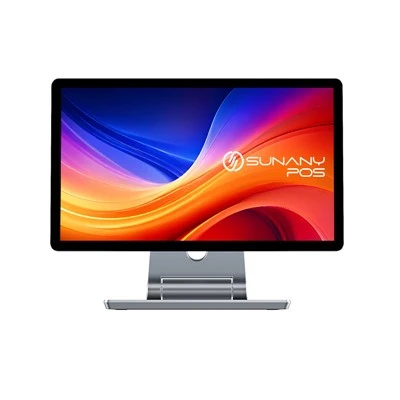
At the end of the day, inventory management is the backbone of any retail store. If you don’t have the right stock at the right time, you lose sales, waste money, and frustrate customers. A POS display isn’t just a tool to ring up sales—it’s a system that connects every part of your business, from the moment an item arrives to the moment it’s sold. It eliminates mistakes, saves time, gives you valuable insights, and makes your job as a store owner easier. If you’re still using manual inventory logs, separate spreadsheets, or a basic cash register that doesn’t integrate with stock, it’s worth taking a look at how a POS display can change your store. I’ve seen it work for hundreds of shops, from small boutiques to neighborhood markets, and the results are always the same: less stress, more sales, and a store that runs smoother. If you’re ready to talk about how a POS display could help your retail store’s inventory management, feel free to reach out to our team to start a conversation about what your business needs.
Windows POS System References
- National Retail Federation. (2022). “Inventory Management Trends for Small Retailers.” Retrieved from industry retail research publications
- Small Business Administration. (2021). “The Cost of Inventory Errors for Small Retail Operations.” Retrieved from small business resource guides
- Retail Systems Research. (2023). “POS Integration Impact on Inventory Accuracy for Independent Retailers.” Retrieved from retail tech analysis reports
- National Association of Specialty Shops. (2022). “How Automated Inventory Tools Reduce Operational Burden for Small Retail Owners.” Retrieved from specialty retail industry reports
Shenzhen Sunany Technology Limited
Shenzhen Sunany Technology Limited is one of the most professional pos display manufacturers and suppliers in China, featured by quality products and good price. Welcome to wholesale bulk advanced pos display made in China here and get pricelist from our factory. Contact us for customized service and OEM service.
Address: 7F, Building 2, Pingji Avenue No.13, Longgang, Shenzhen, China.
E-mail: info@sunany.com
WebSite: https://www.sunanypos.com/
