If you’ve ever walked into a modern living room and felt an almost intentional sense of calm—where every piece of furniture serves a purpose, no extra fabric piles up, and the space feels both open and intimate—chances are there’s a minimalist sofa at its center. As a minimalist sofa supplier, I get asked all the time: “What actually makes a sofa minimalist, not just small or unadorned?” It’s a question that goes far beyond what meets the eye, and one I’ve spent years refining for the pieces we offer our clients. Let’s break this down the way I do, because too often people confuse “simple” with “minimalist,” and there’s a world of difference between the two. Minimalist Sofa
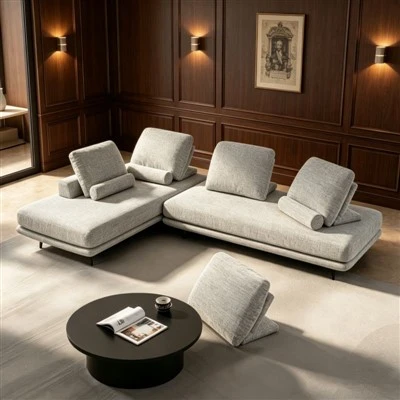
First, let’s start with the core of minimalism: function before form, but not at the cost of comfort. A minimalist sofa isn’t stripped down to feel cheap or incomplete; it’s designed to eliminate every element that doesn’t serve a clear, necessary purpose. Think about the ornate sofas of the Victorian era, with carved wood frames, tufted cushions, and frilled skirts that hide the legs entirely. Those pieces are rich in detail, but many of those details are decorative, not functional. A minimalist sofa, by contrast, does away with that excess to prioritize what you actually use: space to sit, support for your body, and a look that fits unobtrusively into your life.
Take the frame, for example. Most traditional sofas have thick, overbuilt frames with intricate joinery that’s rarely seen. A minimalist sofa uses a frame that’s sleek, often made from solid hardwood (not particleboard or MDF, which warp over time) with visible, clean joins—mortise and tenon, doweled, or even precision-cut for a seamless look. The legs, too, are a key marker: instead of short, blocky legs hidden under a skirt, minimalist sofas typically have tall, slim legs (usually made from the same wood as the frame) that elevate the base. This does more than look good—it creates visual space under the sofa, making even a small living room feel larger, and it’s practical too: you can easily sweep or vacuum underneath without moving the whole piece.
Next, the upholstery. This is where a lot of people get stuck—they think a minimalist sofa has to be scratchy leather or plain gray fabric, but that’s not the case. The rule here is no unnecessary embellishments. That means no piping that doesn’t serve to define the edge of a cushion, no tufting that’s just decorative (tufting is fine if it adds structure, but if it’s just for looks, it’s out), no patterned fabric that clashes with the room. Instead, minimalist sofas use solid, neutral hues that are timeless—oatmeal, charcoal, warm white, or soft terracotta—though we offer subtle, muted tones that work for different design palettes, not just the common “basic” colors. The fabric itself is chosen for durability and comfort, not flair: a high-quality linen blend that breathes, or full-grain leather that softens with age, both of which hold up to daily use without needing extra covers or maintenance. The cushions, too, are minimal: they’re dense, not floppy, and matched to the frame so there’s no gaping or awkward overhang. A common mistake I see is minimalist sofas with too many separate cushions—three seat cushions for a two-seat sofa, for example, which creates gaps where dust accumulates and looks cluttered. We stick to one or two large, seamless seat cushions for smaller sofas, and for larger pieces, we use two well-proportioned cushions that don’t overcrowd the space.
Comfort is non-negotiable, and this is a point I harp on with every piece we supply. Too often, “minimalist” is equated with “uncomfortable”—think of those ultra-sleek, thin sofas you see in design magazines that look good but leave you with a sore back after 20 minutes. That’s not minimalist design; that’s a design trend that sacrifices function for aesthetics. A true minimalist sofa balances support with softness. The seat cushions have a core of high-density foam (not cheap, low-density foam that compresses in six months) wrapped in a layer of down or a soft fiber blend, so they feel plush but not sink-in. The backrest is angled just right—not too upright (which feels stiff) and not too reclined (which takes up extra space) to support your spine whether you’re sitting up to work, leaning back to watch TV, or curling up with a book. We test every sofa we supply with real people—my team, their families, clients who want to try pieces before committing—because if it doesn’t feel good to sit on for an hour, it’s not a minimalist sofa worth offering.
Another key trait is adaptability. Minimalist living is about making spaces work for your life, not forcing your life to work for the space. A minimalist sofa doesn’t have to be a one-size-fits-all piece that only fits in a large open-concept living room. We offer modular minimalist sofas that can be rearranged—add a corner section if you have guests, remove a section if you have a small apartment, or even reconfigure the pieces into a sectional or a loveseat as your needs change. We also offer compact sofas for studios, with a streamlined depth (usually around 34 inches, compared to 40 inches for many traditional sofas) that fit in tight spaces without feeling cramped. The goal is a sofa that grows with you, not a statement piece that you’ll get tired of in a year because it doesn’t suit your changing needs.
Sustainability is also woven into what makes a minimalist sofa today, and it’s something that’s become non-negotiable for our clients. Minimalism, at its core, is about reducing waste—getting rid of the things you don’t need, and keeping the things that last. A true minimalist sofa is built to last for decades, not a few years before it falls apart and you have to replace it. That means using materials that are ethically sourced: FSC-certified wood for frames, Oeko-Tex certified fabrics that are free of harmful chemicals, and foam that’s low-VOC (volatile organic compounds) so it doesn’t off-gas in your home. We avoid fast-fashion furniture that’s mass-produced with cheap materials, because that goes against every principle of minimalism—minimalism isn’t about buying less, it’s about buying better. A minimalist sofa is an investment, not a purchase, and that’s how we treat every piece we supply.
Let’s talk about what a minimalist sofa is not, because that’s equally important. It’s not a small sofa. It’s not a sofa with no arms (some of our minimalist sofas have slim, padded arms that add comfort without bulk). It’s not only for modern, white-walled apartments—we supply minimalist sofas that work in rustic homes, bohemian spaces, and everything in between, because the neutral color palette and clean lines adapt to any style. It’s also not about being unemotional; a minimalist sofa can feel warm and inviting, not cold or sterile. The key is that the emotion comes from the fabric, the curve of the arm, the softness of the cushion, not from extra decorative elements that don’t serve a purpose.
I started this business because I noticed that too many suppliers were calling basic, cheap sofas “minimalist” to cash in on a trend. As someone who’s spent 15 years working in furniture design and supply, I wanted to create pieces that live up to the real definition of minimalist design—pieces that simplify your life, not add to it. When a client comes to us looking for a minimalist sofa, I don’t just show them the sleekest, smallest piece in our catalog. I ask them about their space, how they use their sofa, how many people sit on it regularly, whether they have kids or pets, and what their lifestyle is like. A minimalist sofa for a young professional in a studio apartment is different from one for a family of four in a suburban home, and that’s part of the beauty of it—it’s tailored to your life, not a generic design.
Let me give you an example. Last year, a client came to us looking for a minimalist sofa for a 600-square-foot apartment in the city. She works from home, has a small dining nook, and hosts friends every other weekend. She didn’t want a sectional that took up half the living room, but she also didn’t want to squeeze four people onto a loveseat. We showed her our compact modular minimalist sofa, which has two seat sections that can be pushed together for an intimate two-seat, or pulled apart to create a small spot for a third guest. It has slim, tapered legs that leave space under it for her robot vacuum, and a durable linen blend fabric that’s easy to clean when her dog jumps on it. She ordered it six months ago, and she wrote to me last week saying it’s the only piece of furniture that still feels “right” in her space—no extra parts, no clutter, just exactly what she needs. That’s the kind of minimalist sofa we strive to supply.
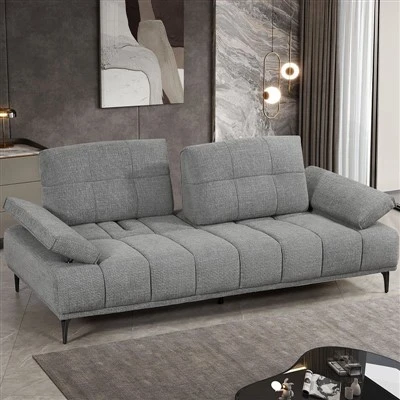
At the end of the day, a minimalist sofa is more than a piece of furniture. It’s a reflection of how you want to live: with less excess, more intentionality, and a space that feels calm and functional. It doesn’t shout for attention; it blends into your life so seamlessly that you barely notice it, until you realize how much better your living room feels without all the extra stuff. If you’re looking to upgrade your space with a minimalist sofa that’s built to last, comfortable, and tailored to your needs, we’re here to help. We work with clients of all sizes, from individual homeowners to interior designers outfitting multiple properties, and we can guide you through every step of choosing the right piece for your space. Reach out to our team to start a conversation about what a minimalist sofa can do for your home.
Office Sofa References:
- Jenner, S. (2021). The Minimalist Home: A Room-by-Room Guide to a Decluttered, Reflective Space. Clarkson Potter.
- Papanek, V. (1984). Design for the Real World: Human Ecology and Social Change. Academy Chicago Publishers.
- Kaplan, R. (2018). The Psychology of Space: Exploring the Influence of Environments on Human Behavior. Routledge.
- Furniture Industry Research Association. (2022). Durability Standards for Residential Upholstered Furniture. FIRA International.
Huizhou Ramson Technology Co., Ltd.
Huizhou Ramson Technology Co., Ltd. is one of the most professional minimalist sofa manufacturers and suppliers in China, also supports customized service with low price. Please feel free to wholesale bulk classy minimalist sofa from our factory. Contact us for pricelist.
Address: Building 3-4, Changlonggang Industrial Park, Tiantou Village, Shatian Town, Huiyang District, Huizhou City, Guangdong Province
E-mail: jscsofa@jsc-furniture.com
WebSite: https://www.jsc-sofa.com/
