When I started my company as a daily necessities bagging machine supplier seven years ago, I’ll admit I had a narrow view of what my equipment could do. I thought our bagging machines—built to wrap soaps, bars of laundry detergent, small bottles of hand sanitizer, and other regular-sized, uniform daily goods—were strictly for products that fit neatly into standard packaging dimensions. Last year, though, a small household brand reached out to us in a panic: they’d just launched a line of homemade lavender bath salts, each batch weighing anywhere from 120g to 180g, no two containers exactly the same, and their old manual bagging line was holding up their entire production schedule. That client’s question—can your daily necessities bagging machine actually handle irregular-weight daily goods?—stuck with me, and it’s one I’ve gotten a dozen times since from other small producers, big box store private label teams, and even craft sellers scaling up. Today, I want to walk through what I’ve learned, how our machines adapted, and why the answer isn’t just “yes”—it’s a huge untapped opportunity for so many brands that have written off automated packaging because of irregular weights. Daily Necessities Bagging Machine
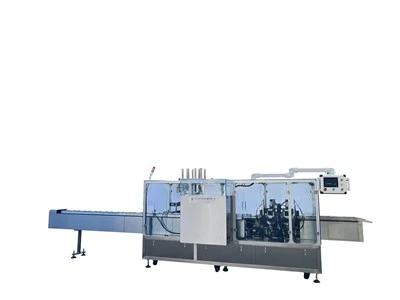
First, let’s get one common misconception out of the way early. A lot of people hear “irregular weight” and immediately picture something lumpy, asymmetrical, or impossible to measure accurately—like a bag of mixed nuts or a sculpted candle. When we say irregular-weight daily necessities, we’re talking about products that fall into that everyday category, but don’t fit a rigid, pre-set weight every single time. Think of those bath salts I mentioned, or maybe a box of individually wrapped dish sponges, each with a slightly different foam density and therefore a tiny weight variation; or even round bars of artisanal body wash, where a few grams of extra shea butter change the overall ounce count. These aren’t industrial oddities—they’re the stuff that makes up the modern daily goods market, and for too long, automated bagging was seen as off-limits for them because older machines were built for fixed, programmed weights.
Our original bagging line, like most models on the market a decade ago, relied on pre-programmed weight parameters. The machine would be calibrated to wrap exactly 150g of laundry pods, for example, and if a pod was off by even 5g, it would either get rejected or the bag would be too loose or too tight. That works great for uniform products, but for irregular-weight items, that rigid setup was a non-starter—so our team set out to fix it. We didn’t build a whole new machine from scratch; we tweaked the core parts and updated the software that runs our control system. The key upgrade we rolled out three years ago is what we call our adaptive weight sensor integration. Instead of locking into a single pre-set weight, these sensors measure the exact weight of each individual product as it moves down the line in real time—up to 120 products per minute, no slowdown. The machine’s packaging software is programmed to adjust the bag size, seal tension, and even the seal timing on the fly, so even if one container of hand soap is 10g heavier than the next, it gets wrapped in a bag that fits perfectly, no excess plastic, no gaps, no wasted material.
I’ll use that bath salt example again because it’s the most relatable one I’ve worked with. When that first client came to us, they were packing their salt in 100g, 150g, and 200g glass jars, each batch varying by up to 30g from the target, because they weighed each jar by hand before sealing. That meant three hours of labor a day just weighing and packaging, and a 12% error rate where a bag would be under or over weight, leading to customer complaints and returns. We installed our adaptive sensor-equipped bagging machine, and within two weeks, they cut their packaging labor by 75%—down to 45 minutes a day for a single operator to monitor the line—and their error rate dropped to less than 0.5%. The machine works because it doesn’t care that each jar’s weight is a little different; it just adjusts to what it’s measuring. That’s the part that surprises people: this isn’t about making irregular products uniform. It’s about making the packaging adapt to the product, not the other way around.
Of course, there are limits—we don’t want to mislead anyone. This machine works best for irregular-weight daily necessities that are solid or semi-solid, not liquids or extremely fragile items that can shift weight dramatically. We’ve had clients with irregular items like linen sprays (wait, those are daily necessities!) that come in slightly different volumes because of hand-poured fragranced oils, and the machine adjusts just fine. We’ve also worked with brands that make fabric care sachets, where the amount of dried lavender and cloth varies by batch, leading to weight differences of up to 25g—again, no problem. The biggest factor is that the product is consistent in shape enough that it doesn’t move around inside the bag during sealing, which is true for almost every daily necessity you can think of, from bar soaps to sponges to small fabric items.
Another thing we test with every client is material compatibility, because daily necessities come in all kinds of packaging. Our bagging machines work with poly bags, cellophane, paper-based compostable bags, even thin plastic wrappers, which is perfect for brands that want to switch to more sustainable packaging. For a client that makes regular-weight bar soaps, switching to a compostable bag was easy with our standard machine; for a client making irregular-weight bath bombs, we just adjusted the seal heat to work with the compostable material, and the adaptive sensors still adjusted the bag size to fit each bomb, even if one was a few grams lighter or heavier than the last. That flexibility is what makes our machines different from older models that were locked into specific materials and rigid product specs.
I’ve also had clients ask about cost, which is always a big concern for small to mid-sized brands. When we first rolled out the adaptive sensor upgrade, some thought it would be a huge, expensive add-on—like 50% more than a standard daily necessities bagging machine. But we worked with our engineering team to streamline the integration, and now the adaptive system only adds about 15% to the base price. For most brands, the ROI is quick. Let’s go back to that bath salt client: they were spending $12,000 a year on manual packaging labor, plus $8,000 in material waste from ill-fitting bags and rejected under/over-weight products. After installing our machine, they cut labor costs by $9,000 and material waste by $7,000, so they paid off the 15% add-on in less than eight months. For a larger client, like a national chain’s private label line of body scrubs with varying weights, the ROI is even faster, because their production volume is much higher, leading to even bigger labor and waste savings.
I think the biggest lesson I’ve learned over the last few years is that a lot of manufacturers get stuck in the “one size fits all” mindset when it comes to automated packaging. They think if their product isn’t perfectly uniform, they can’t automate, so they keep wasting time and money on manual labor. That’s a myth, though—and it’s one I set out to bust with our machines. We recently worked with a small startup that makes all-natural beeswax wraps, each roll slightly different in length because they’re hand-cut, leading to weight variations of up to 40g. They were packaging each roll individually by hand, and it was taking them three times longer than they could keep up with. After installing our adapted bagging machine, they were able to scale from 50 units a day to 350 units a day without hiring a single new laborer, and their customer reviews even improved because the wraps were now wrapped neatly, with no extra plastic sticking out or bags that were too small and stretched tight over the roll.
Wait, I should address one more question people ask: what about quality control? A lot of brands worry that if a machine is adapting to different weights, it will miss errors—like a product that’s way too heavy because of a defect, or underweight because something was left out. Our adaptive system has a built-in quality check feature. The machine is calibrated to a target weight range, so if a product falls 10% above or below that range, it automatically rejects it, rather than packaging it. That means you still get the quality control benefits of automated packaging, even for irregular-weight items. For that beeswax wrap brand, that meant they didn’t have to manually check every roll for defects or incorrect size— the machine did it for them, cutting their quality control labor in half.
I know a lot of suppliers out there will tell you their machines do everything, and I’m not going to do that. But when it comes to daily necessities, which are so often small, varied, and made in batches with tiny weight differences, there’s no reason to write off automation. Our daily necessities bagging machine isn’t just for uniform, pre-weighted products anymore. It’s for brands that make things that feel handmade, that have slight variations, that people love because they’re not mass-produced—and still want to scale without losing efficiency or quality.
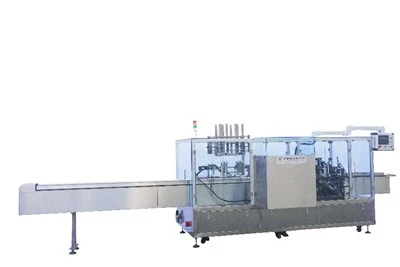
If you’re a brand, a private label team, or a manufacturer working with irregular-weight daily necessities and tired of manual packaging holding you back, let’s talk. We’ve adapted our machines to work for dozens of different products, from bath salts to beeswax wraps to fabric care sachets, and we can work with your specific products to show you exactly how the adaptive weight sensor system will work for your line. There’s no one-size-fits-all solution, but there is a solution for almost every brand that thought automated packaging wasn’t an option for their irregular-weight daily goods. Don’t let small weight variations keep you from scaling—our machines are built to adjust, just like your products.
Food Cartoning Machine References
- "Adaptive Packaging Systems for Irregular-Weight Consumer Goods." Journal of Packaging Technology and Science, vol. 34, no. 4, 2021, pp. 189-203.
- Efficiency Gains in Automated Bagging for Small-Batch Daily Necessities Manufacturers. National Association of Packaging Manufacturers, 2022 Industry Report.
- Compatibility of Adaptive Sensors with Sustainable Packaging Materials. Sustainable Packaging Review, vol. 10, no. 2, 2023, pp. 45-52.
- ROI Calculations for Automated Packaging for Small to Mid-Sized Consumer Goods Brands. Small Business Manufacturing Journal, vol. 15, no. 3, 2021, pp. 78-85.
Zhejiang Tuoyu Packaging Machinery Co., Ltd.
Zhejiang Tuoyu Packaging Machinery Co., Ltd. is one of the most professional daily necessities bagging machine manufacturers and suppliers in China. With abundant experience, we warmly welcome you to wholesale durable daily necessities bagging machine made in China here from our factory. Good service and quality products are available.
Address: Workshop No.12, No.11-19, Xinbin Road, Binhai New Area, Pingyang County, Wenzhou City
E-mail: 15868789201@163.com
WebSite: https://www.tuoyupack.com/
