Hey there, regulars and new folks stopping by, let’s cut to the chase – if you’ve ever bought a catalyst from a supplier and wondered why that stuff that worked like a charm last time died on the job a few months later, or why two batches of the same chemical catalyst acted totally different in your reactor, you’re not alone. As a catalyst supplier who’s fielded 100+ calls this year from plant managers frustrated with wonky catalyst performance, let’s break down the real, messy factors that make a catalyst work (or flop) – no stuffy textbook jargon, just what we’ve seen in the trenches and the science behind it. Catalyst

First up, the one that trips up even the most experienced process engineers: catalyst composition, and I don’t mean “it has nickel in it” basic. You might think if you ask for a nickel-based hydroprocessing catalyst, every supplier’s product is identical, but nope – the trace metals, the mix of support additives, even how we dope those atoms changes everything. For example, last quarter a refinery hit us up saying their old nickel catalyst was coking up left and right, cutting their throughput by 15%. We swapped in a custom formulation with tiny amounts of tungsten and cerium, kept the nickel core the same, and their coking dropped by 60% within two weeks. Why? Those trace additives don’t just hang out – they adjust the catalyst’s active site spacing, make it easier for reactants to stick and not get stuck as carbon buildup. Another big one: the support material. You can have the fanciest active metal in the world, but if it’s sitting on a porous support that’s falling apart at 300°C, that catalyst’s useless. We’ve seen competitors cut costs by using cheap alumina support that breaks down at high temps, which makes active metals clump together – that’s called sintering, for the nerds, but basically your tiny active metal particles turn into big, useless blobs that can’t react with anything.
Next, reaction conditions – this is the #1 thing people overlook when they blame the catalyst. Let’s be real, you could have the best catalyst we make, but if you crank the pressure too high or run at a temp way outside what we recommend? It’s gonna underperform. Take our diesel hydrodesulfurization (HDS) catalysts, for example. We specify a temp range of 320-360°C for max activity. If a plant runs at 300°C to save on energy? Sure, that cuts costs, but the catalyst’s active sites don’t have enough energy to break the strong sulfur-sulfur bonds in diesel, so your sulfur levels stay above regulatory limits. Run at 380°C? The support starts to degrade, and you get that sintering I mentioned earlier. Pressure matters too – too low, and hydrogen can’t get to the active metal sites to do its job, so the reaction rate plummets. We had a customer last year who swears our catalyst is “bad” because they ran their reactor at 20% lower pressure than our specs, and when they fixed that, their activity went back up. Moral of the story: catalyst performance isn’t one-size-fits-all – you have to match the conditions to the stuff we sell.
Then there’s poison and contamination, and this is the wild card that no one sees coming. A catalyst’s active sites are like a coffee shop during rush hour – if a random rude customer (that’s a poison molecule) shows up and takes a seat, no one else can use it. Common poisons for industrial catalysts include sulfur, nitrogen, heavy metals like arsenic or lead, and even things like water or carbon monoxide, depending on the reaction. Last month, a petrochemical plant called in panic because their ethylene polymerization catalyst stopped working mid-batch. We ran a quick analysis on their feed gas and found they had a tiny leak in their hydrogen line that was letting in a little bit of carbon monoxide – that CO was bonding to the titanium active sites on our Ziegler-Natta catalyst, blocking them. We told them to fix the leak, and they were back to full production in 24 hours. Even “harmless” contaminants can be bad – like dust in a gas stream that gets stuck in the catalyst’s pores and blocks reactants from getting to the active sites. We always warn customers to have proper feed purification, but so many skip that to save money, and end up paying way more in lost production.
Catalyst particle size and morphology – this is more important than you’d think, especially for fixed-bed reactors (which are the most common in refineries and chemical plants). If you have a catalyst with big, chunky particles, most of the active metal is trapped inside the particle, so reactants have to diffuse through a long path to get to it. Smaller particles mean shorter diffusion paths, so higher activity, right? But wait – if particles are too small, they’ll get carried away in the gas or liquid flow, or cause pressure drop in the reactor. That’s a balancing act. We recently tweaked our hydrotreating catalyst’s particle size from 1.5mm to 1.2mm for a customer with a smaller reactor, and their conversion rate went up 12% without a big jump in pressure drop. Also, the shape matters – we have catalysts in pellets, spheres, extrudates, even custom shapes for specific reactors. For example, our trilobe extruded catalysts have more surface area than round pellets, so more active sites exposed, without the pressure drop that smaller particles cause.
Oh, and activation and regeneration – a lot of people don’t realize that catalysts aren’t “plug and play” – you have to get them ready to work, and sometimes you can refresh them when they get worn out. Activation is the first step, right after loading the catalyst into the reactor. Most of our metal-based catalysts come as oxides, not the active metal form, so you have to reduce them with hydrogen to turn them into the active metallic state. If you rush that reduction step, or use the wrong temp, you end up with a bunch of inactive oxide sites, so the catalyst starts at 50% activity. We had a customer once who skipped the slow reduction ramp, cranked the hydrogen temp up too fast, and half the catalyst was useless within the first week – they had to re-activate it, costing them thousands in downtime. And regeneration? When a catalyst gets coked up or poisoned, you don’t have to throw it away – most can be regenerated by burning off the coke (carefully, so you don’t damage the catalyst structure) or treating it to remove poisons. We offer in-house regeneration for our clients, and we’ve seen that a regenerated catalyst can get back to 90-95% of its original activity, which is way better than buying new every time.
Wait, let’s not forget something super specific that we deal with all the time: storage and handling. It might sound silly, but if you leave catalyst bags open in a damp warehouse, water vapor can adsorb onto the active sites, deactivating them. We always tell customers to seal catalyst bags immediately after receiving, store them in a dry, cool place, and don’t drop or mishandle the catalyst – broken particles have smaller, uneven surfaces, which can lead to more sintering and lower activity. Last year, a customer had a pallet of our catalyst sitting outside in the rain for three days because their warehouse was full – they ended up having to discard the whole batch because the moisture ruined the active sites. That’s $50k down the drain, all because of bad storage.
Now, as a catalyst supplier, I’m not just selling you a powder or pellets – I’m selling a product that’s engineered for your exact process. All these factors tie back to what we do: we test every batch for composition, particle size, activity, and durability, so you don’t have to guess. But here’s the thing – even the best catalyst won’t perform well if you don’t pair it with the right conditions, maintain your feed purity, handle it correctly, and do proper regeneration when needed.
If you’re dealing with a catalyst that’s underperforming, or you’re looking to upgrade your current setup to save energy, boost throughput, or meet regulatory requirements, we can help. We offer free performance audits for our clients, custom formulation tweaks, and support with activation, regeneration, and storage best practices. No pressure, no hard sell – just honest advice from a team that’s been in the catalyst game for years, and knows how frustrating it is when a key part of your process isn’t working like it should.
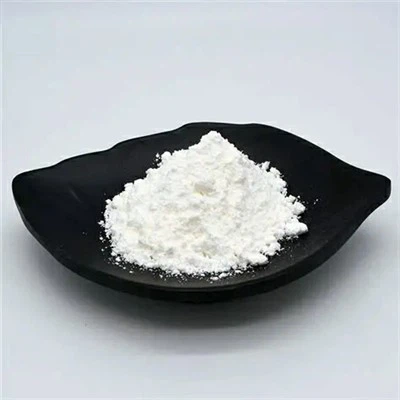
Don’t waste time and money on catalysts that don’t fit your needs – hit us up to talk through your process challenges, and we’ll help you find the right solution. Whether you’re a small chemical plant or a big refinery, we’ve got you covered.
Oxidant References:
- Ertl, G., Knözinger, H., Schüth, F., & Weitkamp, J. (Eds.). (2008). Handbook of Heterogeneous Catalysis (2nd ed.). Wiley-VCH.
- Chen, N. Y., & Gates, B. C. (1995). Recent advances in hydroprocessing catalysts. Catalysis Today, 23(3), 303-317.
- Butt, J. B., & Petersen, E. E. (1988). Activation, Deactivation, and Poisoning of Catalysts. Academic Press.
- Farrauto, R. J., & Bartholomew, C. H. (2018). Fundamentals of Industrial Catalytic Processes (2nd ed.). CRC Press.
- Rezaei, M., & Mosayebi, A. (2020). The effect of support material on the performance of metal-based catalysts for hydrogenation reactions. International Journal of Hydrogen Energy, 45(55), 30127-30142.
Shandong Hefan Chemical Products Co., Ltd.
As one of the most professional catalyst manufacturers and suppliers in China, we’re featured by quality products and good price. Please rest assured to buy bulk catalyst made in China here from our factory. Also, quotation is available.
Address: QIANZHAO BUSINESS BUILDING NO. 709LUOZHAO ROAD,TIANQU INDUSTRY ZOON, DEZHOU, SHANDONG, CHINA
E-mail: sales@hefanchem.com
WebSite: https://www.hefanchem.com/
