If you’ve spent any time around construction equipment, you know excavators are the workhorses of land-based projects—digging foundations, moving rock, clearing debris, you name it. But here’s a question that crosses many minds, especially when coastal or marine construction comes up: Can an excavator bucket be used in underwater construction? As a supplier of excavator buckets, I get asked this all the time, and the answer isn’t a simple yes or no. It’s a mix of engineering limits, specialized design, and practical on-site smarts that I’ve learned from working with contractors on underwater jobs over the past decade. Let’s break this down, because it’s a topic that’s way more nuanced than just sticking a regular bucket in water. Excavator Bucket
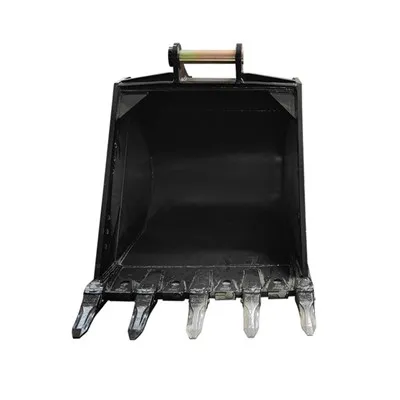
First, let’s set the context: underwater construction isn’t just shallow beach work. It ranges from building pier pilings and seawalls, to repairing submerged pipeline segments, to dredging harbors for larger vessels, to even laying foundations for offshore renewable energy structures. Each of these environments has different conditions—saltwater vs. freshwater, soft silt vs. compacted clay vs. embedded rock, and depths that can go from 10 feet near shore to 100 feet or more in open water. A standard excavator bucket? It’s built for land: mild steel edges, no corrosion resistance beyond a basic paint job, and a shape optimized for cutting through dry dirt. Toss that into 20 feet of saltwater, and it’ll start to rust through in months, not years. It’ll also struggle against the pressure: water exerts about 0.43 psi per foot of depth, so at 30 feet, that’s 12.9 psi pushing against the bucket’s teeth and sides. A standard bucket’s structure isn’t reinforced to handle that constant pressure, plus it’ll get weighed down by mud and sediment that gets stuck in gaps meant to shed dry debris. So right off the bat, a regular excavator bucket isn’t cut out for underwater use. But that doesn’t mean there’s no way to adapt—or design a bucket specifically for that environment.
Over the years, I’ve worked with engineering teams to refine what we call “submersible excavator buckets,” and let’s talk about the key modifications that make these work. First is material: saltwater is brutal, so we use high-tensile, marine-grade steel instead of the mild steel used for land buckets. Marine steel has a higher chromium content, which resists pitting and corrosion in saltwater, and it’s stronger to handle both the water pressure and the abrading action of underwater sediment. Then there’s the sealing: a standard bucket has welds and gaps that are fine on land, but underwater, water can seep into the bucket’s interior, adding extra weight that strains the excavator’s hydraulic system. We weld all seams with a process called flux-cored arc welding, which creates a denser, leak-proof bond, and we add rubber gaskets to pivot points where the bucket connects to the excavator arm to keep sediment and water out. That small change cuts down on hydraulic drag by as much as 30% in deep water—no small detail when you’re working at 50 feet down and every horsepower counts.
Next, shape and attachment. Underwater, there’s no gravity helping to shed debris, so a standard digging bucket’s curved design that works for dry dirt will trap silt, mud, and even small rocks, making the bucket too heavy to lift. Submersible buckets have a shallower, wider profile with larger open gaps between the side plates—called “side cutouts”—that let water and debris flow out as the bucket lifts. It’s a design tweak we tested with a contractor working on a Florida pier project a couple years back; using a regular bucket, they had to stop every 10 minutes to clear trapped sediment, but with our submersible bucket, they only needed a 2-minute check every hour. For hard materials like rock or compacted clay, we add hardfacing to the teeth edges: a layer of tungsten carbide that’s fused to the steel, so it lasts 5x longer than standard teeth when exposed to abrasive underwater rock. I’ve seen a land bucket’s teeth wear down to nubs after three weeks of dredging in a rocky harbor, but a submersible bucket’s hardfaced teeth held up for three months of the same job.
But here’s where it gets tricky: even with a specialized underwater bucket, you can’t just take any excavator and drop it in 100 feet of water. The excavator itself has to be modified too, right? Because standard excavators are designed to operate in dry, low-humidity environments. Their hydraulic lines, electrical components, and engine are not sealed to keep water out. So a lot of contractors partner with excavator rental companies to get units that are already rated for underwater operation—they have sealed electrical systems, waterproof hydraulic pumps, and elevated operator cabins with waterproof glass to protect the crew. That means the bucket is only one piece of the puzzle; it has to match the excavator’s rating for depth and submersion. I’ve had a client who tried to use our submersible bucket on a regular excavator for a 40-foot deep pipeline repair, and within two hours, the excavator’s hydraulic system shorted out, costing them $15,000 in repairs. That’s a mistake a lot of first-time underwater contractors make—they focus on the bucket but ignore the machine’s capabilities.
Now, let’s talk about the real-world applications where underwater buckets are actually used, because that’s where you see their value. Dredging is the biggest one: every year, ports around the world dredge millions of cubic yards of sediment to accommodate larger cargo ships. Underwater buckets are far more precise than dredge pumps, which can stir up too much sediment and harm marine life. Last year, we supplied buckets to a project in the Port of Rotterdam, where contractors needed to dig a new channel for post-Panamax ships. The bucket’s precision let them dig to exactly 45 feet deep, with only 6 inches of error, which saved them from having to do extra dredging work later. Another common use is shoreline stabilization: building seawalls or placing riprap (large rock) to prevent erosion. Underwater buckets can place riprap directly on the seabed, whereas a regular bucket would struggle to handle the weight and depth. I worked on a project in North Carolina after Hurricane Ian, where contractors used our submersible buckets to place 2-ton riprap in 30 feet of water to repair a damaged seawall—without those buckets, they would have had to use barges and cranes, which would have cost twice as much and taken twice as long.
But there are limits to what underwater buckets can do. Let’s be clear: they’re not designed for deep-sea work, like laying underwater cables at 1,000 feet. At those depths, the pressure is too high, and the visibility is too low for even the most specialized bucket to operate effectively—contractors use remotely operated vehicles (ROVs) for that. They’re also not ideal for very fine sediment, like silty muck; a bucket will stir up too much of it, harming fish and coral, so for those jobs, a suction dredge is better. And in very cold water, like the Arctic, the steel of a submersible bucket can become brittle, so we use a different alloy for those environments—something we learned after a contractor in Alaska reported a bucket crack after a month of working in 32-degree water. Those are niche cases, but they matter, and as a bucket supplier, we work with clients to match the bucket’s design to the specific job, not the other way around.
I’ve also heard some people argue that underwater buckets are too expensive, compared to renting a dedicated underwater excavator. Let’s do a quick breakdown: a submersible bucket costs about 15% more than a standard land bucket, but it can last 3x longer in underwater conditions, whereas a standard bucket would need to be replaced every six months on a dredging job. Plus, if a contractor already has a modified excavator for underwater work, they can use the same bucket for multiple jobs—dredging, shoreline repair, pipeline work—instead of renting different equipment for each. That’s a big selling point for small to mid-sized contractors who don’t have a huge equipment budget. I had a client in Texas who started with just two of our submersible buckets, and over three years, he’s used them on 12 different underwater projects, making back the extra cost in savings from not renting specialized equipment each time.
Another thing to consider is maintenance. Underwater buckets don’t need a lot of extra work, but you can’t just leave them in the water between jobs. After every use, you have to rinse them with freshwater to remove salt and sediment, and inspect the welds and teeth for wear. We provide a free maintenance guide to all our customers, and we even offer on-site inspections for clients who are working on large projects. Last year, a client in Thailand had a bucket that was looking a little dull after a dredging job, and our team did a remote check-in via video call, noticed the hardfacing was worn, and sent a replacement set of teeth in three days—no downtime for his project. That’s the kind of support that comes from working with a supplier who understands the unique needs of underwater construction, not just selling a product.
So, circling back to the original question: Can an excavator bucket be used in underwater construction? The short answer is yes, but only if it’s designed for that specific environment. A standard land bucket will rust, trap debris, and struggle with pressure, but a submersible bucket with marine-grade steel, leak-proof welds, and a shape optimized for underwater digging can be a game-changer for projects like dredging, shoreline repair, and underwater pipeline work. It’s not a one-size-fits-all solution, but when matched with the right excavator and used for the right job, it’s a cost-effective, precise tool that’s become indispensable in marine construction.
If you’re working on an underwater project and need a bucket that’s built to handle saltwater, pressure, and abrasive sediment, we’re here to help. We can assess your project’s depth, materials, and timeline to recommend the right bucket design, and we offer custom modifications for unique jobs. Reach out to our team to discuss your needs and get a tailored solution for your next underwater construction project.
Excavator Bucket References
- American Society of Civil Engineers. (2021). Marine Construction Equipment: Design, Operation, and Maintenance. ASCE Press.
- International Association of Dredging Companies. (2022). Submersible Excavator Technology in Coastal Dredging Projects. IADC Technical Report.
- National Association of Heavy Equipment Owners. (2020). Corrosion Resistance in Heavy Equipment for Saltwater Environments. NAHEO Guidelines.
- U.S. Army Corps of Engineers. (2019). Shoreline Stabilization Using Submersible Excavator Buckets: Case Studies from the Southeast U.S. USACE Coastal Engineering Research Center.
Hope Precision Machinery Co., Ltd.
As one of the most professional excavator bucket manufacturers and suppliers in China, we also support customized service. Please feel free to buy high quality excavator bucket for sale here from our factory. For more information, contact us now.
Address: No.8 Shenzhen Street, Development Zone, Yantai,Shandong ,China
E-mail: lulu@hope-breaker.com
WebSite: https://www.hopeequip.com/
